

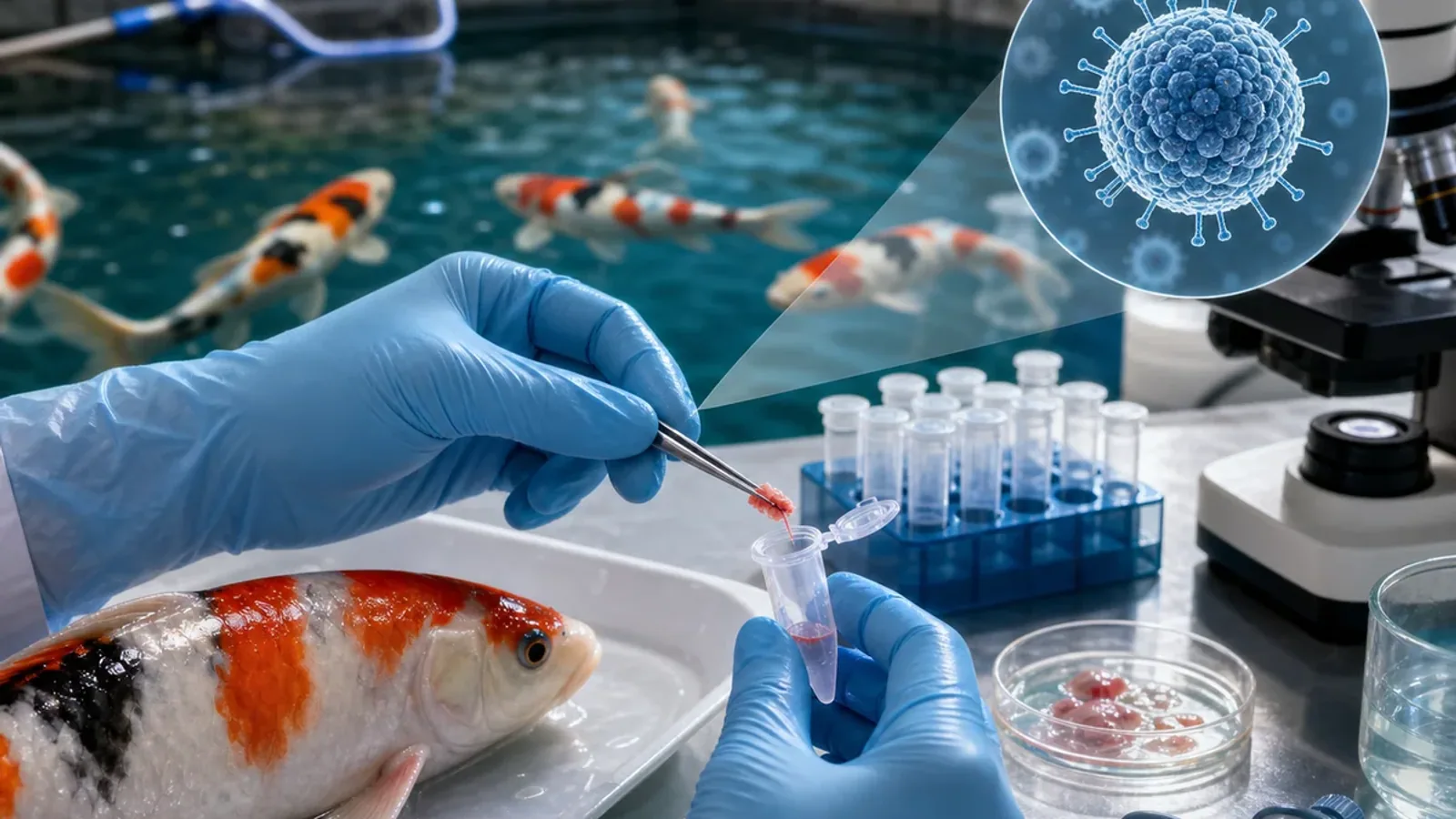
How to detect the CyHV3 (or KHV) virus?
There are two types of methods for detecting the virus responsible for Koi Herpes Virosis:
Direct method: search for viral DNA by PCR (Polymerase Chain Reaction)
It is a molecular method of amplification of the genes of the virus which makes it possible to detect it in the organs of the fish. This test is recommended by the O.I.E. (Office Internationale des Epizooties) and the only one currently validated in France to confirm an episode of KHVD.
Limitation of this test:
Viral DNA is difficult to detect in healthy carrier individuals. In addition, they must be sacrificed to remove the most contaminated organs: spleen, kidney, and gills.
Indirect methods: immunological method by ELISA (Enzyme-Linked Immunosorbent Assay) and sero-neutralization test
They make it possible to detect antibodies synthesized by fish against KHV. These antibodies are present from 3 weeks after contamination on subjects raised between 19° and 25°C and 10 weeks if they are raised between 11 and 12°C. It is possible to detect individuals who have been contaminated up to two years after exposure to the virus. The animals are not sacrificed, a simple blood test is sufficient.
Limitation of these tests:
Individuals without sufficient antibody levels are not detected. This limits those who have not yet synthesized antibodies (3 weeks post infection) or who have a decrease in antibody levels (beyond 2 years post infection). The sensitivity of the technique is lower than PCR and is currently not yet officially validated. There are also risks of cross reactions (false positives) with another herpes virus (CyHV1 responsible for carp pox.
Conclusion
These are therefore two different but complementary diagnostic tools. PCR makes it possible to diagnose KHV in sick individuals and serology to identify healthy or surviving carriers, and therefore to assess the health status of carp populations with regard to the KHV.