

Health status
Assess animals, health history, practices and factors associated with clinical events.
Health audits, veterinary monitoring and biosecurity for aquatic facilities: Vetofish identifies risks and develops practical prevention measures.
Expertise tailored to your situation, animals and facilities.
Assess animals, health history, practices and factors associated with clinical events.
Review introductions, quarantine, flows, equipment, disinfection and cross-contamination.
Define monitoring, alert thresholds and responses to abnormal mortality.
A clear process from needs assessment to practical recommendations.
Collection of available data, plans, procedures and history.
Observation of animals, facilities, practices and flows.
Ranking of risks according to severity and control.
Corrective measures, responsibilities, timelines and follow-up.
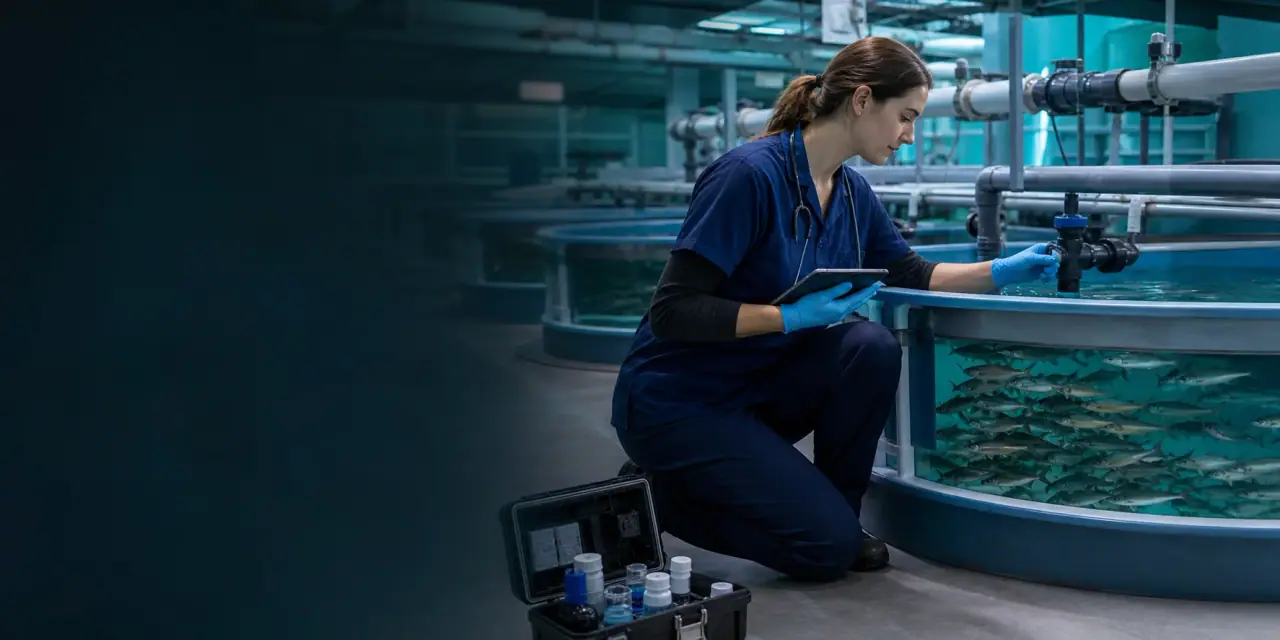
Health expertise combines field observation, data analysis and an understanding of facility flows to build prevention measures suited to each site.
It combines health-history review, observation of animals and facilities, practices, flows, water quality and prevention measures to prioritise risks.
An audit provides a snapshot and action plan. Ongoing monitoring follows health over time through visits, indicators and regular adjustment of measures.
Yes. It may cover introductions, quarantine, clean and dirty routes, equipment, movements, cleaning, disinfection, sick animals and responses to health alerts.
Available plans, procedures, mortality records, water data, treatment history, test results and flow diagrams help make the visit more effective.
They are ranked by severity, likelihood, available controls and operational constraints to produce a realistic, progressive and measurable plan.
Let’s assess the risks, practices and preventive measures suited to your establishment.
Explore the sectors where Vetofish adapts its veterinary expertise to each organisation.
Veterinary support for aquaculture facilities, combining prevention, diagnostics, biosecurity and health monitoring to control risks and protect stocks.
Veterinary support for public aquariums covering prevention, collection welfare, clinical care, biosecurity and practical guidance for animal-care teams.
Veterinary expertise for wild aquatic animals, supporting health surveillance, conservation, sampling programmes and environmental research.
Veterinary support for research facilities using aquatic animals, covering health monitoring, welfare, protocols and biosecurity within scientific programmes.


