

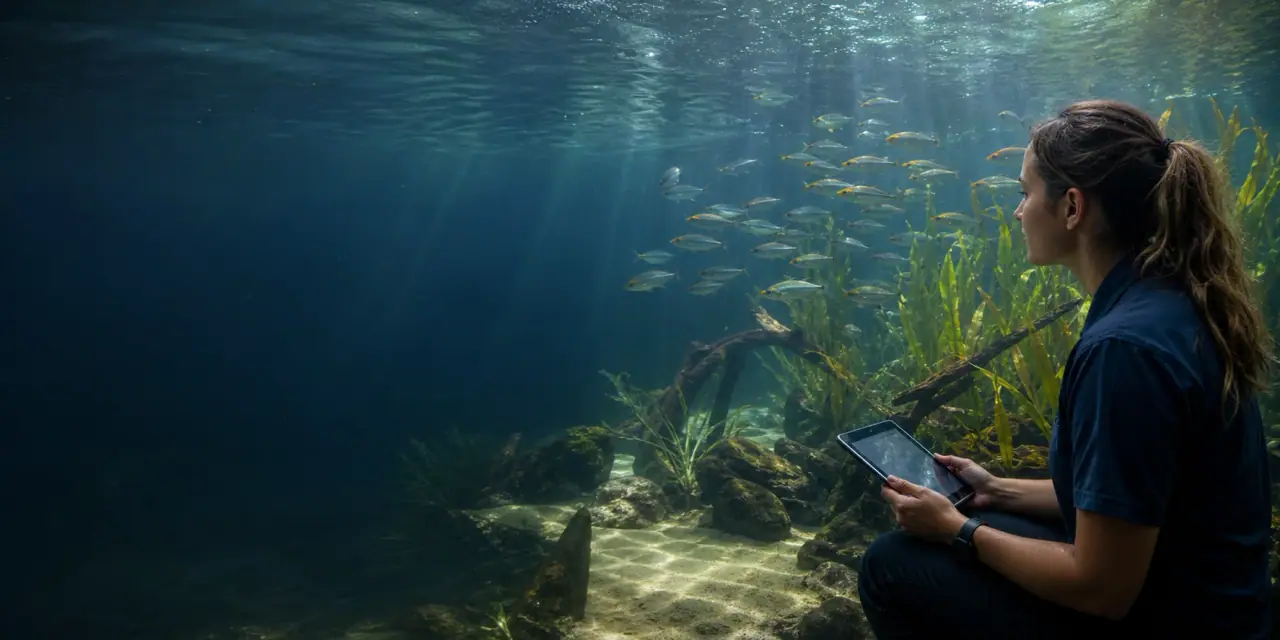
Animal condition
Observe behaviour, body condition, lesions, growth and signs of stress.
Vetofish assesses husbandry practices, facilities and welfare indicators to improve the long-term care of aquatic animals and support operational teams.
Expertise tailored to your situation, animals and facilities.
Observe behaviour, body condition, lesions, growth and signs of stress.
Assess water, stocking density, feeding, enrichment and environmental stability.
Review handling, monitoring, pain prevention and intervention procedures.
A clear process from needs assessment to practical recommendations.
Species, facilities, practices and organisational objectives.
Assessment of animals, environment and risk situations.
Identification and prioritisation of improvements.
Practical measures, monitoring indicators and revised procedures.
Aquatic-animal welfare is assessed through observable indicators, living conditions and the day-to-day practices specific to each facility.
Assessment combines animal-based indicators with the environment, feeding, stocking density, social interactions, handling and care organisation.
Yes. Relevant needs and indicators differ among fish, amphibians, cephalopods and crustaceans, and are adapted to life stage, facility type and purpose.
Yes. Vetofish can review products, administration, monitoring, recovery and pain management in relation to the procedures and applicable regulatory framework.
Depending on scope, deliverables may include an observations summary, prioritised critical points, practical recommendations, monitoring indicators and proposed procedure revisions.
Yes. Recommendations can be followed up with teams to check feasibility, assess their effects and adjust them to operational constraints.
Let’s build an approach suited to your species and facilities.
Explore the sectors where Vetofish adapts its veterinary expertise to each organisation.
Veterinary support for aquaculture facilities, combining prevention, diagnostics, biosecurity and health monitoring to control risks and protect stocks.
Veterinary support for public aquariums covering prevention, collection welfare, clinical care, biosecurity and practical guidance for animal-care teams.
Veterinary expertise for wild aquatic animals, supporting health surveillance, conservation, sampling programmes and environmental research.
Veterinary support for research facilities using aquatic animals, covering health monitoring, welfare, protocols and biosecurity within scientific programmes.


