

Make data reliable
Limit the influence of health status on scientific results.
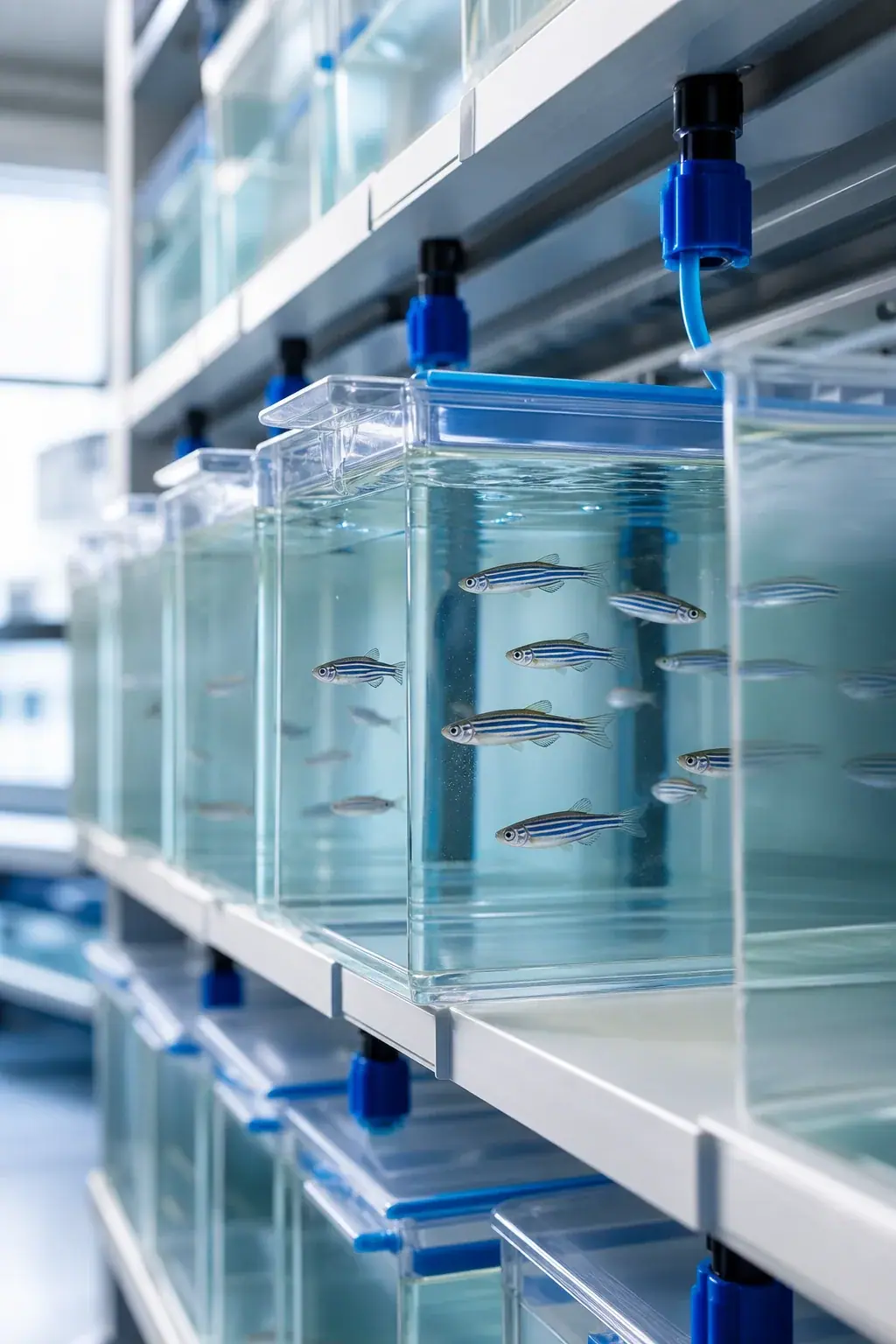
Veterinary support for research facilities using aquatic animals, covering health monitoring, welfare, protocols and biosecurity within scientific programmes.
Limit the influence of health status on scientific results.
Reduce constraints and improve animal welfare.
Secure bloodlines, introductions and animal facilities.
Integrate the requirements applicable to animal testing.
Harmonize clinical observation and good practices.
Control the health status of lines, introductions, quarantine and movements within aquatic-animal facilities.
Establish monitoring and investigations compatible with the study models and the reliability of scientific results.
Design care, anaesthesia and analgesia protocols around authorised procedures and experimental objectives.
Define indicators, humane endpoints and refinement measures suited to species, life stages and study protocols.
Review projects, procedures and facilities to integrate health, welfare, scientific feasibility and regulatory requirements.
Train teams in clinical assessment, welfare, technical procedures and consistent working practices.
Species, protocols, facilities and scientific objectives.
Health, wellness, biosecurity and regulatory points.
Recommendations compatible with scientific quality.
Procedures, training and support for teams.
Protocols for model fish, amphibians and cephalopods are designed around animal welfare, authorised procedures, scientific objectives and the risk of interference with experimental results, in dialogue with research and welfare teams.
Robust research also depends on healthy animals, refined practices and a well-controlled environment.
Specialist veterinary support throughout the organisation’s health approach.
Some of the organisations we support in the research sector.






Subclinical infection, chronic stress, unstable water quality or microbiome differences may affect physiology, behaviour, reproduction and experimental variability. Health monitoring helps identify and control these factors.
Yes. Vetofish supports facilities housing model fish, amphibians, cephalopods and other aquatic animals used for scientific purposes.
Yes. Review considers species, life stage, procedure, scientific objectives, animal welfare, expected recovery and possible interference with results.
The response depends on severity, suspected transmissibility and the authorised protocol. Vetofish can support isolation, sampling, assessment of care options and documentation with the relevant teams.
Yes. Discussions may involve designated veterinarians, facility managers, researchers, animal-care staff and welfare bodies to align scientific requirements, care and refinement.
Vetofish supports research establishments with health monitoring for their aquatic animals and facilities.


