

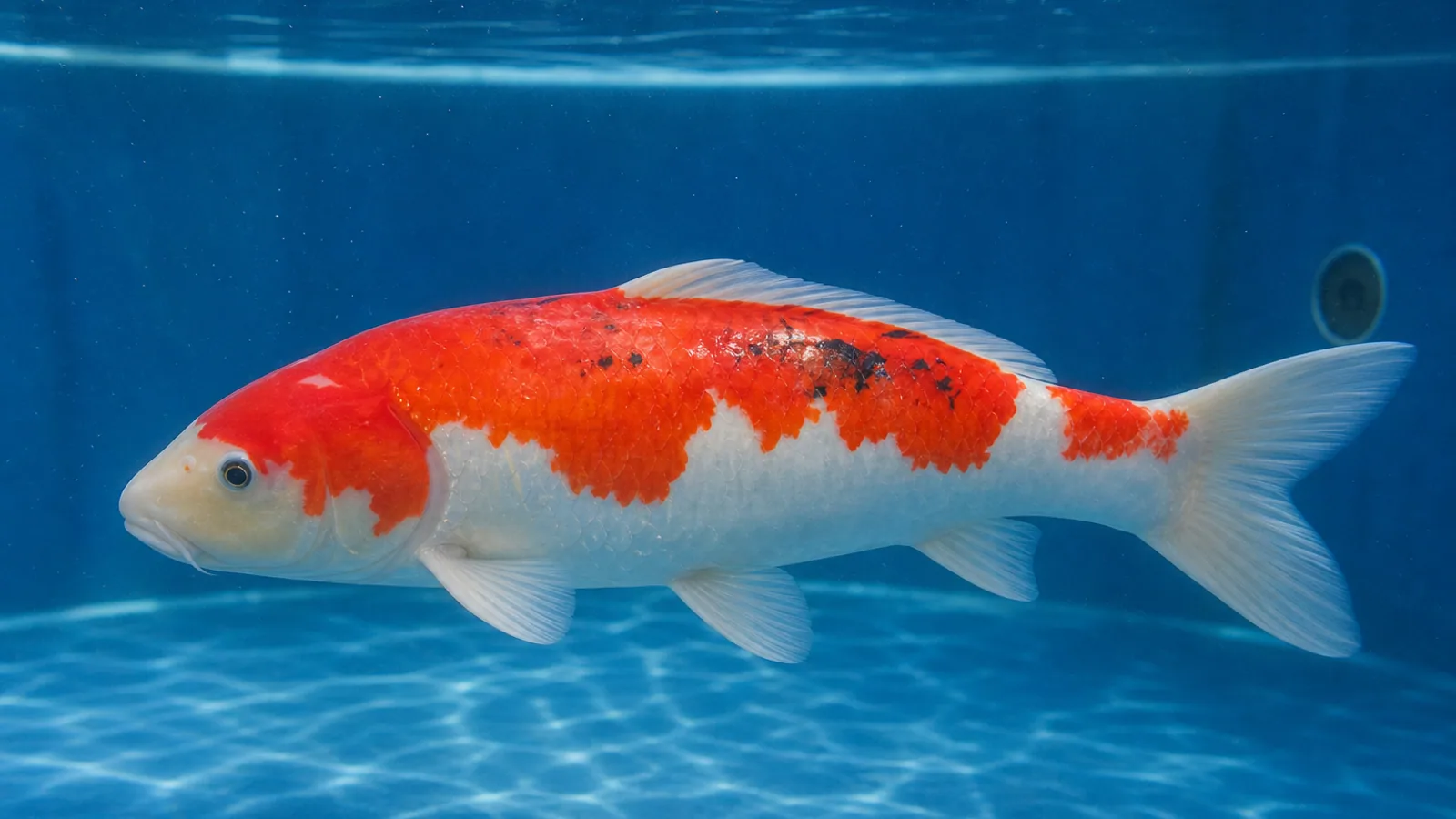
What is Hikui?
Hikui is a skin disorder described in koi carp, particularly in varieties with red (Hi) markings such as Kohaku, Sanke and Showa. For a short overview, see the Hikui entry in the Vetofish glossary.
What signs may be observed?
Lesions are generally visible on the back or top of the head. They may appear as thickened, reddened, inflamed or superficially eroded skin, sometimes with small haemorrhagic areas and changes in pigmentation.
Progression varies: some lesions remain localised, while others progress or recur. The fish may otherwise appear well, but this does not confirm the diagnosis.
How is the diagnosis confirmed?
The appearance of a skin lesion is not specific. Bacterial, viral, fungal or parasitic infections, trauma, sunburn and other tumours can produce similar signs.
A veterinary examination is therefore required. Depending on the presentation, this may be supplemented by examination of skin and mucus samples, microbiology, cytology or a biopsy with histopathology.
What should be done in the meantime?
- Photograph the lesion and monitor its progression.
- Check water quality and the fish’s behaviour.
- Minimise handling and stress.
- Do not scrape the lesion or apply disinfectants or antibiotics without a diagnosis.
- Seek veterinary advice promptly if the lesion spreads, bleeds or ulcerates, or if the fish’s general condition deteriorates.
Treatment depends on the exact nature of the lesion and cannot be determined from a photograph alone.