

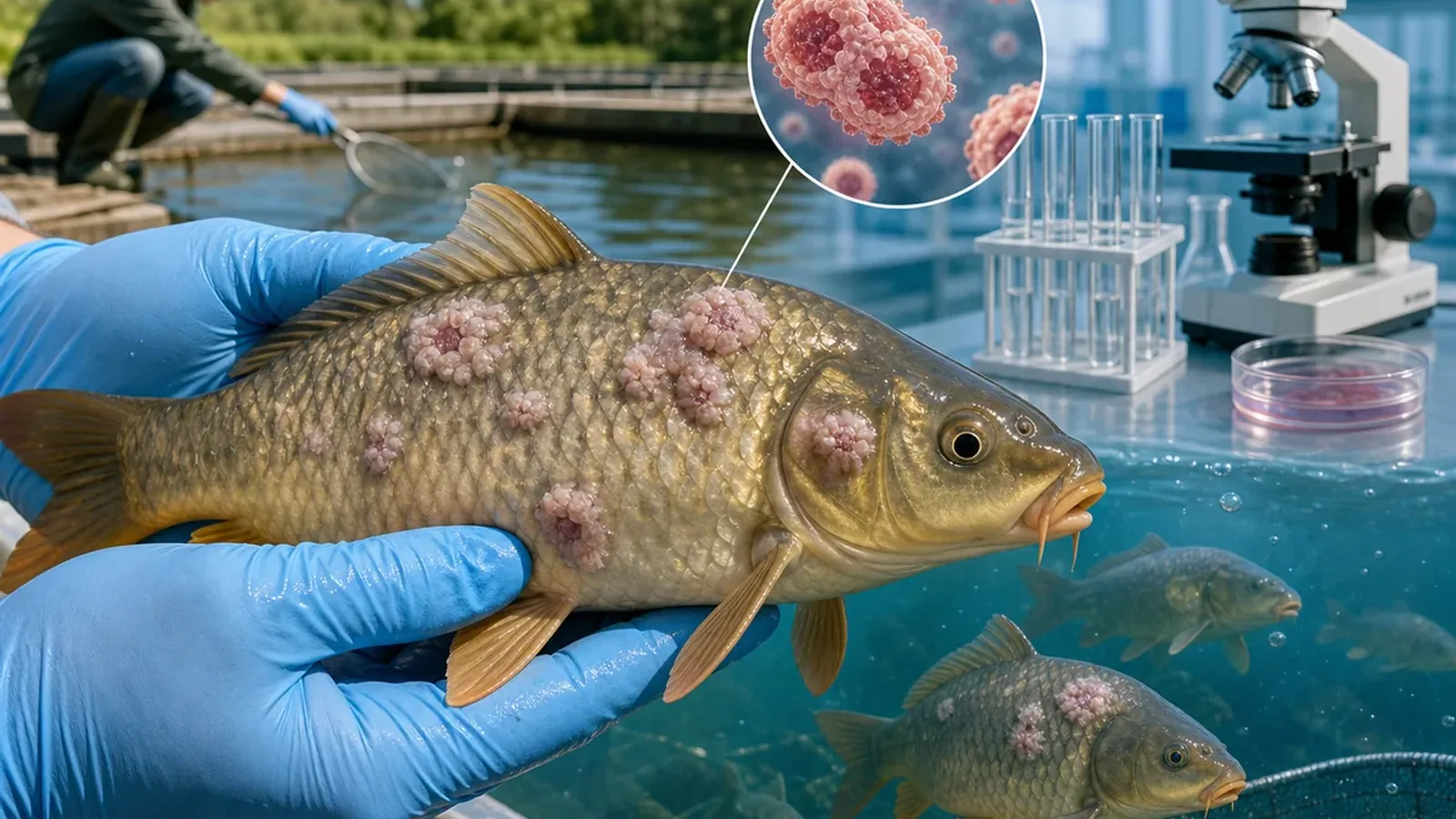
What is Pox Carp?
This is a cutaneous neoplasia, of viral origin, very common in carp. Clinical signs appear when the water temperature is low (in fall, winter and sometimes early spring).
The smallpox virus (Herpesvirus, CyHV1) multiplies in the skin (the lesions look like candle wax stains), then the skin peels off (ulcer). Skin ulcers can become superinfected by environmental bacteria (generally Aeromonas). Smallpox can also affect the fins and eyes.
Smallpox is contagious through close contact with infected fish (at the stage where the skin is ulcerated). Lesions develop in 60 days at 10°C, 30 days at 15°C. Susceptibility to the virus varies from one individual to another, and some “hardy” (less selected) individuals may never develop lesions.
Smallpox is benign in adult carp but it can cause mortality in individuals less than 8 weeks old. There is no curative treatment that can eradicate this virus.
Normally, as soon as the water temperature increases in spring, the carp’s immune defenses strengthen and the wounds regress. It is possible to accelerate the regression of lesions by supplementing food with high doses of vitamin C (known as “megadoses”, of the order of 4 to 6 g per kilogram of food). If above 20°C, the lesions do not regress, this may be a sign that an underlying problem is present.
When the skin flakes, it is preferable to limit contamination to other fish (and secondary infections), to isolate the affected individuals (if possible) and to treat the wounds locally (betadine or water-resistant antiseptic dressing).