

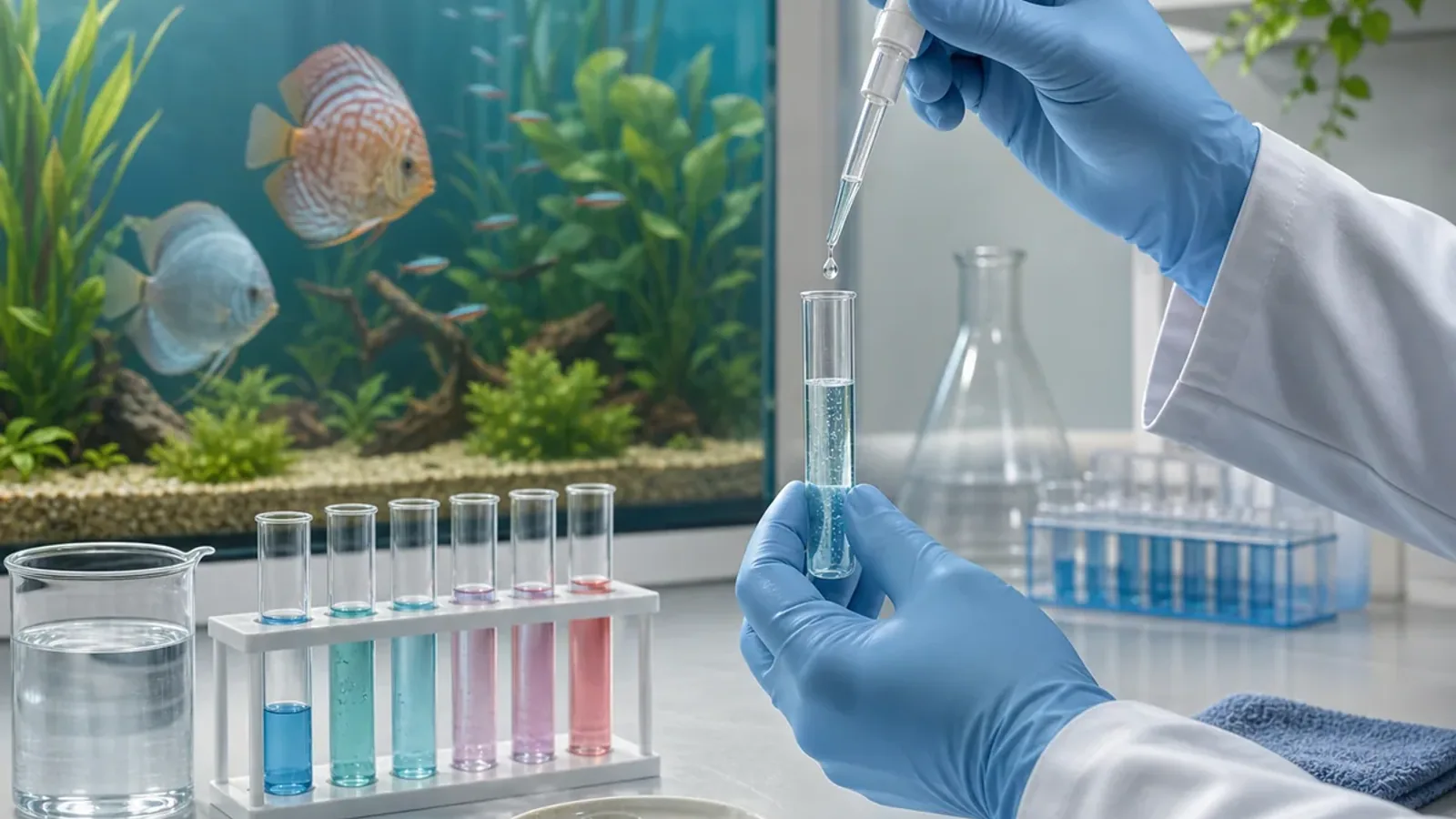
How to measure the buffering capacity of water (TAC, KH)?
The buffering power (or alkalinity) is the ability of water to limit its pH variations under the effect of acids or bases. The higher it is, the more stable the pH will be during the day.
In the absence of water change or dissolution of carbonate substrates (e.g.: limestone, oyster shells), the buffering power decreases over time, under the action of carbon dioxide (CO2) produced by the respiration of fish and plants.
From a chemical point of view, it is the total concentration in the water of hydroxide ions HO-, ions carbonates CO32-, hydrogen carbonate ions HCO3- (also called bicarbonates) and to a lesser extent phosphate ions PO43-, silicates SiO32- … Depending on the country, this concentration is expressed differently: Complete Alkalimetric Title (TAC in French degree) or Carbonate Hardness (KH in German degree). °fH°dH°eppmFrench degree (TAC)1 °fH =10.5600.70210German degree (KH)1 °dH =1.7811.25317.8English degree1 °e =1.430.798114.3ppm CaCO3 (USA)1 ppm =0.10.0560.071
In fresh water, the buffering power does not should not drop below 9 °fH (TAC) or 5 °dH (KH).
In practice, alkalinity can be measured with a simple colorimetric method (reading with the naked eye) or more precise (reading by a photometer).
Examples of liquid colorimetric testing:
Sera KH Test Alkalinity analysis kit (reference Hanna HI 3811)
Example of single-parameter photometer :
Mini fresh water alkalinity photometer (reference Hanna HI 775) Liquid reagent for fresh water alkalinity, approximately 25 tests (Hanna HI reference 775-26) Alkalinity standard solution (Hanna HI reference 775-11)
Order online
Consult note boutique to order a fresh water analysis.