

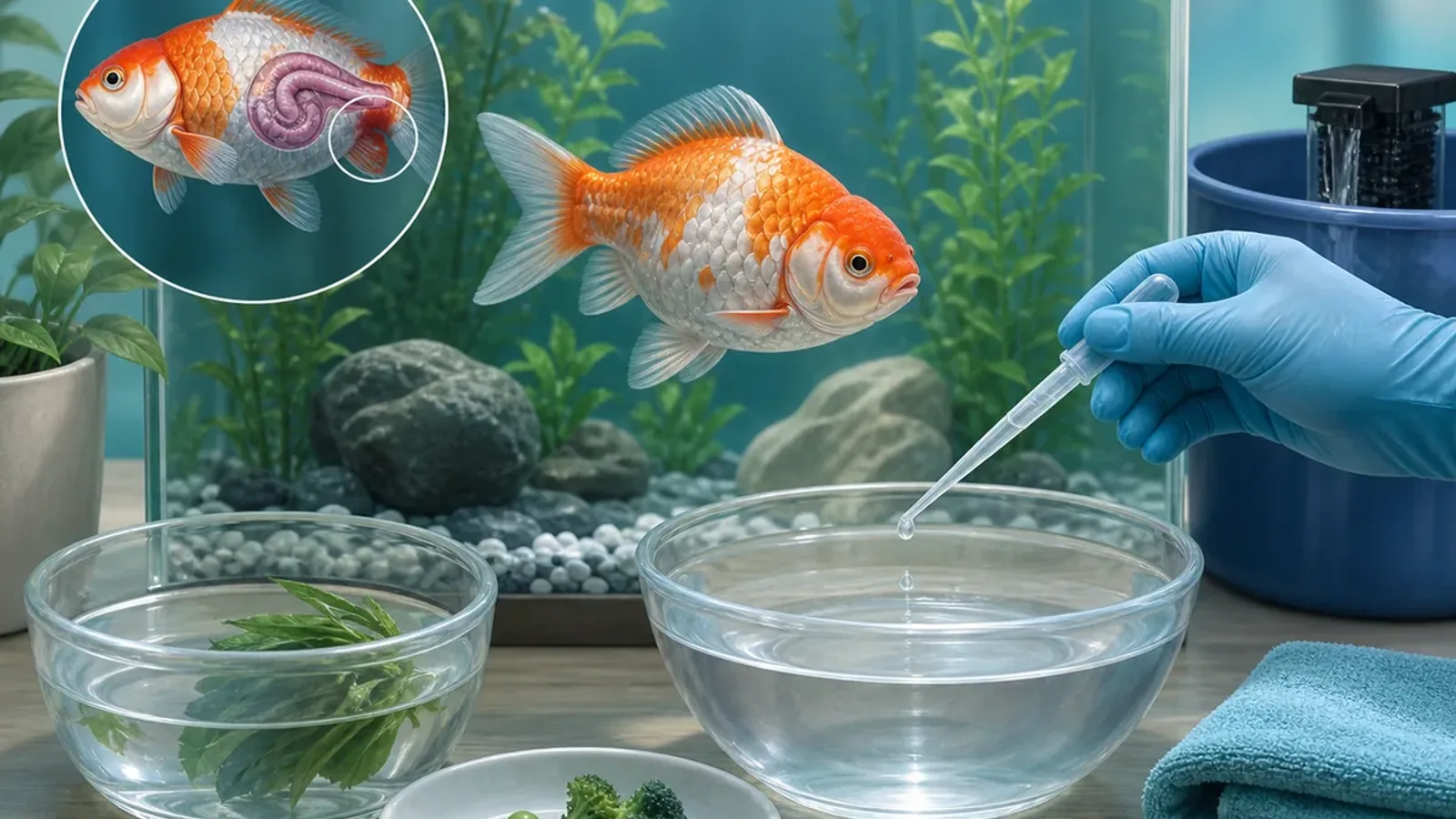
How to deal with a constipated fish?
Certain species of fish are frequently subject to digestive disorders. This is the case, for example, for goldfish, fighters, discus or African cichlids. The digestive transit slows down or even stops completely (obstruction), and in advanced cases, enteritis (filamentous white stools), swelling of the abdomen or buoyancy disorders can aggravate this clinical picture.
As a first intention, it is recommended to isolate the fish from the other residents (in a dedicated aquarium), then to fast it for 48 to 72 hours.
If this forced diet does not resolve the problem, resorting to a laxative may be helpful. Classically, there are two possibilities of administration: the oral route and balneation.
Oral laxative: castor oil
If the fish still has an appetite, it is possible to have it ingest a little castor oil (available in pharmacies), either directly with an esophageal probe of suitable diameter, or by coating a food in the form of granules. Castor oil Ricinus communis owes its purgative activity (stimulates intestinal motility) to a fatty acid, ricinoleic acid.
Balneation laxative: Epsom salt
Epsom salt (available in pharmacies) is chemically magnesium sulfate (MgSO4). It must be used with caution because certain species such as Characids do not tolerate magnesium sulfate at the therapeutic doses used. The usual dosages for goldfish, fighters, discus and African cichlids are:
TypeDuration of the bathDose in grams per literLong bath2 to 3 days0.2 g/LShort bath15 to 30 minutes*5 to 10 g/L
- Warning: the fish must be immediately removed from the bath if it exhibits behavior suggestive of stress (agitation, very rapid breathing, loss balance).