

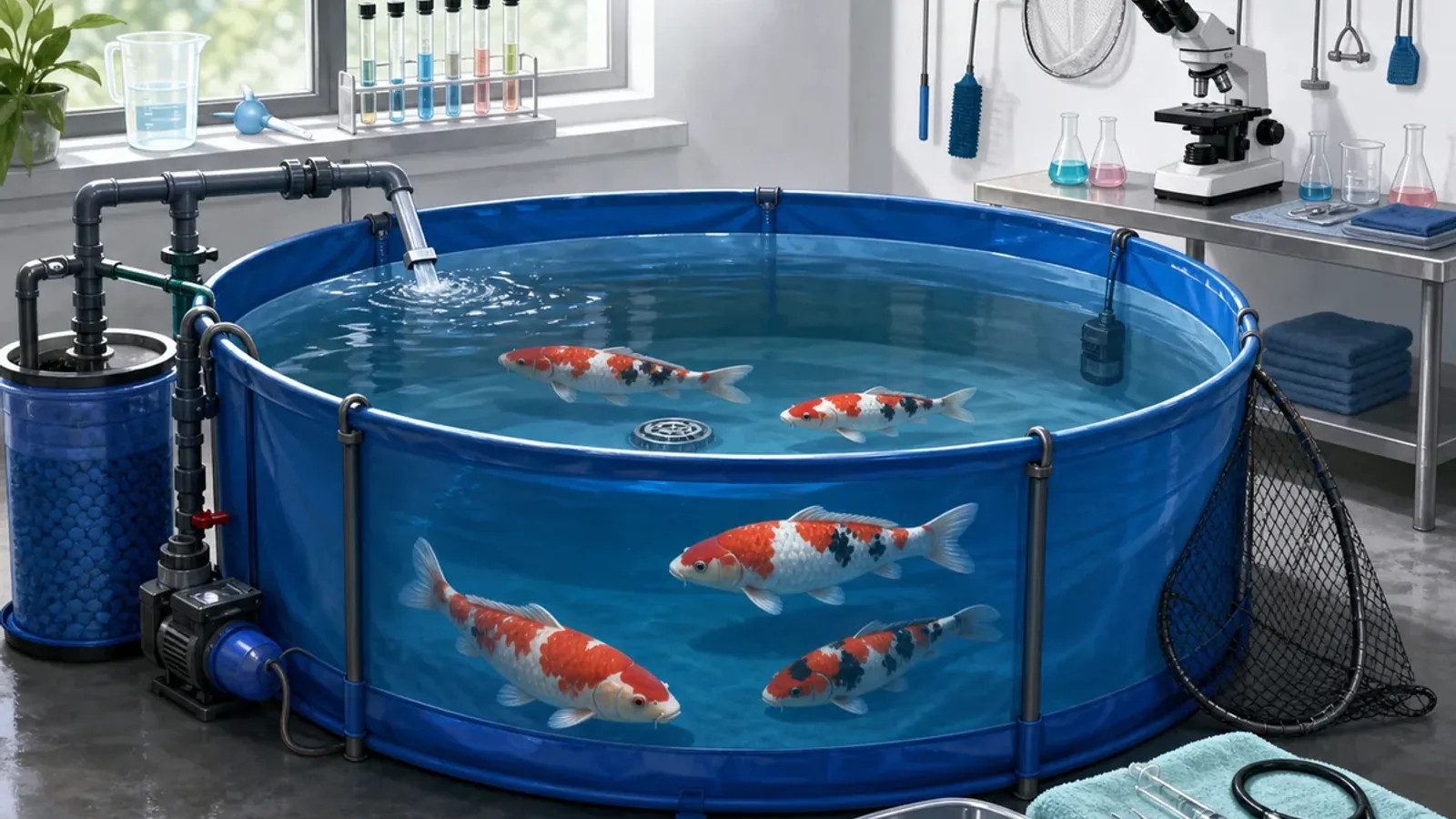
How to set up a quarantine/hospitalization tank for koi carp?
The isolation of new acquisitions and their treatment in the event of a disease declaration are the only defenses against an epidemic which could have catastrophic consequences in your pond.
This proximity allows close control: observation with the naked eye of the slightest physical abnormality (wound, skin infection, parasites), physiological (breathing, food intake) or behavioral (rubbing, lethargy).
The quarantine tank is the ideal place to provide care attentive to sick animals (repeated local treatments, balneation treatments, etc.) or to implement medical prophylaxis (preventive treatments).
Necessary materials
- A high-density polyethylene (HDPE) tank with a volume of 1 m3 (1000 liters) graduated from which you cut the upper face: example of model (around €200)
- A taut net to prevent the carp from jumping out of the tank
- A aerator with diffuser (bubbler) held at the bottom of the tank
- A permanent ammonia tester: Ammonia-Alert from the SeaChem brand
- An external pump with sufficient length of pipe to fill the tank with water from the pool
- Possibly external filtration (not necessary if the water is renewed at least every 48 hours)
Rules to follow
- Place the tank at a reasonable distance from the pool to limit the risk of contamination.
- Protect the tank from heat (shaded place, insulation of walls) or cold (room, insulation of walls, heating).
- Do not house in the tank only one koi carp (regardless of its weight), or several koi carp whose total weight does not exceed 2 kg.
- Have dedicated equipment: landing nets, filtration, aeration.
- Only intervene in quarantine (feeding, maintenance) after interventions in the pool.
- Ensure that you can drain the tank easily (drainage pipes connected on the drain valve, sump, etc.).
- Monitor the ammonia concentration daily and change the water if necessary.