

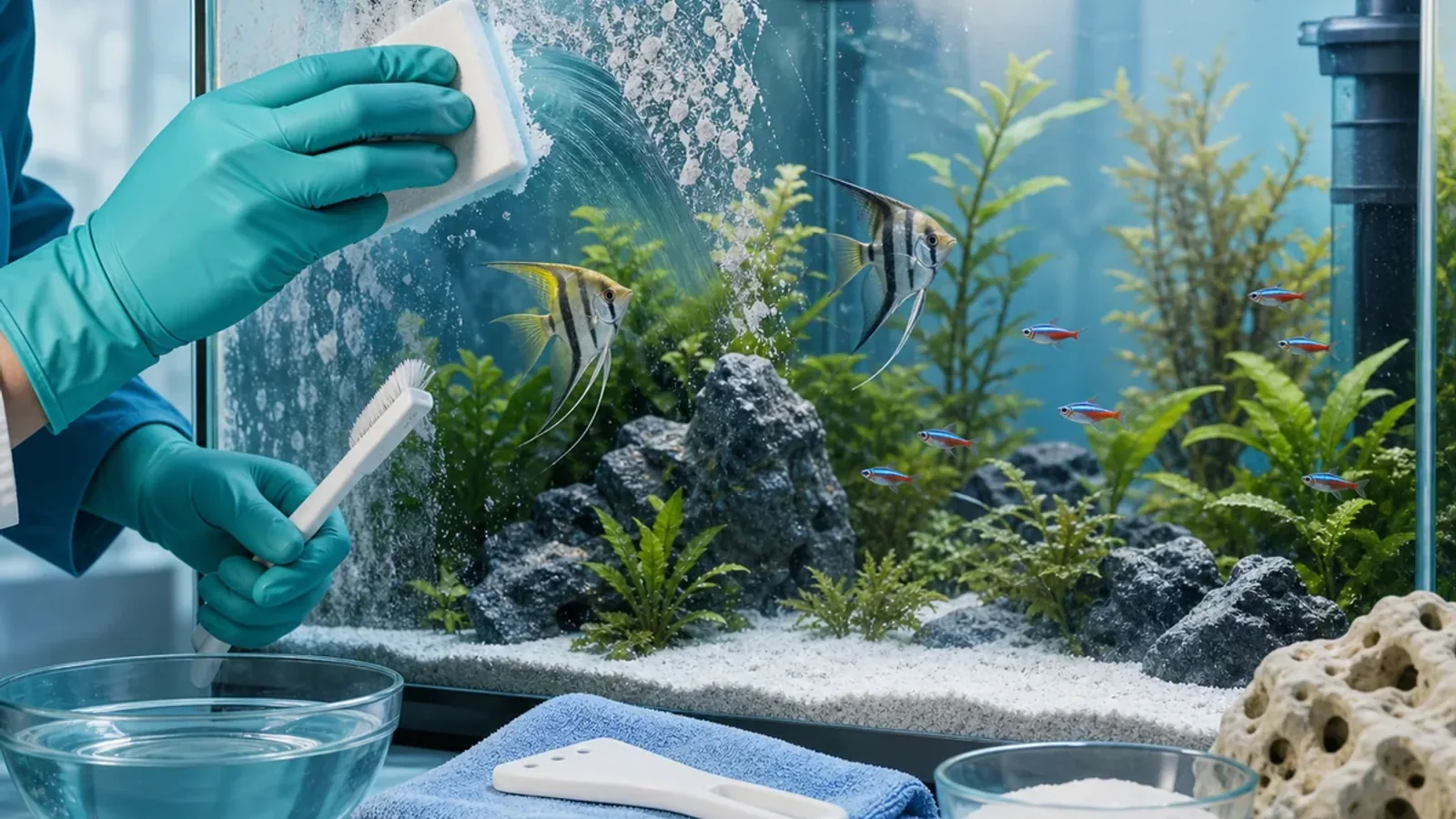
How to remove limescale deposits in an aquarium?
Scale can form in an aquarium due to water evaporation, which leaves behind minerals such as calcium carbonate.
Scale can be an aesthetic problem, but can also affect water quality by raising the pH and hardening the water, which can be harmful to fish and plants.
Here are the steps to take to remove scale from an aquarium:
- Partially drain the aquarium water
Before you start removing limescale, you should drain about a third of the aquarium water to make cleaning easier.
- Remove decorations
If you have decorations, carefully remove them and place them in a bucket of clean water. Do not clean them with chemicals or detergents, as this may be harmful to fish.
- Use a descaler
Soak a clean sponge in white vinegar and gently scrub the walls of the aquarium. Avoid rubbing too hard, as this could scratch the glass or damage the silicone.
An alternative is to use citric acid or tartaric acid concentrated between 5 to 10%. To do this, you must dilute 5 to 10 grams in 100 mL of water.
- Rinse thoroughly
After rubbing the walls with a descaler, rinse the aquarium thoroughly with clean water to remove any vinegar residue.
- Clean the decorations
While you are cleaning the aquarium, you can also clean the decorations. Use a soft brush to remove any accumulated limescale.
- Fill the aquarium
After cleaning the aquarium, fill it again with clean water.