

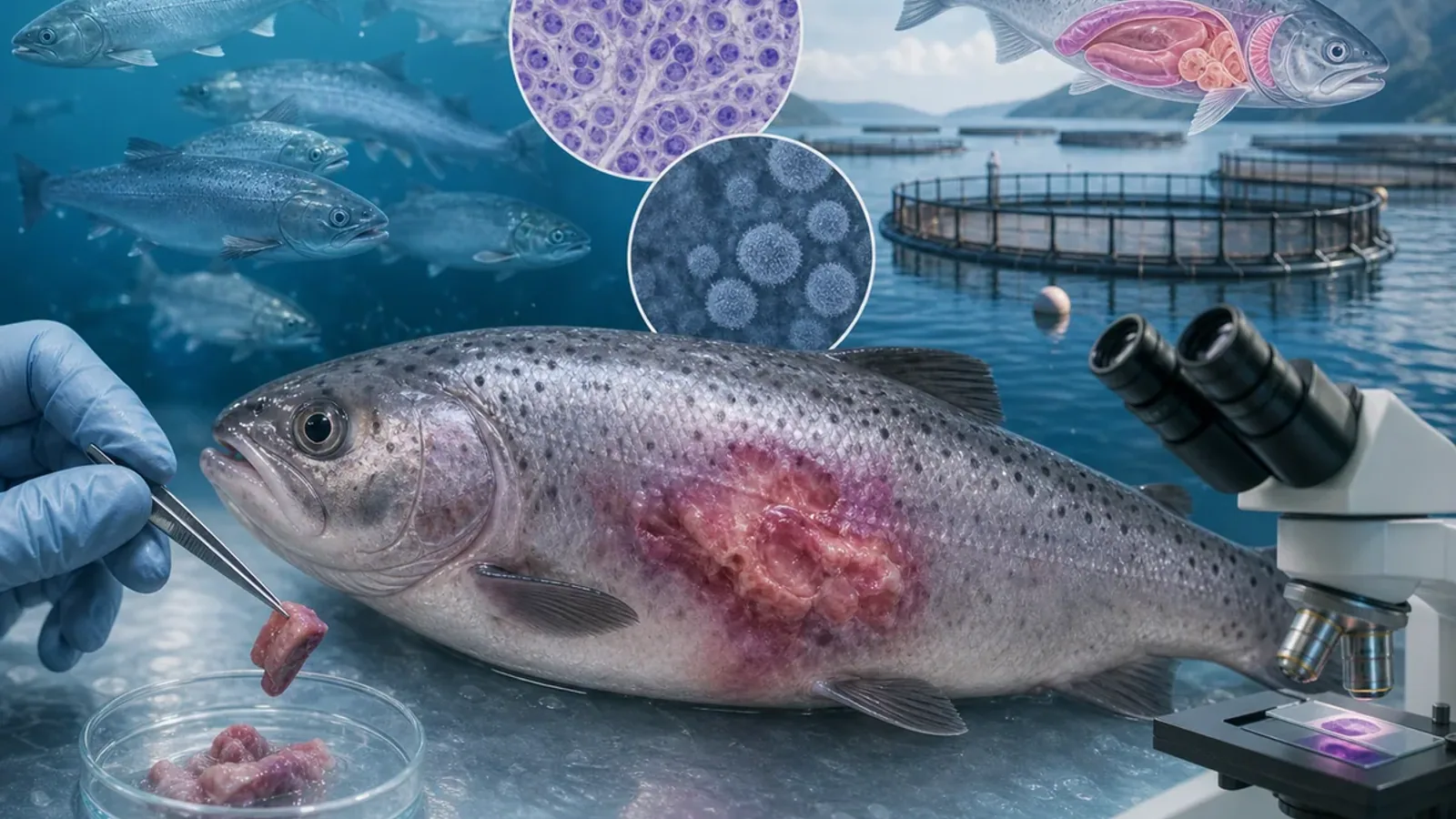
What is IPN (infectious pancreatic necrosis)?
This is a disease which mainly appears in young salmonids (rainbow trout and river trout, Atlantic salmon, char) as well as in pike fry. But almost all freshwater and seawater fish are susceptible to the disease, as are molluscs (mussels).
Signs of disease
The disease often begins when fish are first fed (up to the 20th week of life). Affected fish swim in an uncoordinated manner (spiral or corkscrew swimming), and often lie on their sides at the bottom of the pool. They also have dark coloration, protruding eyes (exophthalmus), a swollen belly, and strings of whitish feces (pseudofaeces). Losses amount to 10-90 percent of affected fish. With the exception of Atlantic salmon, older fish show no symptoms and do not die from the disease either.
Contamination and spread
The sources of contamination are sick fish as well as fish latently carrying the infectious agent (without showing symptoms). The infectious agent is enriched inside the eggs and semen and is transmitted to the fry. Fish can carry the infectious agent for several generations without showing symptoms and can even carry and transmit it for several years.
Indirect transmission via water is also possible, as well as via fish-eating birds, utensils and means of transport.
Distribution of the disease
Infectious pancreatic necrosis is found in certain regions of Europe, America and from Asia.
Infectious agent
The infectious agent is a virus of the Birnaviridae family. This virus is very resistant. It survives up to 8 months in water.