

How can KHVD be prevented and controlled in a carp pond?

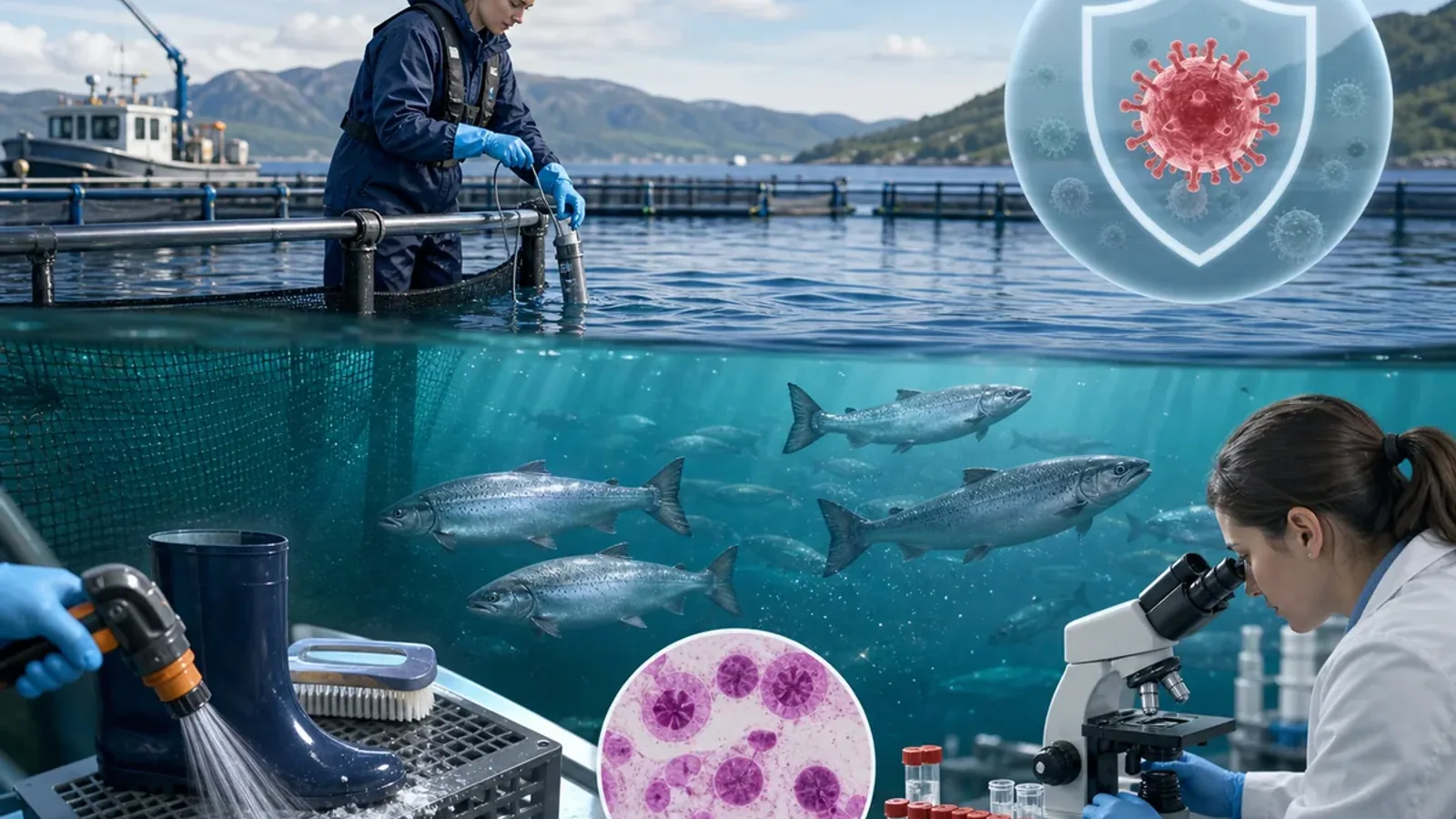
KHVD prevention starts with controlling introductions and contact between stocks. No medicine, pond-heating regime or single test guarantees that KHV has been eliminated from a carp population.
Before introducing fish:
- select a supplier who can document stock origin and health history;
- keep new fish in a genuinely separate quarantine tank with dedicated water and equipment;
- agree the observation period and any risk-based testing with a veterinarian;
- do not share nets, hoses, containers, water or fish between units without an appropriate cleaning and disinfection protocol for aquatic equipment.
A standard quarantine duration cannot compensate for a shared water circuit or missing traceability. One negative result also cannot exclude latent carriage.
What should be done when KHV is suspected?
Stop all introductions and movements immediately. Keep ponds separate, minimise handling, record mortalities and water parameters, and contact a veterinarian so that sampling is coordinated with the laboratory. Do not heat a pond beyond the species’ needs in an attempt to “kill” the virus: experimental data on inactivation outside the host do not provide a safe treatment for carrier fish.
A safe and effective commercial vaccine is not widely available internationally. The status of any vaccine or medicine must be checked in the country concerned and should never be inferred from an experimental trial.