

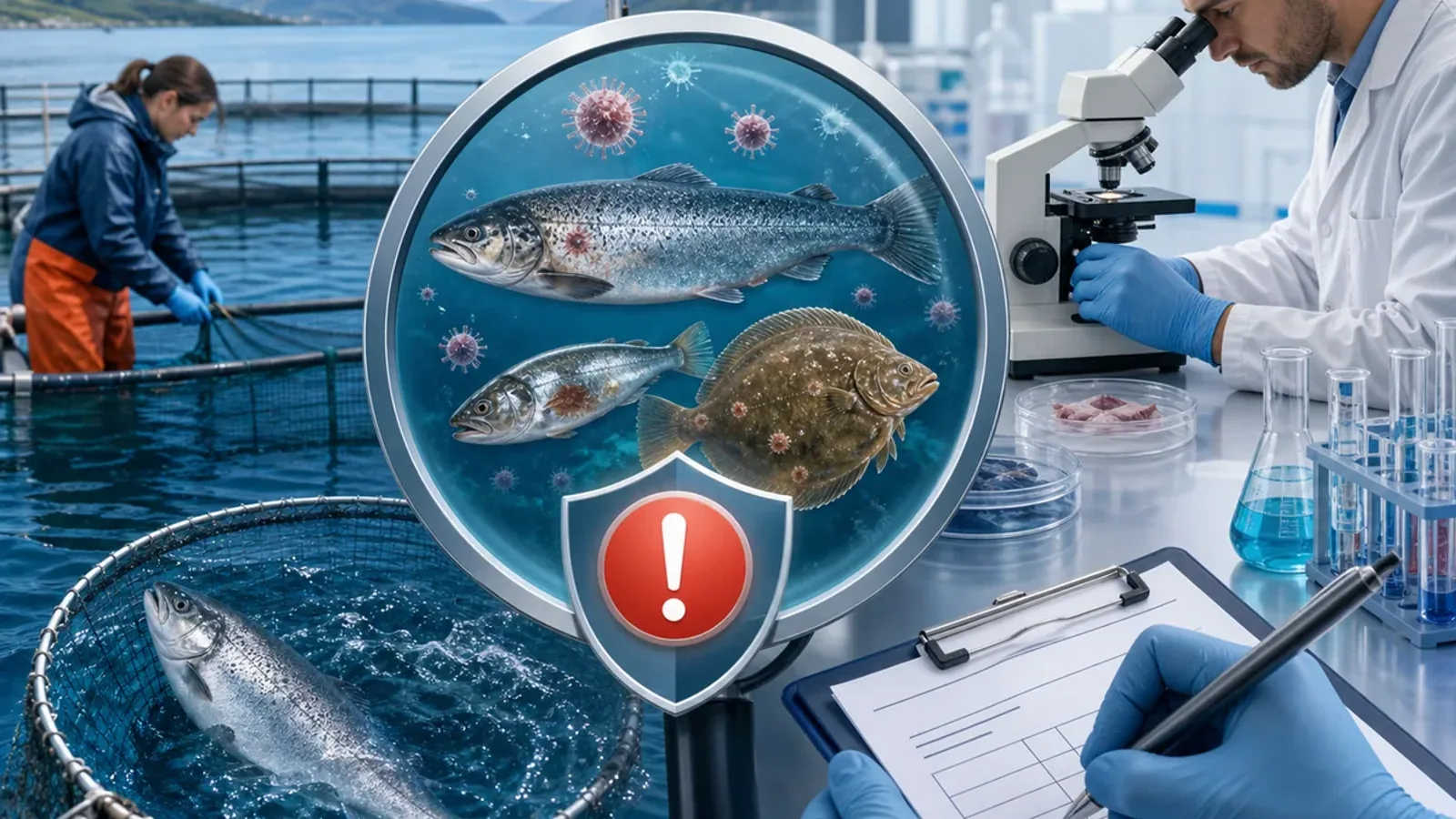
What are the notifiable diseases?


The aquatic diseases listed below appeared in the 2015 OIE edition. To establish the requirements that apply today, consult the World Organisation for Animal Health (WOAH) and the current national rules.
A notifiable animal disease (MADO) is, as defined by the World Organization for Animal Health (OIE), an animal disease included in a list established by the Government Veterinary Administration of each member, and the detection or suspicion of which must be brought immediately to the attention of the Veterinary Authority in accordance with national regulations, in order to monitor a possible departure epidemic and take appropriate measures to contain it. Operator duties also depend on the aquaculture establishment’s registration or animal-health approval status.
Fish diseases
- Koi carp herpesvirus (HCV)
- Aphanomyces invadans infection (epizootic ulcerative syndrome)
- Gyrodactylus salaris infection
- Infection with RHP deleted variants of infectious salmon anemia virus or RHP0 variants of this virus
- Salmonid alphavirus infection
- Iridovirosis of Japanese sea bream
- Epizootic hematopoietic necrosis
- Infectious hematopoietic necrosis (IHN)
- Viral hemorrhagic septicemia (VHS)
- Spring viremia of carp
To verify whether an aquaculture establishment is officially recognised as free from VHS, IHN or KHV, consult the current official list.
Amphibian diseases
Shellfish diseases
- Necrotizing hepatopancreatitis
- Yellow head virus infection
- White spot disease
- White tail disease
- Infectious myonecrosis
- Infectious hypodermal and hematopoietic necrosis
- Crayfish plague (Aphanomyces astaci)
- Taura syndrome