

Amphibian photo-identification: checking apparently new individuals
An unmatched photograph does not establish that an amphibian has never been recorded before. An open comparison of four photo-matching tools shows why software choice, image quality and review of candidate matches need to be evaluated together.


- Content type
- Practical guide
- Sector
- Research facilities
- Animal group
- AmphibiansUrodeles
- Keywords
- Capture–recaptureLightingStress
A comparison of image collections, not a universal ranking
The 2017 study by Matthé and colleagues in Ecology and Evolution compares four photo-matching tools: Wild-ID, I 3 S Pattern+, APHIS and AmphIdent. It uses four amphibian pattern-image collections involving newts, salamanders and yellow-bellied toads. Some collections combine closely related species. Their thousands of photographs must not be described as thousands of independently followed animals.
Known matches, established by visual comparison, are used to assess where matching images appear in the software’s ranked results. Performance varies with the collection, algorithm and number of candidate images reviewed. This is evidence about a continuing methodological problem. It does not rank current software releases or validate the result for every animal with a spotted pattern.
The original setting is photographic capture–recapture. A research facility considering an identity-record application would need to evaluate that transfer using its own animals and images. The paper does not validate automatic identification across all captive amphibians, including models whose markings may be indistinct or change during the period of interest.
A missed match can create an apparently new animal
A false rejection occurs when a real correspondence is not retrieved. If staff then assign a new identity, photographs of one animal can be split between separate records. The database appears to gain an individual while actually accumulating an identification error. This differs from falsely joining photographs of different animals under one identity.
The distinction belongs in the project vocabulary. A measure of known matches retrieved does not automatically measure how often different individuals are wrongly joined. The study mainly assesses missed known matches; it does not demonstrate that false acceptance is absent. Describing the method as error-free would therefore go beyond the evidence.
An “unresolved correspondence” category can make that uncertainty visible in a working record. This is an organisational suggestion, rather than an experimental result from the paper. It encourages staff to retain candidate images and the reason for their decision instead of immediately treating a failed search as proof that an animal is new to the record.
A rank is not an identity probability
Photo-matching software returns an ordered list of more or less similar images. First place does not make a match certain. A similarity score does not become a validated probability of identity merely because it is displayed numerically. Interpreting it requires information about its construction and the evidence used to evaluate that interpretation.
The number of candidates reviewed is part of the method. Checking only the first result is different from reviewing a longer list. A working procedure should state what staff actually inspect and how uncertainty leads to further review. The time available for this work is a practical constraint to record, rather than a basis for promising a universal saving in staff effort.
For a local trial, request separate counts of known matches retrieved, known matches missed and decisions that remain uncertain after human review. Record the number of photographs available per animal as well. Several already identified views may change the chance of retrieving that animal, but they do not become independent demonstrations of individual identity.
Include photography and preparation in the assessment
The paper describes differences in image preparation between tools. Cropping, colour transformations and alignment therefore belong to the evaluated workflow. A software comparison becomes difficult to interpret if one tool receives differently prepared images without that difference being reported. Retaining originals and documenting transformations allows later review.
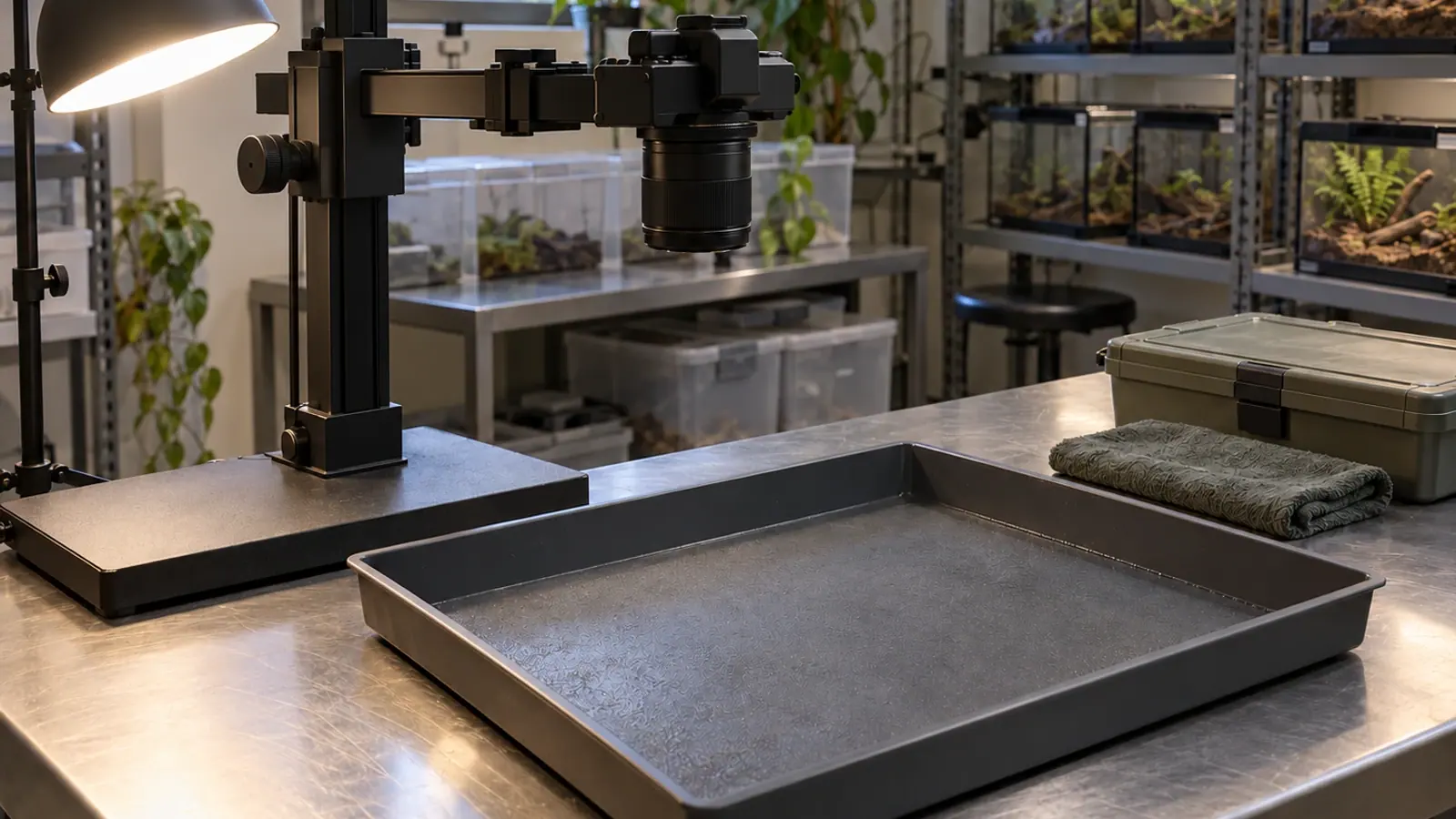
Posture, camera angle, focus and glare can alter the apparent pattern. The team needs to identify which variations make a comparison unreliable in its own setting. Reproducible illumination does not mean arbitrarily intense light: the photographic arrangement must remain appropriate for the animals and consistent with the facility’s requirements.
Evidence supporting a matching method does not, by itself, justify extra handling or avoidable stress. Observation arrangements need discussion with the responsible staff. In particular, a procedure described in field research should not be converted into general permission to restrain another species for another purpose. The validation question and the animal-care decision need to remain explicit.
If an image cannot support the intended comparison, record that limitation. Deleting poor images without documenting their frequency may make the remaining collection look easier to analyse than the actual workload. Retention and exclusion rules should make it possible to distinguish a photography problem from a matching problem before either is labelled a failure of identification.
Keep a check independent of the proposed matches
A validation sample needs correspondences that can be checked independently of the software’s suggestions. Building the reference identities solely from those suggestions would hide some of the errors the trial aims to detect. Describe excluded photographs and the reasons for exclusion. Results obtained only from the easiest images do not describe the whole operational task.
The paper declares that its first author develops the commercial AmphIdent software. That disclosure is relevant to critical appraisal. It does not invalidate the observations by itself, but it supports the case for a documented local assessment and independent checking of decisions. This article recommends no automatic purchase or selection of a particular product.
Keep the original photograph, reviewed candidates and reasoned decision together so the identification can be reviewed. Useful photo-identification is more than a filename at the top of a list. Staff should be able to understand why an identity was retained, divided or left unresolved, then correct it while preserving the history of the decision.
Vetofish provides training for research teams to define photo-identification trial questions, recognise validation bias and organise proportionate records. The purpose is to prepare a method that can be checked, without promising perfect automatic recognition or the disappearance of human review.
To move from evidence to action, explore our training courses and our expertise for research facilities.


