

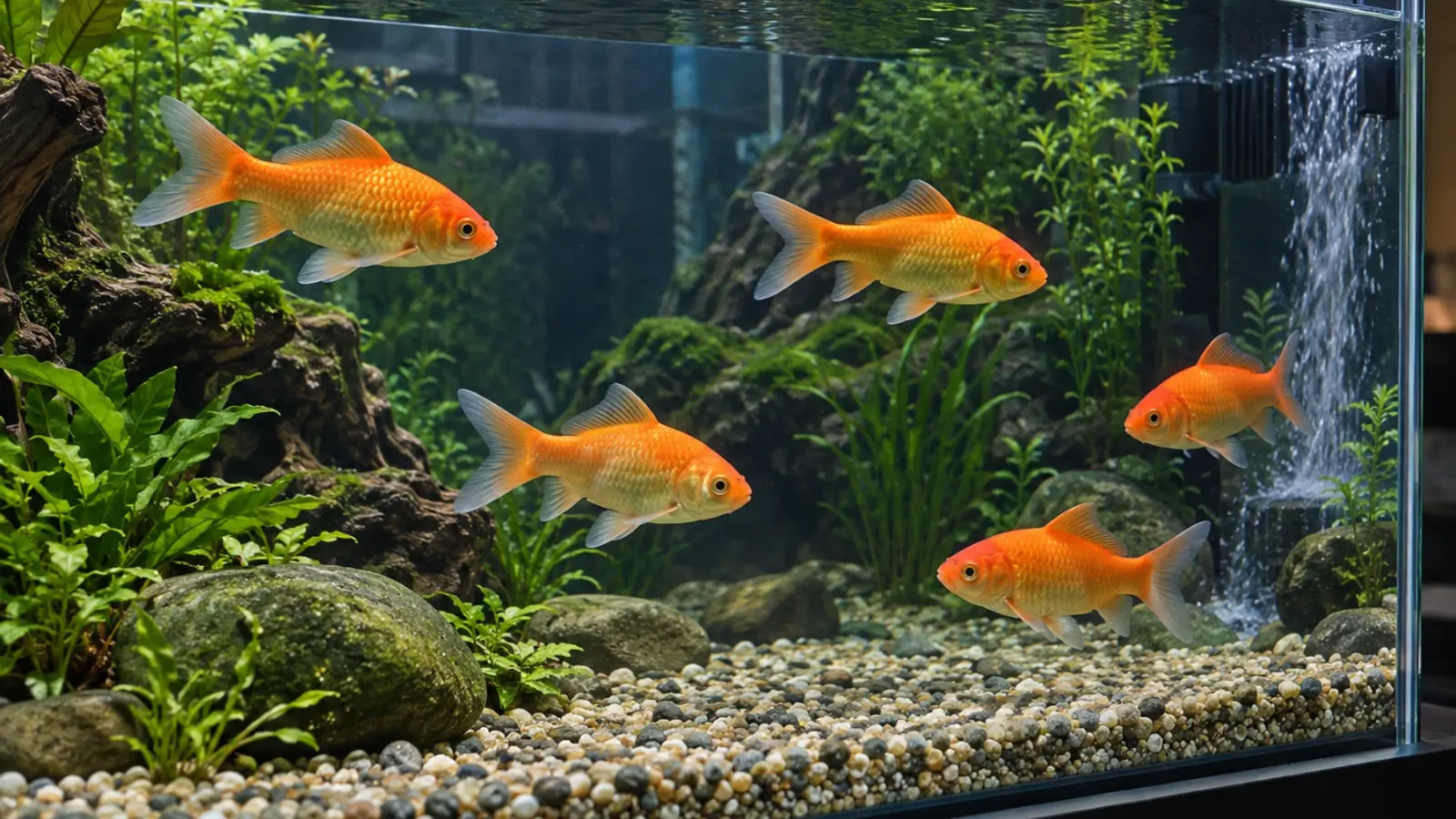
Trichodina in fish: interpreting the sample
Finding Trichodina on a freshwater fish does not by itself justify treating a whole collection. Abundance, sampling site, gill condition and environmental quality need to be assessed alongside clinical observations and discussed with the veterinarian.
- Content type
- Practical guide
- Sector
- Public aquariums
- Animal group
- Fish
- Theme
- DiseasesDiagnostics
Finding an organism does not establish its role
A freshwater fish rubs against objects, ventilates more rapidly or produces excess mucus. Examination reveals moving organisms in a skin or gill sample. The finding needs to be assessed against the fish’s condition. It does not establish that Trichodina explains every sign, or identify an appropriate treatment for the whole tank.
Virginia Cooperative Extension’s guide, reviewed by subject specialists in July 2024, explains that small numbers generally cause little difficulty, whereas large numbers can be associated with serious disease. This distinction is not a universal numerical treatment threshold. Fish species, life stage, affected tissue and other findings influence how the observation should be interpreted.
For a public aquarium, the immediate task is to connect the laboratory finding with the history of the affected animals. A parasite report and a keeper’s observations should become parts of the same investigation.
Recognise the group without claiming an exact species
Trichodinids are ciliates, rather than worms or crustaceans. Their flattened shape and rotating movement help guide recognition. An internal ring of denticles is an important feature, although related genera can have a similar appearance. A brief wet preparation does not always support identification to species.
The UF/IFAS pictorial guide places Trichodina on the skin, fins and gills of freshwater fish and compares it with other motile ciliates. It is an aid to visual identification. The authors explicitly distinguish that purpose from a complete account of each parasite and its clinical significance.
Useful photographs or short recordings can help a diagnostic laboratory assess movement and morphology. Sampling location, magnification and the interval before observation should accompany the material. Even a clear recording loses diagnostic value when nobody can establish which tissue it represents.
Assess abundance alongside tissue changes
An ectoparasite occurs on the external surfaces of its host. Mucus and debris form part of the immediate environment occupied by trichodinids. High burdens can irritate the epithelium. At the gills, tissue changes may impair an organ essential to exchanges between the fish and the water.
The presence of an organism in a sample and an injury consistent with the fish’s signs are different findings. Gill lesions, irritation and tissue proliferation are not exclusive to one agent. Agreement between location, abundance and tissue changes strengthens a parasitic explanation without excluding another cause or a concurrent infection.
Counts become more informative when linked to a repeatable method: the type of preparation, area examined and fish sampled. Descriptions such as “numerous” cannot reliably be compared across different collection and examination methods. The veterinarian can decide which additional investigations are justified while avoiding unnecessary handling.
Young or small fish may also require particular attention. The extension guide identifies their susceptibility to severe problems, but that observation does not produce a single safe burden for every collection or developmental stage.
Investigate the system as well as the fish
The finding needs to be considered alongside maintenance conditions and recent events. UF/IFAS notes an association with water containing high concentrations of organic material. This does not mean that visual clarity alone can confirm or exclude a relevant environmental problem.
Organic accumulation, filtration performance, transfers, stocking conditions and changes in feeding provide useful context. Record temperature alongside the other water parameters routinely assessed at the facility. A measurement made after corrective work may not describe the conditions present when the signs first developed.
A sampling plan agreed with the veterinarian may compare affected fish, apparently unaffected companions and other tanks sharing the same circuit. This can help distinguish a local problem from a wider event. Failure to detect organisms in a limited sample cannot establish that an entire system is free of them.
Recent treatment history belongs in the same record. An intervention can alter both the clinical picture and what remains detectable, making an undocumented sequence harder to interpret.
Resolve the diagnostic question before treating the collection
Direct examination provides initial information about organisms present. Histopathology can add evidence when the investigation requires characterisation of lesions and their relationship with observed agents. It still depends on field information, including anatomical site, chronology and previous interventions.
Treatment decisions then need to consider the diagnosis, the condition of the animals and the constraints of the system. A display may contain several fish species with different tolerances, together with other organisms sensitive to particular interventions. A response intended to help affected fish must account for the collection and its biological support system.
Products and schedules described in US extension guidance are not authorisations for use in France or other jurisdictions. They also do not justify transferring a dose without assessment of species, environment and applicable requirements. The veterinarian makes the therapeutic decision. Detecting a ciliate is not a prescription.
Follow the outcome and review routes of introduction
Improved behaviour after intervention does not necessarily explain what caused the change. Clinical progress, parasite observations and system conditions should be assessed together. If organic loading and parasite abundance decline at the same time, the whole benefit cannot automatically be attributed to a medicinal product.
Quarantine arrangements and transfers of animals, water or equipment can be reviewed in light of the findings. Their purpose is to reduce opportunities for introduction and circulation under conditions appropriate to the facility. They cannot guarantee absolute freedom from parasites.
The objective is a documented health response followed by a useful assessment of recovery. Vetofish supports diagnostic investigations and laboratory testing for public aquariums, helping teams connect samples, lesions and system performance before choosing the next checks.


