

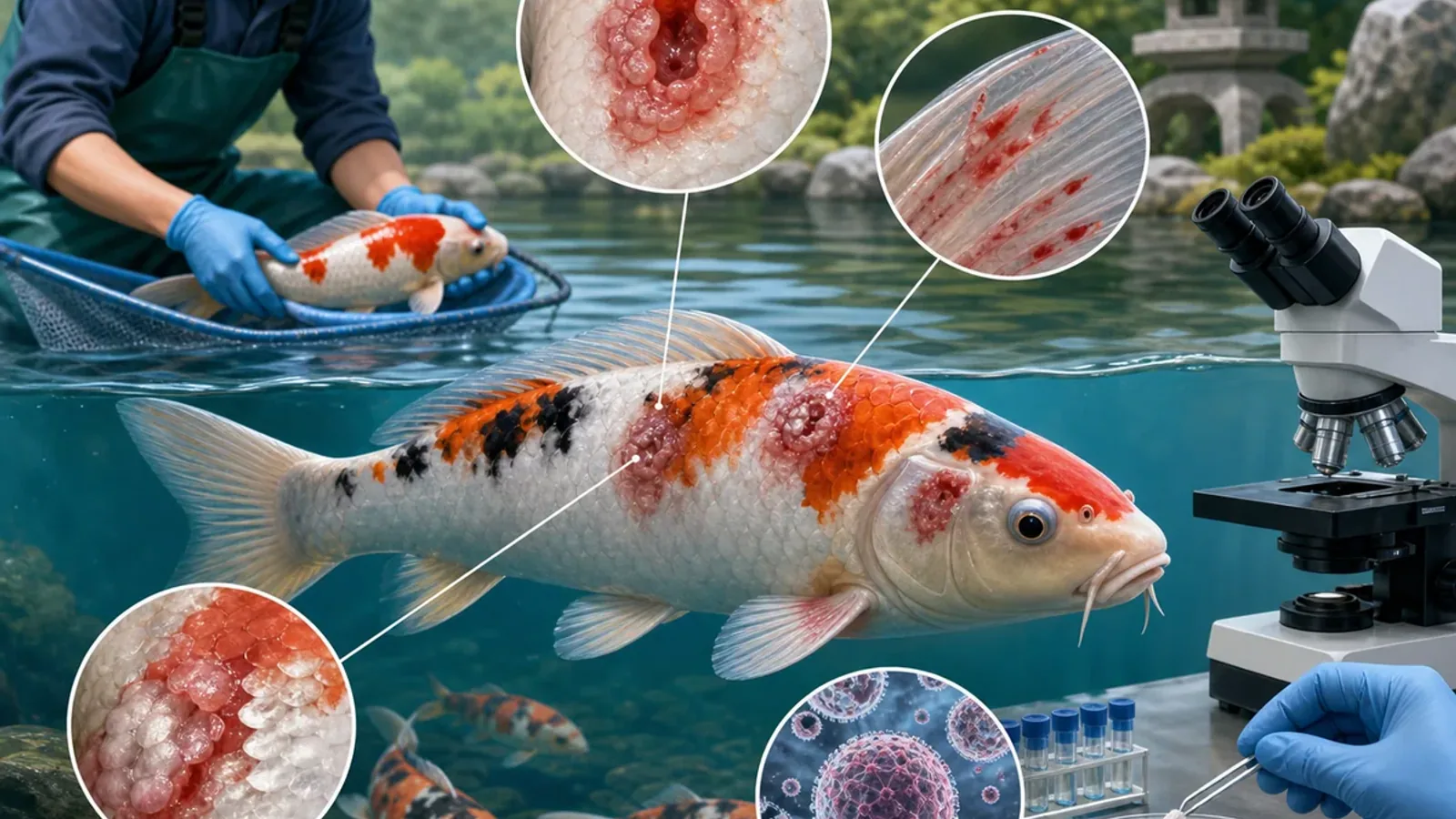
Which signs may suggest koi herpesvirus disease (KHVD)?

A rapid rise in mortality among common or koi carp, together with pale, discoloured or necrotic gills, should raise suspicion of KHVD. Fish may also become lethargic, separate from the group, gather near a water inlet or gasp at the surface.
Other possible signs include:
- excessive skin or gill mucus, sometimes followed by mucus loss;
- pale or red patches and a rough skin texture;
- sunken eyes;
- skin haemorrhages, fin erosion or loss of balance.
These signs are not specific. Poor water quality, parasitic or bacterial gill disease, koi sleepy disease (KSD) and other conditions can look similar. Localised skin lesions also require differentiation between conditions including carp pox and Hikui. Check water temperature, dissolved oxygen, pH, ammonia and nitrite immediately, then arrange examination of affected or freshly dead fish.
Can water temperature rule KHV out?
No. Clinical disease occurs mainly between 16 and 29°C, but this range is an epidemiological pattern rather than a diagnostic test. Carp may carry the virus without apparent disease, and temperature changes can influence its expression. Heating or cooling a pond to “test” fish can add stress and cannot replace laboratory investigation.
Pending veterinary advice, do not move fish, water or equipment to another pond.
For a movement within the European Union, check the guarantees associated with approved national KHVD measures (French summary) for the destination. Absence of clinical signs alone does not establish a compartment’s official health status.