

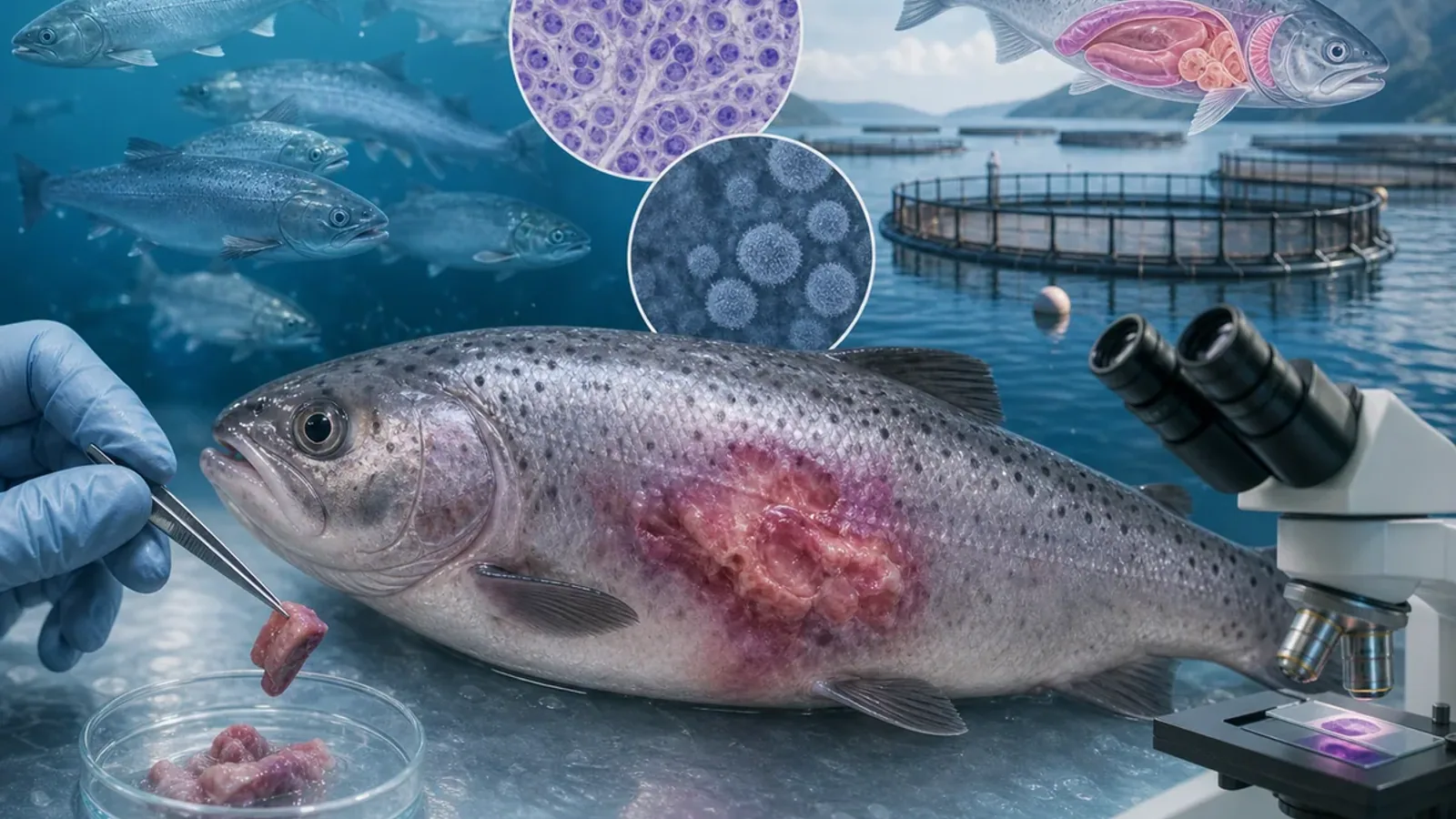
What is infectious pancreatic necrosis (IPN)?


Infectious pancreatic necrosis (IPN) is a viral disease that mainly affects young farmed salmonids. It is caused by infectious pancreatic necrosis virus (IPNV), an aquatic birnavirus. Detection of the virus in a species does not automatically mean that the species develops clinical IPN: susceptibility, age, viral strain and farming conditions strongly influence disease expression.
Which fish are most at risk?
Characteristic clinical outbreaks mainly affect fry and young salmon, trout and char, often around first feeding. Susceptibility generally decreases with age. Older fish can nevertheless remain infected without visible signs and shed the virus.
IPNV has been detected in many aquatic species, but detection, carriage and disease are different findings. It is therefore misleading to state that almost every fish and mollusc is clinically susceptible.
Which signs should raise concern?
Increased mortality in young salmonids may occur with darkening, abdominal distension, trailing faeces, exophthalmia or disorganised spiral swimming. These signs are neither constant nor specific. Severity and mortality vary greatly between groups, so a fixed percentage cannot confirm IPN.
How is the diagnosis confirmed?
Group history, clinical signs and lesions guide an investigation but cannot by themselves distinguish IPN from other diseases. Confirmation requires laboratory testing: a validated real-time RT-PCR method and, depending on the purpose, virus isolation in cell culture, viral identification and histopathology.
The veterinarian and laboratory should agree before dispatch on which fish and organs to sample, packaging and timing. A positive result must be interpreted alongside age, species, lesions and the epidemiological setting.
Transmission and prevention
The virus can move with infected fish, water, surface-contaminated eggs, equipment and transfers between units. Prevention combines broodstock and eggs of known status, suitable hygiene, dedicated equipment, separation of groups, controlled introductions and effluent management, and prompt investigation of unusual mortality. There is no routine curative antiviral treatment for an affected stock.
IPN is no longer listed by the World Organisation for Animal Health. It remains important in salmon farming and may be covered by specific national programmes or measures. In France, ask the veterinarian and competent authorities which requirements apply to the particular situation.