

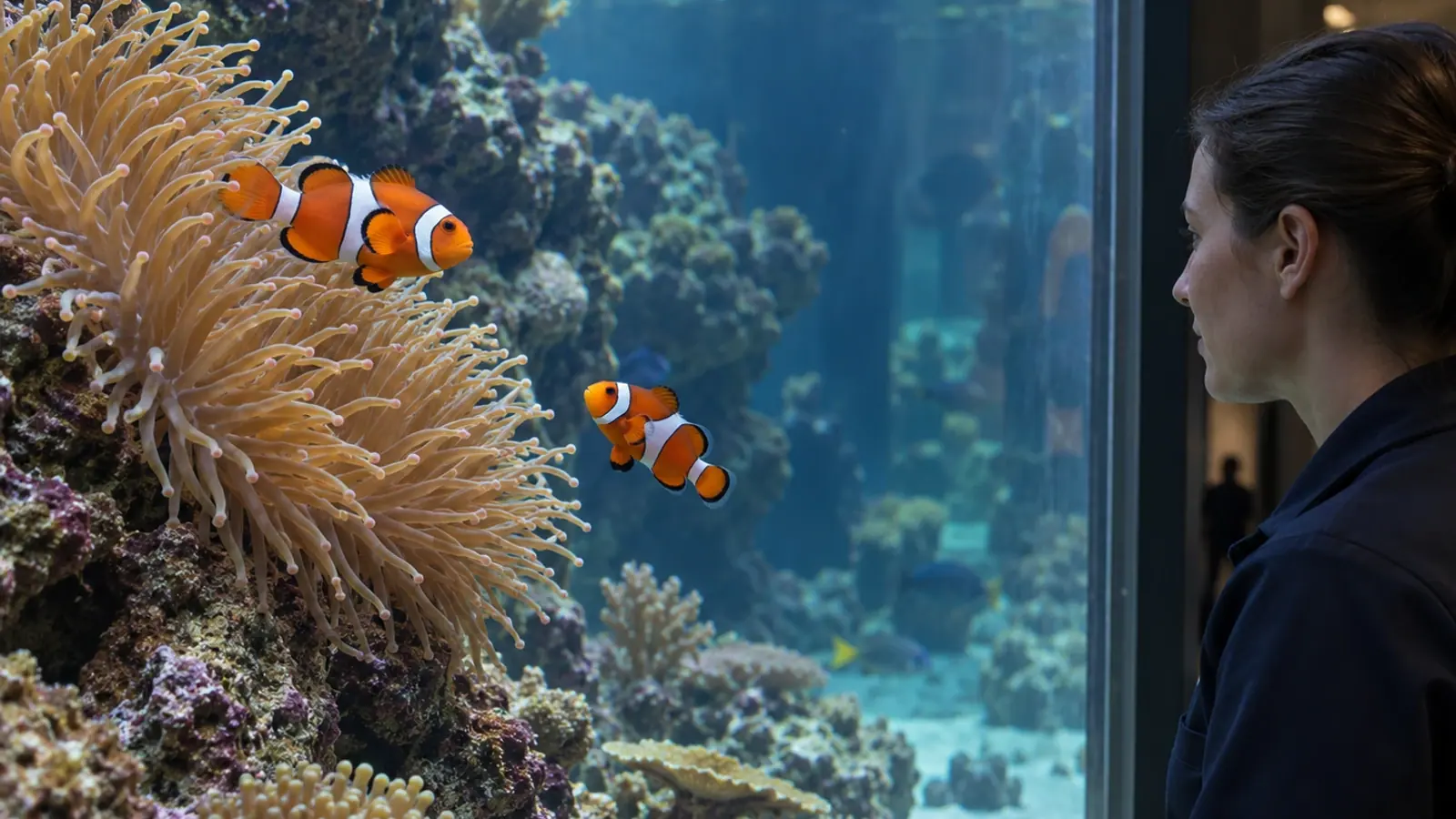
FishBase: making aquarium records useful to science
Photographs, measurements and breeding observations can contribute to FishBase when identity, context and reuse rights are recorded. A 2023 account from the Muséum-Aquarium of Nancy offers a practical starting point, while keeping captive observations separate from general claims about a species.
- Content type
- Practical guide
- Sector
- Public aquariums
- Animal group
- Fish
- Keywords
- ReproductionTemperatureLighting
A fish photograph can document a poorly illustrated colour pattern, life stage or behaviour. Much of that value disappears when the file becomes detached from the species identification, photographer and animal history. For a public aquarium, contributing to a scientific database therefore starts with collection records, before anyone sends the images.
A 2023 paper describes the Muséum-Aquarium of Nancy’s collaboration with FishBase. The French institution used its existing records and archives to prepare contributions. The example offers a practical starting point for other aquariums, without implying that every captive observation is ready for integration or that FishBase replaces a veterinary record system.
Choose a contribution that fills a real gap
Chardard and colleagues compared FishBase information with the species held at Nancy and reviewed material available in the institution’s archives. Photographs, biological observations, measurements and early life stages can all provide useful information. Their approach depends on communication with database staff rather than simply uploading a collection catalogue.
A collection manager can begin with a few species for which a well-documented observation already exists. Checking the database first helps establish what would be useful. Another adult photograph may contribute less than a clear image of an underrepresented juvenile stage. Verify the scientific identification before sharing and retain previous names in the internal history when they explain older records.
Selecting a small first contribution gives staff time to check each record and explain its context. Early agreement with the database team can also prevent staff spending time on a format that does not meet the intended use.
Keep photographs connected to their records
The metadata table in the paper identifies genus, species, image filename and photographer as mandatory information. Other fields record date, sex or life stage, origin and size when known. The distinction matters: unknown information should remain unknown, rather than being reconstructed from appearance or assumed husbandry practice.
An internal record should connect the original image and its sharing copy through one identifier. Document processing, cropping or colour correction when it changes the interpretation of the feature shown. A visually attractive photograph is not necessarily informative. A concealed fin, glass reflection or oblique viewpoint may prevent a reliable identification or measurement.
Reuse rights need a separate check. The institution should know who created the image, which uses are authorised and what credit must accompany it. Sending a file does not settle those questions. Review people, documents or sensitive details visible in the background before publication, and agree how any restrictions will be communicated to the recipient.
It is also useful to preserve the reason the photograph was selected. Was it chosen to show an early stage, a diagnostic character or an unusual behaviour? That short description helps the receiving team evaluate its value without attributing more meaning to the image than the aquarium intended.
Measurements need a method and an animal history
A length is comparable only when its type and unit are explicit. Total length, standard length and an estimate derived from a photograph do not represent the same measurement. Retaining method, date and animal identity makes the observation reusable without inventing missing precision.
Repeated measurements of one fish describe an individual trajectory; they are not independent observations of different animals. A growth record should retain that relationship and any changes in conditions between dates. Age known from hatching must remain distinct from time spent at the aquarium when an animal arrived at an unknown age.
A documented period in captivity should not automatically be reported as a species’ maximum lifespan. Likewise, a measurement obtained during clinical care needs to retain that context. Preparing a contribution does not justify an additional capture solely to fill a spreadsheet cell. Review information already gathered during routine husbandry or necessary care first.
Separate the stages of a breeding observation
Aquariums may observe courtship, eggs, hatching and larval development. A scientific contribution needs to distinguish which stages were actually seen. Courtship does not prove fertilisation, and spawning does not establish survival to the juvenile stage.
Connect dates, known parental identity, successive photographs and maintenance conditions. Temperature and other relevant parameters should describe the observation period rather than a general facility set point. Recording staff interventions makes it possible to distinguish spontaneous events from those associated with a procedure.
These remain observations in captivity. Success in one exhibit is not a universally transferable breeding method or a full description of natural behaviour. Uncertain parentage, untracked animals and gaps in observation should remain visible. That information does not make a record worthless; it defines the questions the record can reasonably answer.
Build a collaboration that survives staff changes
Appoint a contact, inventory a small set of available records and agree the format with the receiving database. A second reviewer can check identification, file matching and permissions. Record requested corrections so that later contributions benefit from what the first exchange revealed.
Archive the submitted version with its date and supporting references. If an identification changes later, the team must be able to locate the recipient and the affected files. FishBase also asks users to credit the main or data references associated with the records they use. Attribution therefore extends beyond naming the database itself.
Limits and conclusion
The Nancy paper is an institutional example, not a controlled trial demonstrating a health benefit. Its practical lesson is that aquarium archives can support science when identity, method, context and credit remain connected. A data submission does not automatically produce a conservation outcome; the intended use needs to be explained.
Starting with a small verified contribution lets teams test the collaboration without overwhelming collection work. Do not fill unknown fields with assumptions, and retain the captive context. Before sending a record, check whether someone outside the aquarium could understand and verify the observation.
Vetofish support
Vetofish can help organise collection observations, health-related fields and review procedures through our advisory service. Our work with public aquariums connects veterinary follow-up with traceable records, without promising that an external database will automatically accept a contribution.


