

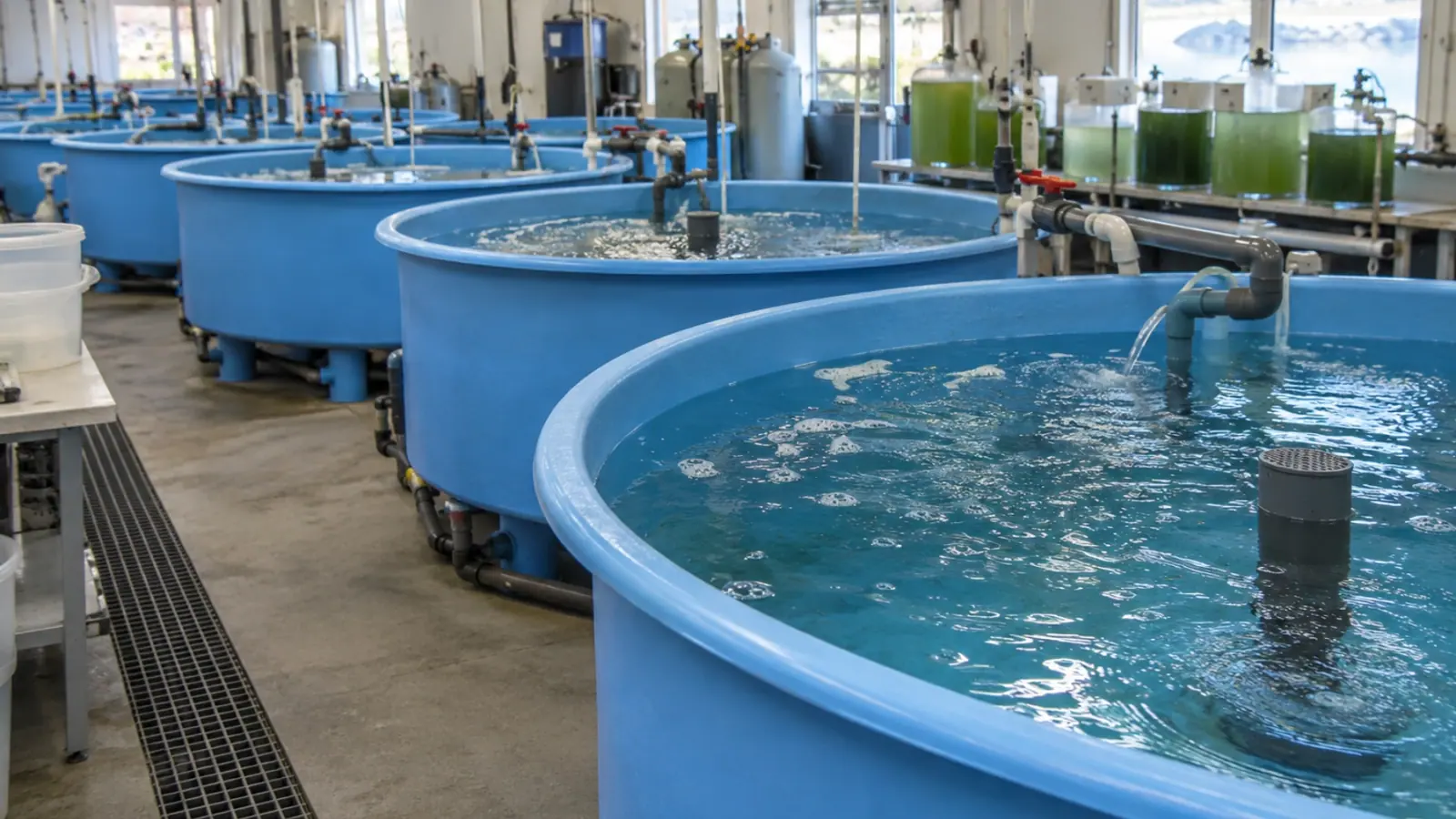
Marine fish breeding: organising an aquarium network
A US aquarium and university network is sharing marine fish breeding methods and reports distributing juveniles. Reliable supply for collections also requires health records, cohort traceability and evidence that successes can be repeated.
- Content type
- Practical guide
- Sector
- Public aquariums
- Animal group
- Fish
Spawning in a public aquarium creates a breeding opportunity, but does not guarantee a supply of new fish for collections. Several teams may need to coordinate egg collection, incubation, first feeding and health assessment before juveniles can be transferred. A network can distribute that expertise, provided that records and methods travel as reliably as the animals themselves.
The US project “Catalyzing Marine Finfish Aquaculture Through Public Aquariums” offers an example. It was presented at Aquaculture America 2026 and described by WHOI Sea Grant on 28 July 2026. This guide considers the organisational lessons for aquarium teams. Reported production achievements are institutional information, rather than independent evidence that the programme has already reduced collection from wild populations.
Share expertise across complementary facilities
The collaboration includes the University of Massachusetts Boston, Roger Williams University and the New England Aquarium, alongside other aquarium partners. WHOI reports the development of methods for more than twenty species and the distribution of thousands of juveniles to institutions within the Association of Zoos and Aquariums. These are achievements reported by the programme’s partners.
Facilities can divide the work according to their experience and equipment. One may hold regularly spawning broodstock, while another has experience with a particular larval stage or live-feed culture. Sharing those capabilities reduces the need for every institution to establish the entire production chain. Responsibilities still need to be explicit: who collects eggs, who rears larvae, who maintains the records and who decides that a cohort can be transferred?
Success with one species does not establish a method for every marine fish. Larval requirements, suitable prey sizes and husbandry conditions differ. The collaboration provides a way to organise experiments and exchange findings, rather than a universal rearing recipe. Every technical record should retain the species, developmental stage and conditions to which its result applies.
Establish cohort records before the larvae arrive
Egg collection is one of the programme’s areas of work. A useful record should identify the broodstock source, species, collection date and relevant circumstances. Eggs recovered from a mixed-species exhibit cannot be assigned confidently merely because one inhabitant was seen spawning. Any unresolved identification needs to remain attached to the cohort until supporting evidence becomes available.
A cohort identifier can then connect incubation, first feeding, losses and transfers between containers. This is a practical recommendation for organising a breeding programme, rather than a measured outcome of the US project. It helps teams trace where conditions changed and prevents separate spawning events from being combined unintentionally when several batches are reared at once.
Transfers also require a biosecurity assessment. Exchanging eggs or fish can exchange health risks. Discuss the source system’s history, available observations and receiving arrangements before dispatch. Participation in the same professional network does not replace that assessment. The receiving institution needs enough information to consider risks to the new cohort and to the animals already in its care.
Treat first feeding as a species-specific problem
The project highlights live feeds and modular larval rearing systems known as MoLaRS. A successful first meal depends on whether larvae can detect, capture and use the available prey. An abundant culture is not necessarily suitable for the developmental stage being reared. Nutritional decisions need to be connected with the larvae’s development and observed feeding performance.
Prey production, preparation and delivery belong to the same chain. Microalgae may contribute to live-feed systems, but their presence is neither a universal solution nor a guarantee of nutritional suitability. The conference abstract describes work involving fatty acids. It does not supply a complete, independently validated feeding protocol that can be applied unchanged across aquarium collections.
Record feeding transitions alongside developmental changes when comparing attempts. The final number of survivors alone cannot explain why a batch succeeded. A successful cohort can generate a useful hypothesis; repeated, documented production is needed to assess reliability. Concurrent changes in water conditions or equipment must remain visible rather than being assigned automatically to the dietary intervention.
Send the method with its working conditions
The partners describe professional exchanges and shared resources. A useful protocol should explain where the method worked, which observations were needed and what difficulties occurred. Readers need to distinguish an exploratory approach from a procedure that has been repeated successfully. Reporting failed attempts also makes staffing demands and operational uncertainties easier to assess before another facility commits resources.
Receiving teams can compare equipment, live-feed availability and staffing arrangements with those of the originating facility. Modular equipment does not remove local constraints on water, space or out-of-hours monitoring. A limited, documented trial can assess feasibility before a collection relies on the proposed production programme. Its purpose and stopping criteria should be agreed in advance.
Juveniles subsequently need transfer records covering identity, cohort, accepted diet, health history and transport conditions. Such information supports reception and quarantine planning; it does not certify freedom from pathogens. The destination team can use it to decide which examinations and precautions are appropriate for its own animals, systems and institutional health arrangements.
Measure the contribution rather than assuming conservation success
The institutional account documents production and distribution, but does not calculate avoided wild collection or full species-specific production costs. A captive-bred fish might replace a planned acquisition, meet an additional demand or remain within the breeding network. Those outcomes have different implications. They should not be combined into a single unmeasured claim of conservation benefit.
Aquariums can track which acquisitions were actually replaced, survival after reception and the consistency of subsequent production. Keep the species and time period attached to those measures. One successful cohort cannot establish a benefit for every species in the collection. Collection plans and available capacity should guide which breeding targets deserve further investment and which questions remain unresolved.
Conclusion and Vetofish support
A breeding network is most useful when it exchanges animals, workable methods and an honest account of their limits. Our advice and support service can help public aquarium teams organise cohort records, define health responsibilities between institutions and prepare breeding programmes that fit their facilities and staffing.


