

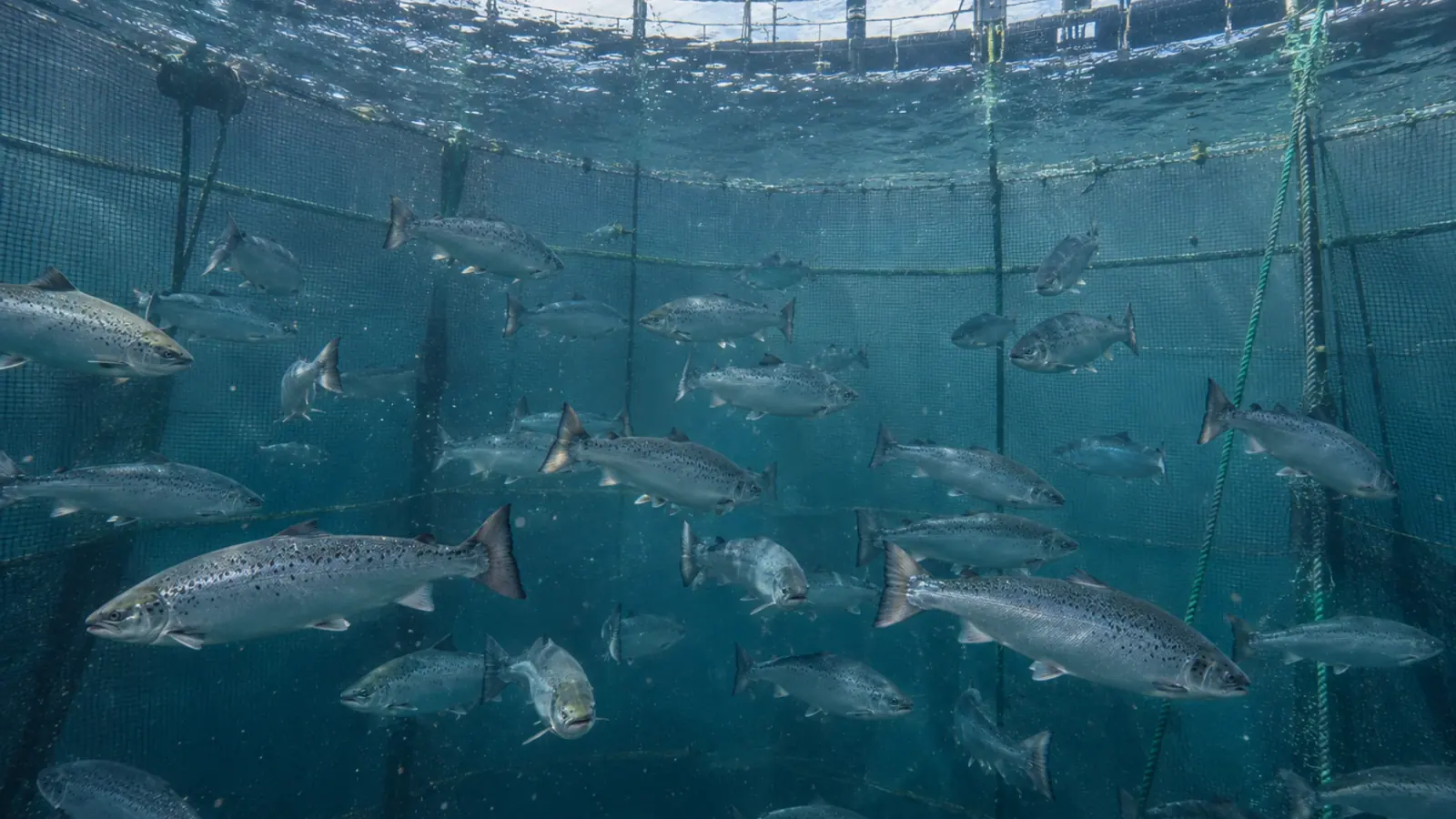
Salmon DNA vaccines: measure transmission as well
Better clinical protection does not establish that vaccinated fish stop transmitting a virus. Work on salmonid alphavirus shows why mortality, tissue damage, growth and infections among contact fish need separate assessment.
- Content type
- Scientific news
- Sector
- Aquaculture
- Animal group
- Salmonids
A vaccinated group can grow better after infection while still passing virus to neighbouring fish. For a salmon farm, that distinction changes the meaning of vaccine efficacy. Protecting an individual, reducing circulation within a population and preventing every infection are separate objectives. A lower loss rate cannot answer all three questions. The assessment needs to identify the expected outcome, the fish population and the period being compared.
Start with the outcome, then consider the technology
DNA vaccination uses a plasmid carrying a sequence that allows fish cells to produce a viral antigen. The immune system responds to that antigen. This differs from administering an inactivated whole-virus preparation, and it does not involve giving fish a live attenuated virus. However, performance still needs to be established for the particular vaccine, pathogen and conditions. The manufacturing principle alone cannot predict the result on a farm.
In their 2026 review, Rimstad and Evensen examine DNA vaccines in farmed fish, with particular attention to salmonid alphavirus, or SAV, which causes pancreas disease in Atlantic salmon. They discuss immune responses, damage to target organs and viral dynamics as different dimensions of protection. Their favourable assessment of the technology does not establish that vaccination eliminates virus from every farm.
For a health manager, the useful question is therefore what the evidence actually demonstrates: fewer deaths, less tissue damage, improved growth or fewer infections among contact fish. Those outcomes may occur together, but they are not interchangeable. A single immune marker cannot be treated as a reliable substitute for all of them.
An experiment in which mortality told only part of the story
Thorarinsson and colleagues compared a DNA pancreas disease vaccine, an oil-adjuvanted inactivated whole-virus vaccine and two groups without pancreas disease vaccination in a study published in 2024. Atlantic salmon encountered SAV genotype 2 through cohabitation with infected fish. The efficacy study continued for 84 days after challenge.
Cumulative mortality was low and did not differ significantly between groups. Other outcomes did differ. Fish receiving the DNA vaccine had less disease-associated growth loss, milder heart and muscle lesions and better clearance of viral RNA. Time to death was also delayed in that group. An assessment based solely on the final mortality percentage would have missed part of the observed protection.
These measurements described different processes. Viraemia concerns virus in the blood; the molecular assays in this study detected viral RNA. Histopathology assessed tissue damage, while growth measurements captured a production consequence. None of those measurements, on its own, established what would happen to newly introduced contact fish.
Reduced shedding signals do not establish zero transmission
The researchers also moved previously exposed fish into tanks with new contacts. In one experiment, those contacts were unvaccinated and susceptible. In another, contacts had received the same vaccine type as the exposed fish with which they were housed.
That distinction mattered. Despite lower waterborne viral RNA at some sampling points in the DNA group, infection reached naïve contacts during cohabitation. By contrast, no infection was detected among DNA-vaccinated contacts housed with previously exposed DNA-vaccinated fish under the conditions tested. The recipient’s protection therefore contributed to the outcome alongside the characteristics of the infection source.
These findings support reduced viral circulation as a possible benefit within a vaccinated population. They do not show that every vaccinated fish is non-infectious. RNA in water is not a direct count of infectious particles, so a shedding measurement should be considered alongside infections actually observed in contact animals.
For a farm, this means that lower molecular signals cannot automatically justify relaxing separation between groups. A fish population with different vaccination histories may respond differently from the matched groups used in an experiment. Exposure conditions also change when water exchange, stocking arrangements or movements differ.
Make comparisons interpretable before collecting results
A farm team and its veterinarian can define the outcomes needed for a vaccination review in advance: mortality relative to the population at risk, growth, clinical observations, lesions and laboratory findings. Vaccination dates, transfers, disease episodes and sampling conditions need to remain connected to those records. Comparisons become misleading when populations or observation periods change without explanation.
Biosecurity remains part of that assessment. A favourable vaccination result does not remove the need to manage fish movements, shared equipment and dead fish. When infection occurs, sampling should help identify the agent and investigate other causes of reduced performance, rather than immediately labelling the event a vaccine failure.
Testing intensity also affects the number of positive results found. Recording how many fish were tested, their life stage and the reason for sampling helps separate a change in surveillance from a change in health. Decision rules are more useful when they are agreed before the results are known.
Keep the experimental limits attached to the conclusion
The 2024 work concerned Atlantic salmon and a controlled SAV2 challenge. Groups in the main efficacy study shared one tank. That common exposure supports certain comparisons, but it does not represent replicated independent farm units. The transmission experiments had their own tank arrangements and did not reproduce every condition encountered in commercial sea cages.
Several authors had commercial affiliations, including with the DNA vaccine manufacturer, and these interests were disclosed. Results need to be considered with the design and the wider evidence; a favourable review is not independent validation of every proposed use. Neither a vaccination dose nor a farm schedule can be derived from this assessment alone.
Review protection at both fish and population levels
A useful vaccine review connects fish health, group performance and infections among contacts. Mortality remains essential, but low mortality can provide little discrimination between strategies. Decisions for a particular farm require the local infection risk, an appropriate vaccine and monitoring criteria agreed with its veterinarian.
Vetofish can help design that assessment, select informative samples and interpret findings through its consultancy and assessment service, supporting aquaculture operations.


