

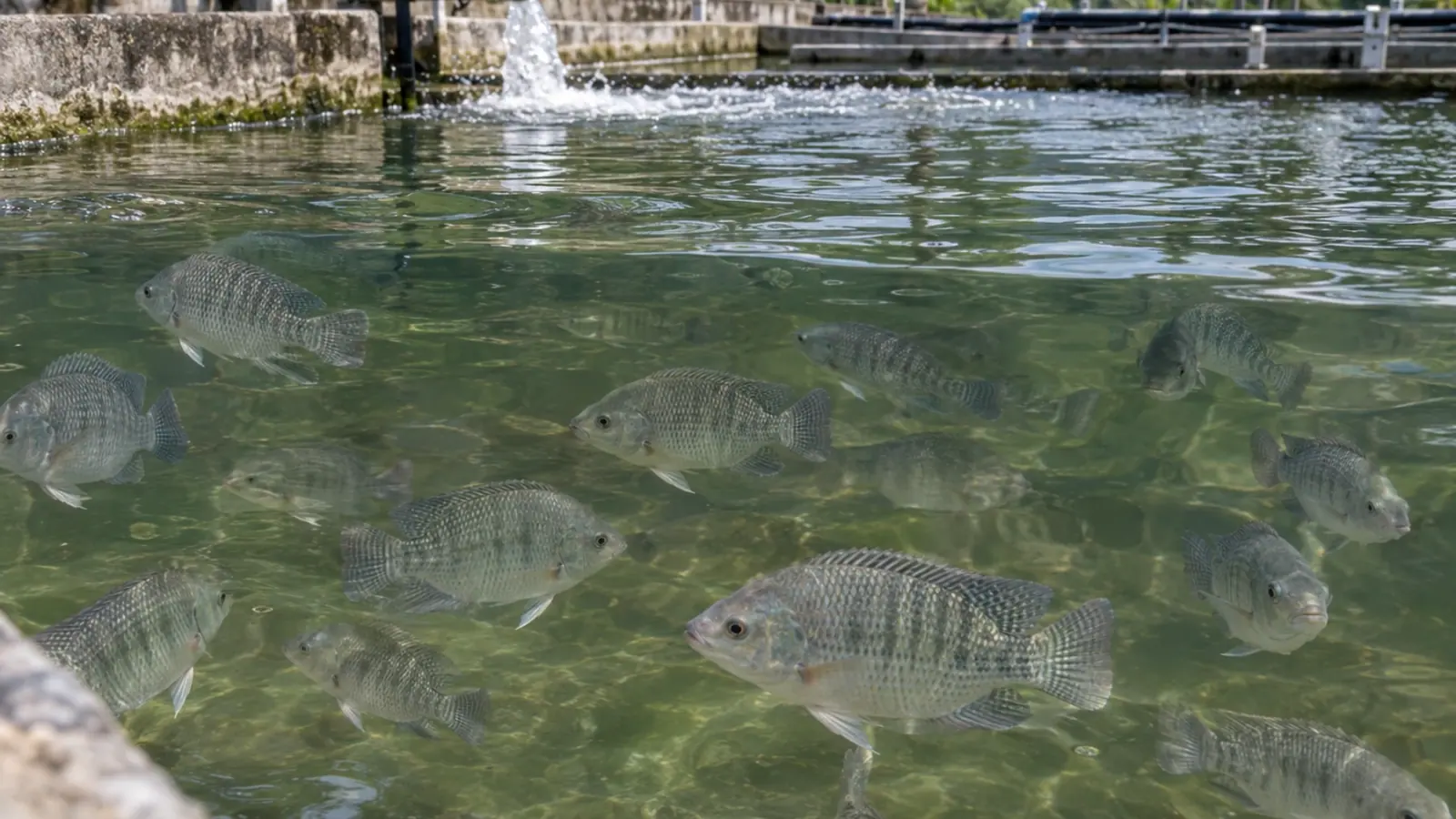
Tilapia: how strong is the evidence for antibiotic alternatives?
A review of 192 studies identifies many approaches to bacterial disease control in tilapia. Most concern prevention; direct antibiotic comparisons and evidence from working farms remain limited.


- Content type
- Scientific news
- Sector
- Aquaculture
- Animal group
- Fish
- Keywords
- ImmunityMicrobiomeBiosecurity
Evidence that an intervention improves survival during a laboratory bacterial challenge does not establish that it can replace treatment on a tilapia farm. Producers need to separate preventive use, an on-farm evaluation and the response to a clinical outbreak. Those decisions require different evidence. The scoping review published by Eltholth and colleagues in September 2026 offers a useful way to examine what has been tested and what remains uncertain.
A map of research rather than a product league table
The review includes 192 studies of non-antibiotic approaches to bacterial disease control in tilapia. It identifies 288 alternatives across twelve categories. Plant-derived preparations and probiotics feature prominently. Preparations within a category can differ substantially, so their effects should not be treated as interchangeable.
A probiotic finding concerns a particular strain and preparation. A plant-derived intervention depends on its composition and manufacture. Before using a paper to support a purchasing decision, establish whether the marketed product matches those characteristics. Sharing a general ingredient name is insufficient to show that farmed fish will receive the intervention that produced the reported result.
A scoping review describes the extent and structure of an evidence base. This one does not supply a pooled estimate of protection for every category. Counting positive studies would therefore be a poor way to predict survival on a specific farm or identify a universal replacement for antibiotics. The practical question remains narrower: what evidence supports this product in this situation?
Prevention cannot be read as treatment evidence
Prophylactic approaches account for 82% of the studies. In such experiments, the intervention precedes pathogen exposure. That sequence examines preparation before infection; it does not establish recovery in fish that are already clinically affected. Changes in immunity or the microbiota may help explain an effect, but they are not by themselves evidence of a successful treatment.
Only nine studies included an antibiotic comparator. Much of the literature consequently compares an alternative with an untreated control, rather than a reference therapeutic intervention. Both designs can produce useful information, but the conclusions differ. A benefit compared with no intervention does not demonstrate equivalent performance to a medicine or justify withdrawing necessary care.
Ask suppliers to identify whether their evidence concerns prevention, use after the onset of clinical signs, or a laboratory outcome alone. Carry that distinction into the evaluation plan and purchasing record. A preventive claim should not be used to postpone investigation when mortality increases. The farm veterinarian needs the actual history and clinical findings, not merely the name of a proposed alternative.
Challenge methods matter for farm relevance
Intraperitoneal injection was used in 83.8% of the bacterial challenge studies. Injection helps standardise exposure, while bypassing some natural barriers. It does not recreate the full sequence of exposure through water, contact between animals or interaction with farm conditions. The challenge method must therefore travel with the survival result when that result is discussed.
Fish size and life stage, diet, follow-up duration and the bacterium studied are equally relevant. Two experiments can both concern tilapia yet represent very different health problems. Evidence against one agent does not automatically transfer to another. Identifying the farm’s disease problem is still necessary before choosing an intervention, even when a product is described as broadly supportive.
Controlled facilities remove variation to make experiments interpretable. Working farms have changing cohorts, fluctuating water conditions and practical constraints on feed distribution. Biological plausibility, efficacy under a particular test and routine operational feasibility are separate stages of evaluation. A convincing result at one stage helps define the next investigation; it does not complete that investigation in advance.
Make an on-farm evaluation answer a defined question
Start with the documented disease, affected population, relevant risk period and desired outcome. With veterinary input, design a comparison that can inform management without deliberately exposing fish to infection or withholding needed treatment. Agree intervention and stopping rules before the evaluation starts. Staff should know who can suspend the trial and arrange clinical assessment.
Record mortality alongside growth, feed intake, clinical observations and water conditions. A change in losses is difficult to interpret without the events surrounding it. Changes in feed, handling, stocking or equipment can coincide with the intervention. Keeping those records makes alternative explanations visible and prevents an attractive result from being assigned to the wrong cause.
Assess tolerance separately from the intended benefit. The review reports that close to half of the studies did not explicitly assess adverse effects. An unreported problem is not proof of safety. Producers also need to check the product’s status and permitted conditions of use with the appropriate professionals in their jurisdiction. A scientific paper supplies evidence, not a marketing approval or a veterinary prescription.
Put the intervention within the farm health plan
Biosecurity extends beyond adding a preparation to feed. WOAH’s chapter on aquaculture establishments sets out risk-based assessment of pathogen entry, movement within the site and release to other populations. Animals, water, equipment and people can each contribute pathways. These international recommendations are a planning framework; their application depends on the production system and local requirements.
An alternative should have an explicit place in that plan, with a measurable objective and someone responsible for evaluating it. Where exposure arises from incoming fish of unknown health status, a feed additive alone does not resolve the introduction pathway. Linking each measure to the problem it addresses helps farms compare preventive investments and identify what an evaluation can realistically establish.
Conclusion and Vetofish support
The research offers promising preventive approaches, with conclusions tied to the preparation, disease and experimental model studied. Our advice and support service can help aquaculture teams assess a scientific dossier, define an on-farm monitoring plan and connect an evaluation with veterinary care and the wider farm health strategy.


