

Salmon: investigate persistent feed refusal
Atlantic salmon can tolerate food deprivation while remaining compromised by the problem suppressing appetite. Farm monitoring needs to connect actual intake, environmental conditions and individual fish, rather than rely on a cage-wide feeding total.


- Content type
- Practical guide
- Sector
- Aquaculture
- Animal group
- Salmonids
- Keywords
- StressTemperatureOxygenEthogram
Establish whether feed was withheld or refused
In Atlantic salmon (Salmo salar) production, feed delivered is not the same as feed eaten. A lower delivery may reflect a planned management decision, whereas reduced intake with feed still available may indicate deteriorating conditions or compromised fish. Start by establishing what changed, when it began and whether the whole cohort appears affected.
Hvas and colleagues’ 2024 review separates imposed feed withdrawal from cessation of feeding initiated by the fish. Post-smolts and adults have physiological adaptations to food shortages, while early freshwater stages are more sensitive. Those adaptations cannot establish that a fish refusing food is healthy. Loss of appetite can be a consequence of an existing welfare problem, rather than the original cause of that problem.
A feeding total can hide individuals losing condition
Anorexia means loss of appetite. It differs from being unable to reach feed or physically unable to take it. All three situations can occur within the same sea cage. A reasonable total intake may reflect substantial feeding by some individuals alongside little or no intake by others.
The review identifies limited individual monitoring as a major weakness in the evidence from commercial farming. It discusses growth-stunted salmon in poor body condition without identifying a single explanation for that outcome. Neither infection nor adequate nutrition can therefore be inferred from a feeding total alone. A group-level observation needs to be interpreted alongside what can be seen of the animals.
Useful daily records connect feeding responses with size variation, cage position, swimming and changes in body condition. Staff can distinguish an apparent group-wide reduction from a localised change or a few visibly affected individuals. Repeated observations under comparable conditions are easier to interpret, although easily visible fish should not be assumed to represent the whole population.
Build a timeline before changing the feeding programme
Start with the last meal that appeared to be consumed normally. Add changes to feed, delivery settings and timing, followed by handling events, equipment problems and health observations. The resulting sequence helps distinguish a planned withdrawal from a delivery failure or a persistent refusal following an intervention. Days when feed was offered but not eaten should remain identifiable in the record.
Environmental conditions need investigation at the same time. Hvas and colleagues discuss appetite suppression associated with thermal extremes and low oxygen. Water temperature and dissolved oxygen should be assessed where the fish are actually living, with relevant differences in depth and time included. A favourable reading at a distant monitoring point may miss the conditions experienced in the cage.
Environmental and health problems can reinforce each other. Their occurrence close together does not, by itself, reveal which came first. Recording measurements, observation times and corrective actions helps the veterinarian weigh competing explanations, especially when several changes must be made before a full investigation can be completed. The record should make those concurrent actions visible rather than crediting recovery to whichever intervention is remembered most clearly.
Assess fish without adding avoidable handling
Monitoring should look for deteriorating condition and changes in ventilation, swimming and responsiveness. Low mortality is not evidence that all surviving fish are coping well. Animals may remain compromised for a substantial period before losses become the most conspicuous signal. A monitoring system based only on deaths will miss part of that trajectory.
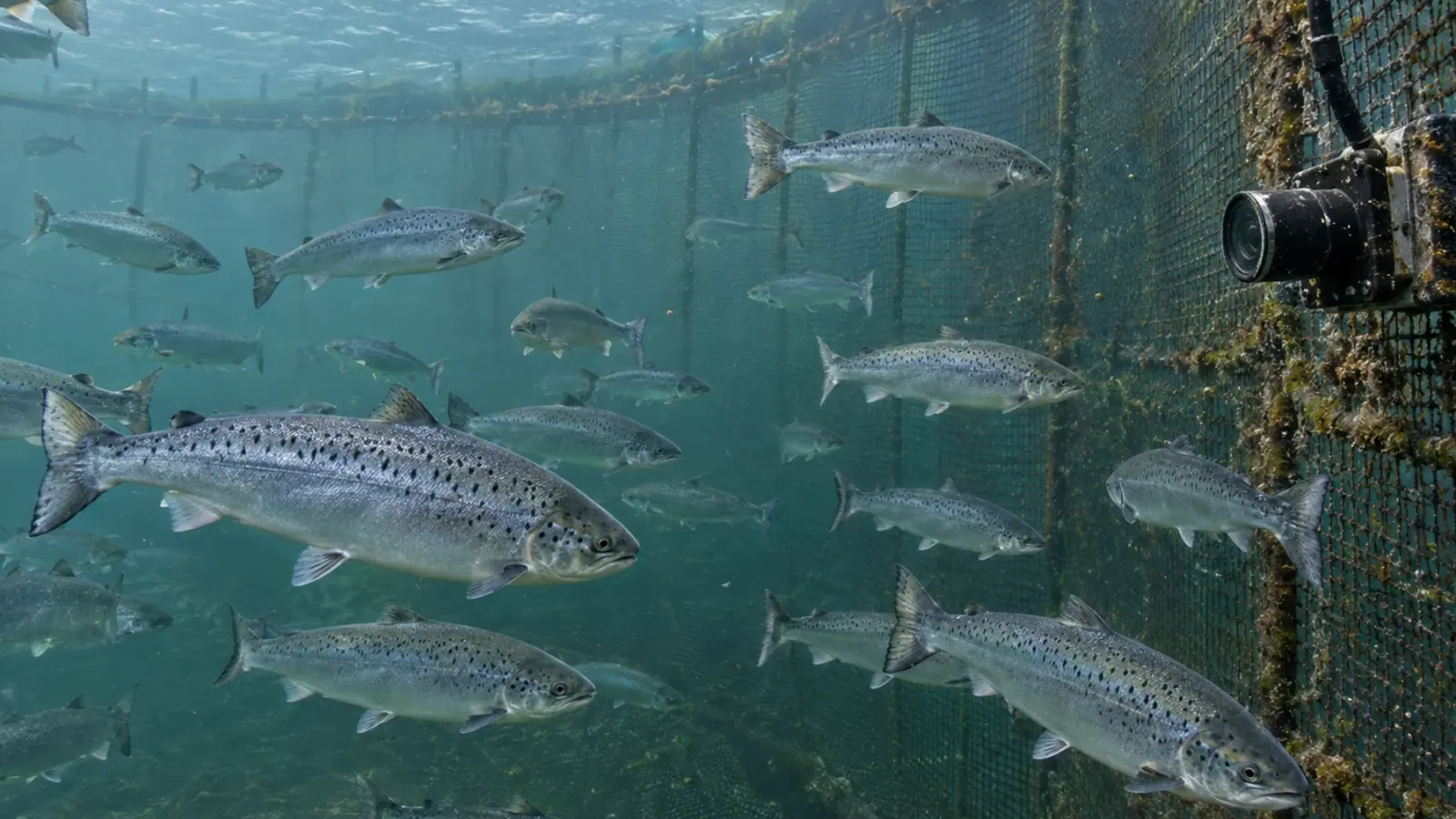
Remote observation, including underwater cameras where available, provides a useful first assessment. It can also miss fish outside the field of view and lesions requiring a closer examination. Capture, clinical examination and sampling should answer a defined question. Veterinary planning helps balance the information needed against the additional disturbance of handling a cohort that may already be struggling.
An empty digestive tract is not a diagnosis. Its interpretation depends on feeding history, life stage, environmental conditions and other examination findings. Similarly, detection of an infectious agent needs to be considered in relation to the observed disorder. Treatment and examination schedules depend on that assessment.
Define a response and check who resumes feeding
An operational plan identifies who reports the change, verifies delivery, checks water conditions and contacts the veterinarian. Reassessment criteria can combine persistence of refusal, an increasing number of affected fish, impaired swimming or ventilation and declining body condition. Their use should reflect the cohort and its circumstances rather than a fixed waiting period for all salmon.
More feed cannot overcome a physical inability to eat and may simply increase waste. Recovery should be assessed through actual intake and the progress of the most vulnerable animals. A higher cage total does not demonstrate that those fish have resumed feeding. Fish whose condition continues to deteriorate require veterinary assessment of their welfare and realistic prospects for recovery.
Responsibilities should remain clear after the first improvement. The team needs to know when an intensified observation schedule can end, what information must still be collected and which signs trigger renewed investigation. Maintaining that continuity is particularly useful when different staff cover successive feeding periods or when an incident spans several shifts.
What the evidence can support
This is a review centred on Atlantic salmon, not a trial establishing a fasting limit for every farm. Evidence describing individual recovery after sustained appetite loss remains limited. Its conclusions should not be transferred directly to larvae, rainbow trout or other cultured species. It also does not validate a particular feeding policy under different environmental conditions.
The welfare decision is to identify why fish have stopped eating and then track their progress. Physiological tolerance of food deprivation cannot justify keeping fish in conditions that persistently suppress appetite. Distinguishing adaptation from the underlying problem is more useful than deciding whether a single number of fasting days sounds acceptable.
Plan a monitoring response with Vetofish
Vetofish can help connect feeding observations, water records and health examinations within a cohort monitoring plan. Our animal welfare service supports indicator selection and reassessment for aquaculture operations, with attention to the limitations of group-level feeding data.


