

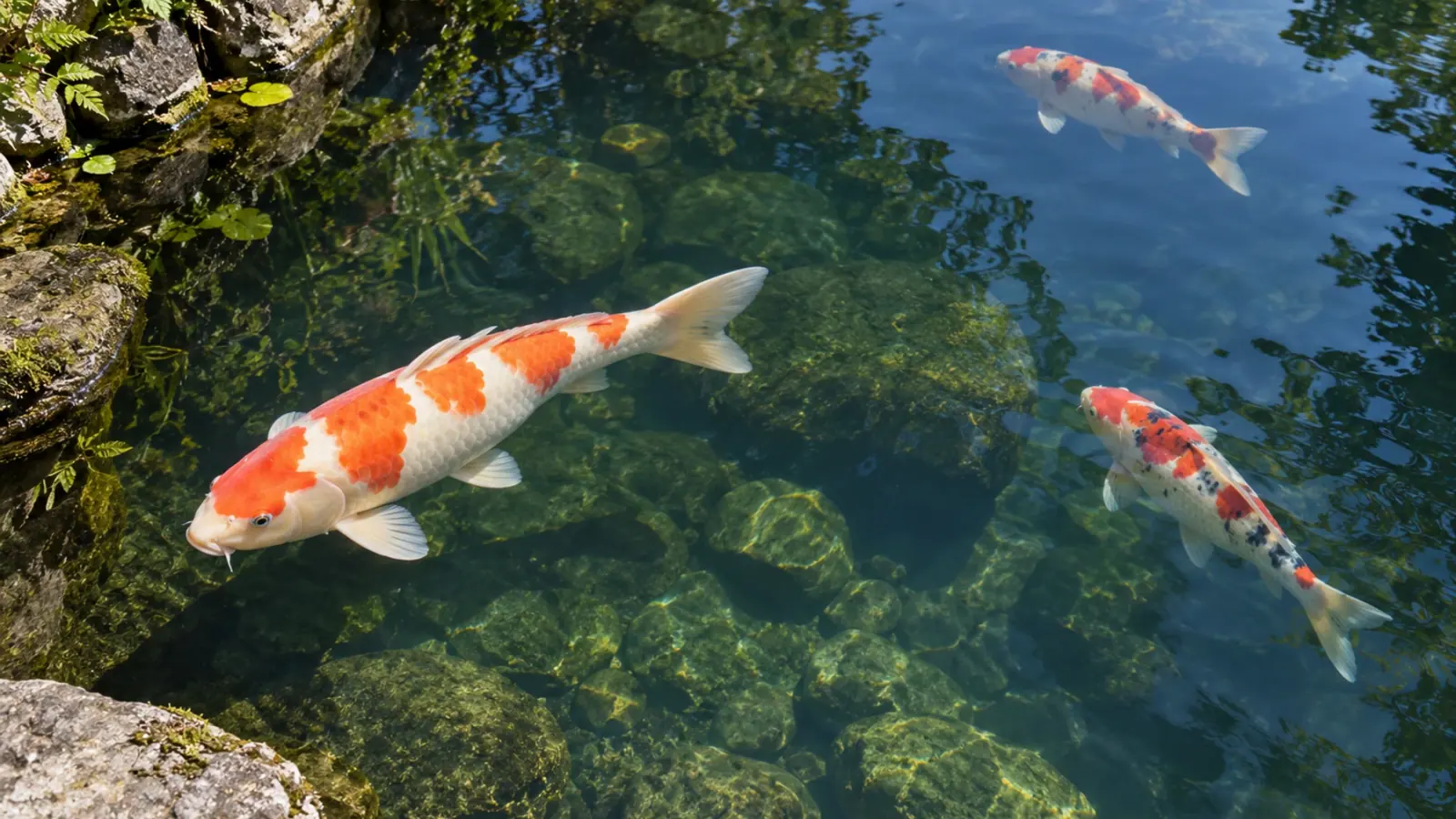
Ageing aquarium fish: follow the individual
Reduced activity in an older fish should not automatically be attributed to age. Individual records connect history, resource access and veterinary decisions without imposing a universal geriatric threshold.


- Content type
- Practical guide
- Sector
- Public aquariums
- Animal group
- Fish
- Keywords
- EthogramStressEnrichment
A recent change needs an explanation
A fish that has lived in a collection for years may start behaving, feeding or moving differently. Age belongs in its history, but does not explain every deterioration. The useful question for an aquarium team is what has changed in this individual, under which conditions, and how the change affects its opportunities to use the environment.
Krebs and colleagues’ 2018 review proposes individualised care for ageing animals in zoological institutions. It draws on several animal groups, many of them biologically distant from fish. Smith’s 2023 review adds a fish-specific account of husbandry requirements and welfare indicators in public aquariums. Together, they inform an assessment approach; they do not establish a universal geriatric age or a validated clinical scoring system for every aquatic species.
Use the animal’s own history as a reference
Senescence describes biological ageing rather than a medical diagnosis. Krebs and colleagues explain that age-related changes can coexist with disease. Treating reduced activity as an inevitable consequence of age can therefore delay investigation of illness or difficulty reaching resources. An explanation should follow assessment, rather than replace it.
Records should distinguish a known birth date from an estimate and from the length of time an animal has been held. Years in a collection do not always reveal its age on arrival. Keeping that uncertainty visible helps staff and veterinarians interpret the history without creating an artificial level of precision.
Repeated observations are easier to compare when their context is recorded: time of day, feeding conditions, tank area and visibility. Dated photographs or video can support written descriptions. Their value lies in showing a trajectory, including gradual changes that might otherwise become accepted as the animal’s new normal before anyone reviews them formally.
Assess access as well as apparent activity
Body condition, food intake, swimming, social interactions and access to resting areas provide different kinds of information. Smith recommends combining categories of welfare indicators. No single sign describes a fish’s overall welfare, and acceptable water measurements do not demonstrate that every individual can use its environment normally.
A fish may still approach food but obtain less of it when other animals arrive faster. It may occupy a different area after a change in current, social conditions or tank layout. These possibilities need consideration before age is assigned as the cause. An observation establishes what happened; it does not necessarily identify the mechanism responsible.
Staff can record both spontaneous behaviour and activities the fish now appears unable to perform. A changing capability is often more informative than calling an animal tired. Describing difficulty reaching a feeding location, an unusual position or an avoided interaction gives the veterinarian a clearer basis for deciding what to investigate.
Adapt resources while preserving useful choices
Krebs and colleagues emphasise opportunities for positive experiences and agency: the animal’s ability to make meaningful choices within its environment. In an aquarium, that invites a review of resource accessibility. Any proposed adjustment still needs to suit the species, water system, observation requirements and safety of the wider collection.
Environmental enrichment need not become more elaborate to remain useful. It should support relevant behaviour or an accessible choice. An arrangement that benefits one fish may inconvenience another, interfere with cleaning or create an area staff cannot observe adequately. Its actual effect needs assessment, even when the intention is to improve welfare.
Where the clinical situation allows, evaluating changes separately makes their effects easier to understand. Altering current, feeding schedules and group composition at the same time can obscure which change helped. An apparent improvement also needs to persist and be considered alongside the animal’s other observations, rather than judged from one favourable moment.
Connect daily observations with veterinary decisions
A shared record can bring together observed changes, adjustments and subsequent outcomes. It should identify whom to contact and when reassessment is needed. This supports continuity across shifts, particularly when several people care for the same animal. It does not replace veterinary examination or turn a locally developed score into a diagnosis.
Capture and examination also need a purpose. Their value should be discussed in relation to the clinical question, information already available and the constraints imposed on the animal. Advanced age alone is not a reason either to increase handling automatically or to dismiss an investigation that could change care.
End-of-life decisions require veterinary assessment and appropriate discussion within the institution. Longevity is only one part of that assessment. Feeding, use of the environment and the prospects of benefiting from care need consideration alongside potential suffering, prognosis and the observed course. A birthday cannot substitute for this review, and a chronic condition cannot be evaluated solely from its diagnostic label.
Conclusion: follow a trajectory, not an age category
Care of an ageing fish starts with precise observations and a usable history. Zoological reviews provide useful questions, while their application to fish remains species-specific. The practical response is to investigate change, adjust resources where appropriate and check the outcome over time. This keeps an individual’s needs visible without treating every change as either disease or inevitable ageing.
Working with Vetofish
Our animal welfare service can help teams develop observation records and review environmental adjustments with their attending veterinarian. For public aquariums, this supports individual assessment and documented decisions. The aim is a workable care process for the animals concerned, without applying a single age threshold or unvalidated scoring system across an entire collection.


