

Aquarium corals: fluorescence and bioluminescence explained
A fluorescent coral does not light an aquarium in complete darkness by itself. Aquarium La Rochelle’s 2026 displays provide a useful starting point for explaining two different processes to visitors: converting incoming light and producing light through a chemical reaction.


- Content type
- Practical guide
- Sector
- Public aquariums
- Animal group
- Corals and invertebratesFish
- Keywords
- LightingTemperatureStress
Use the display to explain where light comes from
Aquarium La Rochelle’s 2026 press kit describes “Le Lagon la Nuit”, a display inspired by a New Caledonian lagoon. Visitors encounter coral fluorescence at an open aquarium. The document also describes bioluminescent Australian pineapplefish, Cleidopus gloriamaris, in the same room. Placing the examples together offers an opportunity for science communication; it does not mean that the fish and corals make light in the same way.
The aquarium is the primary source for this account of its visitor route. The press kit does not establish a measured learning outcome, and this article does not report a Vetofish visit. For another public aquarium, the transferable question concerns the explanation offered to visitors: what supplies the energy for the light they see, and what observation would help them understand the answer?
A display label can introduce that question before naming pigments or organisms. Visitors can understand the difference between incoming light that is converted and light produced through a chemical reaction without first learning protein structure. Starting with the visible phenomenon gives the scientific terms a clear job in the explanation.
Fluorescence needs incoming light
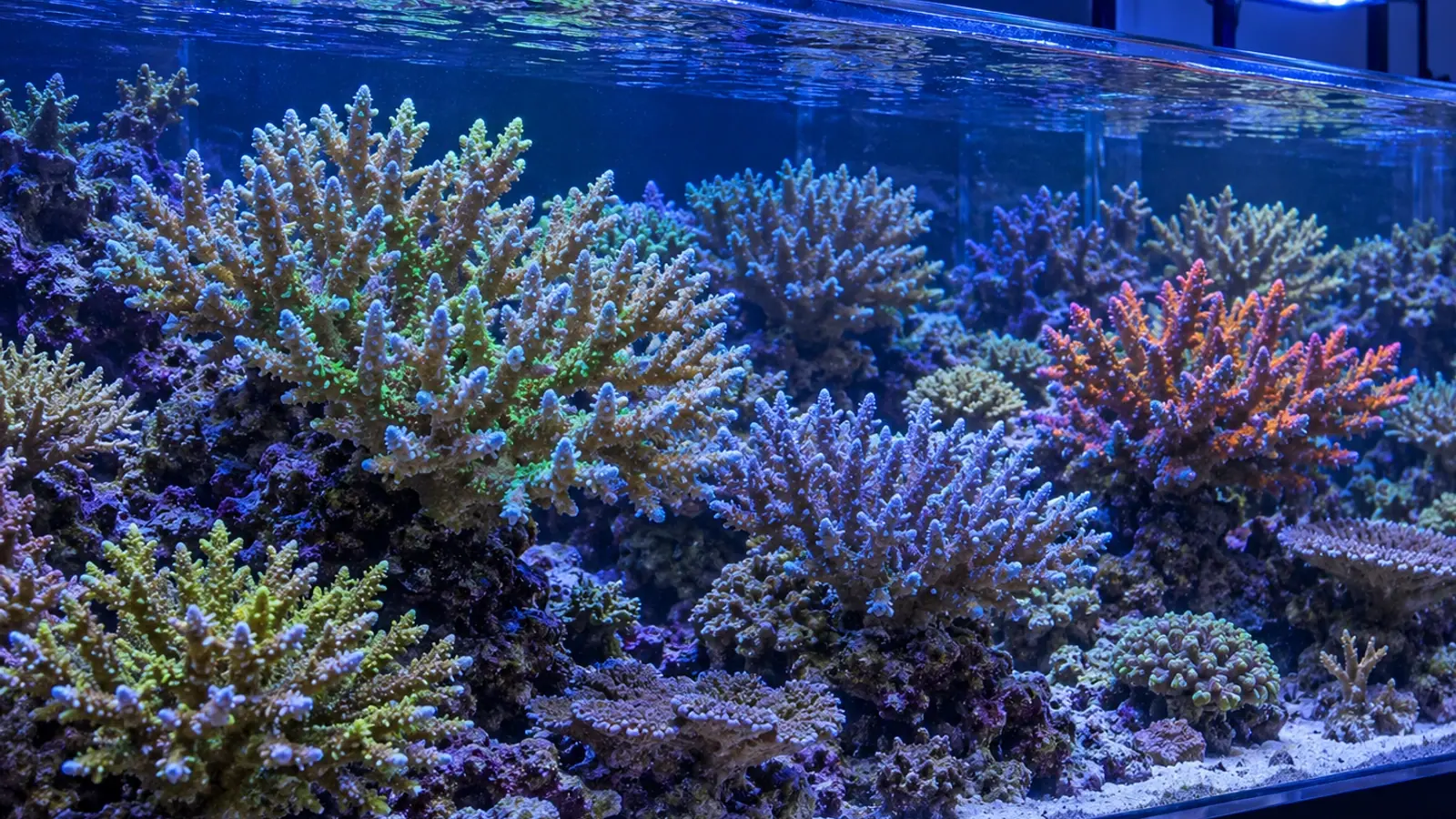
NOAA distinguishes fluorescence from bioluminescence by explaining that fluorescent material absorbs incoming light and emits light of another colour. The University of Southampton’s Coral Reef Laboratory brochure describes this process in corals and illustrates the effect of blue illumination. A glowing appearance therefore does not establish that an animal can illuminate a place with no external light at all.
When preparing an explanation, separate the lighting source from the coral’s role. A room that looks dark to a visitor can still provide blue light to the animals. Calling it a night display does not identify the mechanism. An explanatory diagram can show where light arrives and where an emission is observed, without becoming an instruction for changing the aquarium’s operating settings.
Photography introduces another set of conditions. Camera settings and illumination belong in the description of an image. Strong saturation is not a biological measurement of emission intensity. When photographs are used for animal follow-up, documented acquisition conditions are more informative than a dramatic comparison between pictures taken under different lighting arrangements.
Separate host pigments from algal pigments
The Southampton brochure distinguishes fluorescent pigments produced by the coral host from photosynthetic pigments in its algal partners. Symbiotic algae, often called zooxanthellae in aquarium communication, are part of the association. They should not be credited automatically with every colour a coral displays. Photosynthesis and fluorescence describe different processes, even though both involve light.
This distinction helps avoid the claim that a coral glows simply because its algae manufacture that visible colour. Before drafting a label, specify which pigment or observation the statement concerns. Some coral pigments are coloured without being fluorescent. Appearance under white light and appearance under blue illumination can therefore convey different information about the same colony.
Visitors do not need to identify a pigment by eye. A reliable explanation can acknowledge what the image does not resolve. It can also distinguish one example from a claim about all corals: a green-emitting colony does not establish the colour or brightness expected in every species, individual or display setting.
Bioluminescence has a chemical energy source
NOAA describes bioluminescence as light produced by a chemical reaction within an organism or from material it releases. The La Rochelle press kit states that the pineapplefish houses luminous bacteria in organs near its mouth. That example should therefore not be explained using the fluorescence mechanism illustrated by nearby corals.
Functions also need to remain tied to the species and evidence being discussed. An explanation proposed for one luminous organism cannot be applied to all animals that emit light. Staff can distinguish a documented observation, a proposed function and something the display does not show. An unseen event is not a reason to invent a feeding or communication behaviour for the sake of a complete story.
For editorial images, a representative scene should be labelled as such. A picture of corals under blue lighting can support an explanation of fluorescence. It does not document the exact architecture of La Rochelle’s display or establish that every species mentioned in the article occupies the same tank. Keeping the illustration’s purpose clear preserves the difference between explanation and evidence.
Do not use colour alone as a health assessment
Explaining a light phenomenon and monitoring animal health require different observations. Visible fluorescence is not, by itself, a diagnosis of good condition. A photographic change in appearance does not demonstrate thermal stress either. Tissue observations, relevant behaviour and husbandry parameters, including temperature, need their own context and assessment.
A communication brief can keep three items together: the mechanism being explained, its source and the limit of the proposed observation. An animal monitoring record has a different purpose and requires its own observations. Connecting the two is useful; combining them around a single colour risks losing the health question that the monitoring record was meant to answer.
Vetofish provides training for public aquarium teams to develop accessible scientific explanations and connect them with responsible observation practices. A session can start with existing labels, check their sources and prepare consistent answers to visitor questions. It should not turn a lighting effect into a diagnosis or supply a universal lighting prescription for all corals.
To move from evidence to action, explore our training courses and our expertise for public aquariums.


