

Clean Rivers 2026: measure more than litter removed
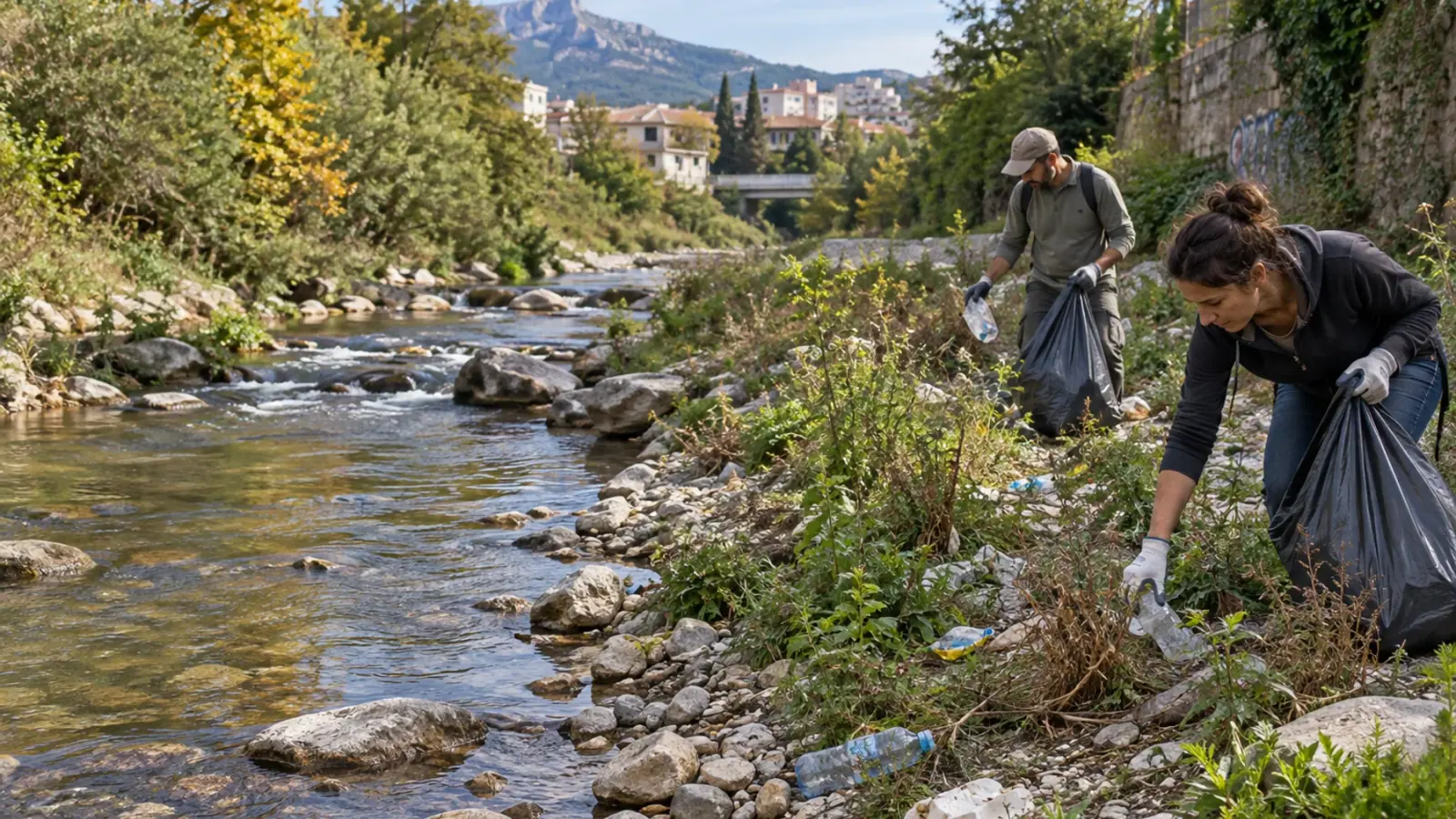
The 2026 Clean Rivers programme around Marseille plans nearly 70 litter collections. Bags removed document the effort; assessing possible benefits for aquatic life also requires follow-up of remaining litter and habitat.
- Content type
- Practical guide
- Sector
- Environment
- Animal group
- Fish
A scheduled clean-up is not yet an ecological result
EPAGE HuCA, the public body responsible for local waterways, has announced its 2026 Rivières Propres programme for 1 October to 16 November. Nearly 70 litter collections are planned along the Huveaune, Jarret, Aygalades and other watercourses around Marseille and Aubagne. Fifteen events in eight municipalities will be open to the public. At the publication date of this article, the programme has not begun. No total for the 2026 collections or observed benefit to wildlife can be reported.
Removing visible waste can immediately improve the condition of a bank and bring local groups together. A claim about aquatic wildlife asks a different question: what exposure remains after the collection, and does habitat or biological monitoring subsequently show a meaningful change? The number of bags filled measures work completed, not fish exposure or overall river health.
Why a collection total is an incomplete indicator
Two sites may produce different weights because they started with different amounts of litter, covered different lengths or involved different numbers of volunteers. A high total can reflect substantial pollution at baseline or a thorough collection. It cannot alone show that the river is recovering. Comparisons need a record of how and where the work was carried out.
Litter also moves and accumulates unevenly. In their review of river macroplastics, Gallitelli and Scalici describe the roles of flow, high-water events, river form and retention areas. Banks, bends and vegetation may trap items while other material travels downstream. Their review draws on other river systems; it informs the design of local observations but provides no direct 2026 measurement for the Huveaune.
Some fragments may remain after a visible clean-up, and inaccessible reaches may go unchecked. New rain can bring further litter or release material that had been trapped. A photograph taken immediately after the event may therefore overstate how long the apparent change lasts. Monitoring should distinguish remaining items from later inputs.
Record effort and conditions before starting
Define fixed survey reaches before a collection. Record their length, date, flow conditions and accessible sections. Photographs from the same viewpoints can support the record, but they cannot replace counts. Grouping items into a few consistent categories allows teams to compare numbers and types of waste alongside mass.
The protocol should say whether observers examined the bank, vegetation and channel bed. No count justifies placing volunteers at risk or damaging habitat to reach every object. Marking unexamined areas is more informative than implying that the survey covered the whole river. The method can then be repeated by another team after the event.
Return to the same sites at documented intervals. Follow-up can separate material left behind from new accumulation and highlight locations where waste reappears quickly. Include rainfall and flow in the record: a survey before a flood and one after it do not isolate the effect of a clean-up.
Connect litter observations to wildlife cautiously
Habitat records can describe shelter, riverbed continuity, bank vegetation and areas where waste collects. Habitat quality is broader than the presence of visible plastic. If fish or aquatic invertebrates are already being monitored, managers can examine those series over time, provided season, methods and sampling effort remain comparable. A change in detections could also reflect water temperature, flow or other pressures.
Biological assessment often benefits from comparison reaches and repeated surveys. Specify in advance which change would count as improvement and allow for a result that does not change. No detected change does not prove the collection was pointless. Equally, an increase in recorded species after the work does not prove that litter removal caused it.
A comparison reach should be selected for similar habitat and hydrological conditions, while recognising that no two river sections are identical. If both cleaned and comparison reaches change after a storm, the common change may reflect the storm rather than the collection. Recording these possibilities before analysis guards against a convenient explanation chosen after the results are known.
Prevention can complement collection. Repeatedly finding the same types of objects at specific entry points can guide discussions with municipalities, land managers and users. That inference requires several local observations; one discarded item rarely identifies its source reliably.
Limits and conclusion
The official announcement describes future activities. The macroplastic literature explains why waste is distributed unevenly and why a survey should cover more than one place and time. Neither source currently demonstrates a measured benefit of the 2026 programme for Huveaune fish.
The strongest future account will separate three things: collection effort, whether litter remains or returns, and any observed change in habitats or organisms. Keeping these levels distinct helps managers improve later work without promising ecological restoration before evidence is available.
Vetofish support
Vetofish can help teams define comparable observations across river reaches and interpret the limits of biological results. Our advice and support service can assist aquatic environment managers seeking to connect field action with a defensible monitoring plan.


