

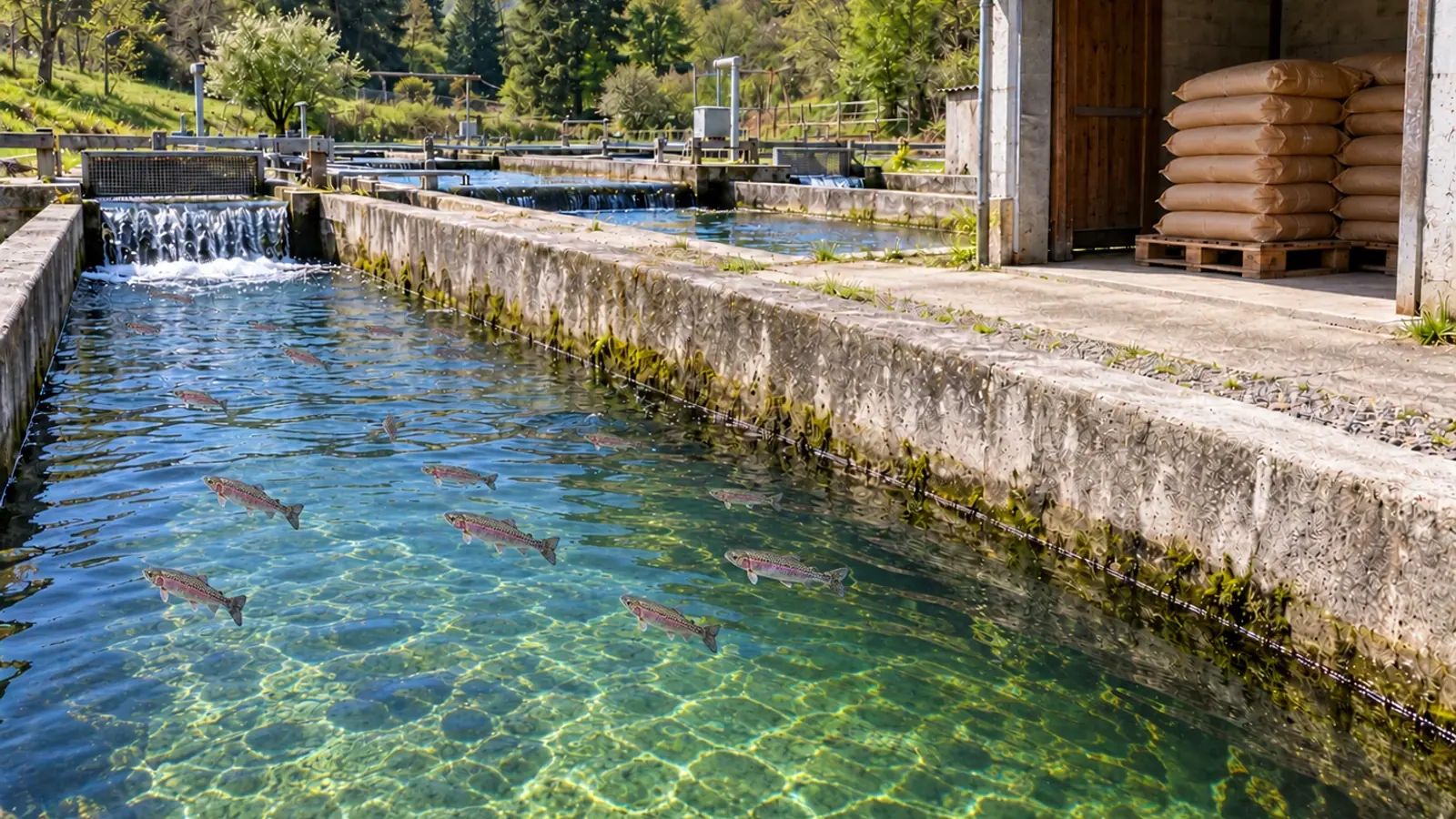
Fish feed: isolate a damp batch before feeding
Drying a damp or mouldy sack does not clear it for use. SRAC’s technical guidance on mycotoxins explains why storage conditions and testing matter. For a fish farm, the immediate task is to identify the affected batch and hold it out of the feeding supply.


- Content type
- Practical guide
- Sector
- Aquaculture
- Animal group
- Fish
- Keywords
- TemperatureImmunityBiosecurity
Check the supply before the first meal
Feeding a group of fish involves more than choosing the formulation printed on a sack. Between delivery and use, pellets can encounter rainwater, condensation inside a bin or a damp storage wall. An investigation needs to identify the product, location and period involved. Those details help protect the stock without immediately blaming poor growth on an infectious disease or an unsuitable formulation.
Bruce Manning’s 2010 Southern Regional Aquaculture Center guidance gives moisture prevention and assessment of mouldy feed a practical place in farm management. This American technical document remains useful for organising storage and responding to a suspect batch. Its experimental findings and references to US regulatory limits are not universal safety thresholds or rules applicable in France.
Receiving checks should cover sack condition, the pallet and any signs of water ingress. Record the batch number and arrival date before different deliveries become mixed in the store. Photographs and identifiable stock records provide a stronger basis for follow-up than a general note about unusual feed written several days later.
Moisture damage does not identify a toxin
Some moulds can produce mycotoxins, toxic substances that fish may ingest with contaminated feed. Visible mould therefore warrants investigation, but it does not identify which compounds are present or their concentrations. Looking at the pellets cannot replace an appropriate laboratory assessment.
The SRAC guidance describes responses that differ between toxins, species and life stages. Changes in growth or immune function do not identify feed contamination on their own. Equally, fish continuing to eat does not establish that a batch is acceptable. Feeding records need to be considered alongside observations of the animals and their water conditions.
Drying a wet sack is not evidence that a toxin has been removed. Manning also notes that heating affects different compounds differently and that products intended to bind toxins have not all been adequately evaluated in fish. Improvised drying, heating or addition of a binder cannot turn suspect feed into a validated product. Decisions about its use require more than an improvement in appearance.
Inspect the routes by which feed becomes wet
A sound roof and protective walls are basic elements of moisture prevention. Sack storage should allow staff to inspect packaging, see the condition of the floor and retrieve product references. Feed should be kept away from visibly damp areas. Stock rotation needs to reflect the manufacturer’s instructions and the farm’s actual rate of use, rather than an assumed storage life for every product.
Bins create a different set of inspection points. The guidance identifies seasonal temperature changes as a cause of condensation on metal walls. Feed delivered dry can therefore encounter water later. Filling points, closures and areas that retain material between deliveries belong in the inspection plan as well.
We recommend planning inspection and cleaning for times when equipment can be emptied and handled safely, in accordance with its design. That requires preparation of the fish-feeding supply and safe maintenance arrangements; it is not a reason to enter an operating bin. A recurring damp patch needs a correction to the storage system or working practice as well as removal of the visibly affected material.
Hold the batch without losing its history
If sacks show dampness, mould or an unusual deterioration, our proposed first response is to suspend distribution and identify the affected stock clearly. Keeping suspect material separate from usable feed reduces the chance of accidental return to the feeding supply. Check whether other sacks from the same batch share the location or have already been used.
The hold record should identify the supplier, product reference, batch number, receipt and opening dates, observed conditions and the tanks or ponds supplied. Where feed has already been distributed, recorded dates and quantities can be compared with changes in appetite or condition. This establishes a timeline, not proof that the feed caused the observations.
A replacement supply must suit the fish and be available before a prolonged change to farm routines is made. Several abrupt changes at once would also make subsequent observations harder to interpret. The supplier and veterinarian can help determine the next steps according to the extent of the incident and the condition of the animals.
Agree the testing question before taking samples
Discuss sampling with the laboratory first. The matrix, amount, representativeness, packaging and target substances all affect what the result can answer. Material taken only from the most visibly mouldy patch may not describe contamination across the batch. Conversely, mixing that patch into an unidentified composite can obscure a local storage problem.
Manning distinguishes screening tests that indicate the presence of a target toxin from analyses that determine concentration. A negative result for one compound is not a search for every possible mycotoxin. The target, method and limitations need to accompany any decision about release, return to the supplier or disposal.
In practice, that means retaining the connection between the sample and the stock placed on hold. A laboratory report with no reliable batch identity cannot resolve the status of the sacks still in the store. Sample labels and the farm’s stock records should allow the decision to be traced back to the material actually examined.
Conclusion: protect both the stock and the decision
Protected storage, retrievable batch references and an organised response to damage are the basis of prevention. Holding damp or mouldy feed avoids its use by default. Testing and assessment of the circumstances then support the appropriate decision; a better-looking pellet is not sufficient to release it.
Planning the response with Vetofish
Vetofish can help connect fish observations with feeding histories, prepare discussions with the laboratory and review the route from receipt to storage and distribution. The work identifies control points suited to the farm, without promising that a single feed analysis will explain every clinical or production change.
To move from evidence to action, explore our advice and support service and our expertise in aquaculture.


