

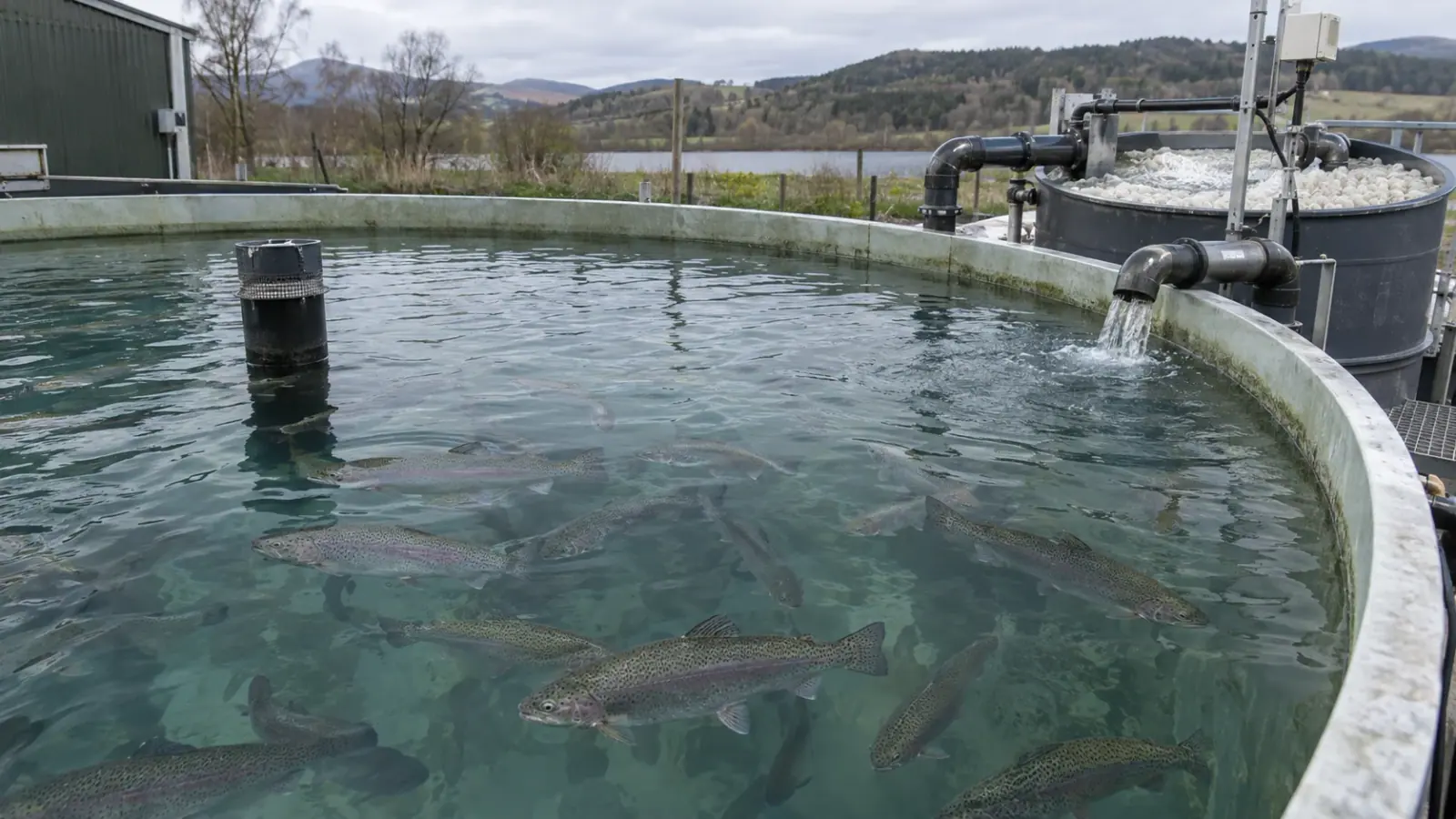
RAS biofilters: spot drift before ammonia rises
An elevated ammonia result may be the late signal of a change in recirculating system performance. Operators can investigate earlier by reading water trends alongside feed load and equipment records.
- Content type
- Practical guide
- Sector
- Aquaculture
- Animal group
- Fish
- Keywords
- pHOxygenCO₂Temperature
A recirculating aquaculture system does not necessarily begin to fail on the day a routine test reports high ammonia. Fish continuously release nitrogenous waste, while pumps, filters and feeding regimes can change between tests. The biofilter depends on a living community attached to its media. Interpreting several trends together can help staff separate a new nitrogen load from a hydraulic problem or a loss of biological capacity before choosing a response.
A biofilter is a biological process, not a cartridge
In a recirculating aquaculture system, mechanical filtration removes part of the suspended solids and biological filtration converts ammonia to nitrite and then nitrate. The two conversions may respond differently to a disturbance. Clear-looking water does not establish that either step is working well. Nor does one acceptable measurement at the fish tank prove that the filter has enough capacity for the next increase in feeding or biomass.
Bartelme and colleagues studied the microbial community in a fluidized sand biofilter serving a yellow perch (Perca flavescens) production system. Its community changed across a rearing cycle while a nitrifying consortium remained identifiable. This was not an experiment establishing universal alarm thresholds. It shows why the filter must be treated as an active compartment affected by system operations rather than a passive item of equipment that can be cleaned or changed without consequences.
Put nitrogen results next to the feeding record
The load reaching the filter is linked to feed input, fish biomass and uneaten material. A revised ration, a new feed or a stocking change may raise demand before the biofilter adjusts. Monitor total ammonia nitrogen, nitrite and, where useful, nitrate alongside the amount fed. Record the sampling point and time. A result taken after a feeding peak is difficult to compare with one collected at another point in the daily cycle.
The proportion of toxic un-ionized ammonia depends in part on pH and temperature. A report must therefore specify units, distinguish total ammonia nitrogen from free ammonia and retain the simultaneous pH and temperature readings. A rising nitrite concentration with relatively stable ammonia can suggest that the second step of nitrification is lagging. A rise in both may also reflect reduced flow or a new organic load. These patterns suggest questions to investigate; they are not a diagnosis by themselves.
Trace the water through the actual installation
Review the sequence of equipment events: mechanical filter cleaning, pump interruptions, valve adjustments, water exchange, new stock and feeding changes. Measure or otherwise verify the flow actually passing through the biofilter. A displayed pump set point cannot show whether water bypasses the media or whether the media has become obstructed. Sampling upstream and downstream of the filter can localize a loss of conversion more effectively than repeatedly sampling just one display tank.
Oxygen availability within the filter matters to nitrification, and a tank reading need not represent conditions throughout the filter bed. pH and alkalinity deserve joint attention because nitrification uses alkalinity and can contribute to a falling pH. Temperature changes affect fish and microbes. Degassing and carbon dioxide control should also be assessed as parts of the same water treatment chain. If a sensor reading conflicts with animal observations or another measurement, verify it with an independent instrument before acting on an apparent trend.
Protect fish while finding the cause
If nitrogen values move outside the installation’s normal pattern, first confirm the measurements, inspect circulation and aeration, and observe fish behaviour. The facility’s escalation plan should identify who assesses welfare and when veterinary input is needed. A temporary adjustment to feeding may reduce additional nitrogen input, but the decision should reflect fish condition, stock and the likely duration of the disturbance. Any water replacement requires attention to incoming water quality, temperature, chemistry and effluent capacity.
Avoid resetting several controls at once. Disinfecting or aggressively washing all biofilter media can remove active biomass and complicate recovery. A large unplanned water change may produce a second challenge for fish. Document the sequence of interventions and test responses at the tanks and on both sides of the filter. Resume load progressively as measurements stabilize, instead of treating one improved reading as proof of full recovery.
Build a local warning system
Evidence from a yellow perch facility with a sand filter cannot specify how a moving-bed filter at a marine farm will behave. Molecular profiles describe organisms present; they do not by themselves measure conversion capacity under operational flow. The useful baseline is therefore local: feed and biomass, equipment events, flow, dissolved oxygen, temperature, pH, alkalinity and nitrogen compounds, measured consistently with functioning instruments.
A practical log names the person who checks a deviation, the method used to confirm it and the point at which an alert is escalated. It also records what happened to the fish, rather than treating chemistry as a complete welfare assessment. Reviewing trends across several parameters gives a facility a chance to investigate a change before the next ammonia peak and makes later decisions auditable.
For aquaculture operations, our advisory service can help connect water data, equipment events and observations of fish in a workable monitoring plan.


