

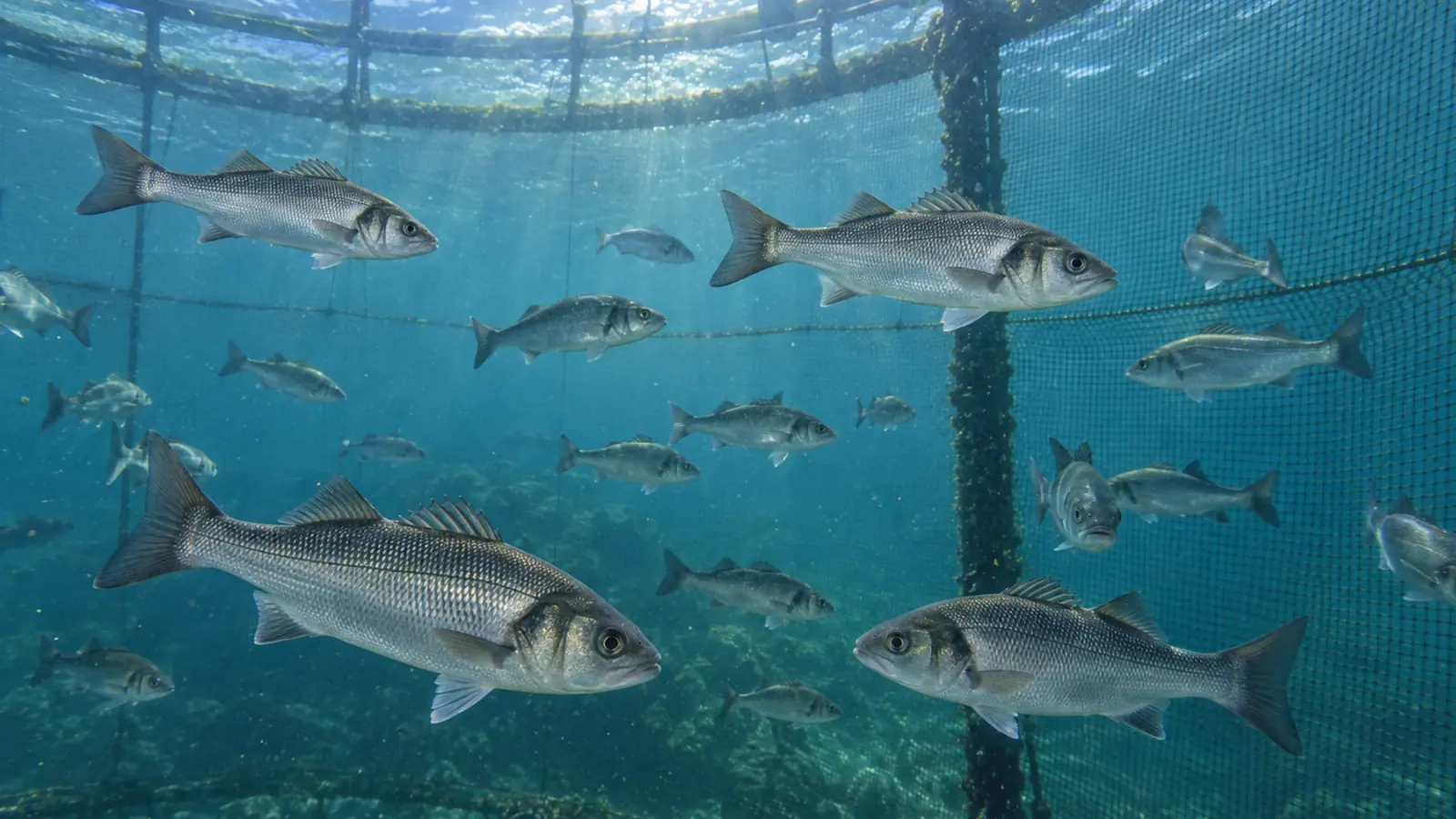
Sea bass tenacibaculosis: infection route changes the outcome
A 2024 European sea bass study separates inflammation from disease after exposure to Tenacibaculum maritimum. Its value for marine farms lies in understanding what an experimental challenge actually tests.


- Content type
- Scientific news
- Sector
- Aquaculture
- Animal group
- Fish
- Theme
- DiseasesDiagnostics
Before applying an experimental finding on a marine farm, ask how the fish encountered the pathogen. An injection and exposure through water do not test the same sequence of events. This matters for tenacibaculosis, a disease often associated with damage to external tissues. In a study published in 2024, Ferreira and colleagues compared these routes in juvenile European sea bass, Dicentrarchus labrax. The distinction matters when interpreting evidence: an immune response does not establish that an experiment has reproduced the disease.
The challenge route changed the clinical outcome
The researchers used a single strain of Tenacibaculum maritimum, ACC13.1, originally isolated from Senegalese sole. Fish underwent either a bath challenge or injection into the peritoneal cavity. The injection treatments included bacteria with or without their extracellular products, and extracellular products alone. Control groups were included to distinguish the treatments from the liquids used to administer them.
In the survival experiment, bath-exposed fish developed skin and fin abrasions and had no survivors by day seven. Survival remained at 100% in the injected groups during the ten-day monitoring period. The reported survival groups comprised 12 bath-exposed fish and 21 fish per injected group. These numbers must not be read as independent experimental replicates: fish were housed together in aquaria.
Injection nevertheless produced cellular and molecular changes in immunity. The team measured inflammatory gene expression and several blood-related parameters, among other endpoints. Survival after injection therefore did not mean that the fish had failed to respond. Equally, an inflammatory response did not establish that the challenge had recreated the external disease seen after immersion.
Contact with the fish surface is part of the model
Skin, fins and gills form interfaces between a fish and the surrounding water. The review by Mabrok and colleagues describes their relevance to tenacibaculosis and the interaction between pathogen, host and environment. Injection bypasses parts of the process through which bacteria encounter and colonise these surfaces. It can answer an immunological question while representing natural exposure less closely.
The experiment does not show that a pre-existing wound is required in every infection. Nor can it identify a particular handling event as the cause of a farm outbreak. The routes differ in administration, tissue contact and exposure conditions. The conclusions remain specific to the strain, juvenile fish and experimental arrangements tested.
On a farm, reconstructing the sequence of events is more useful than assigning a cause from a photograph. Record the first feeding changes, location of lesions, deaths, recent husbandry changes and water conditions. These observations describe the real episode against which experimental evidence must be assessed.
What a prevention trial needs to demonstrate
When a vaccine, feed or other intervention is assessed, the challenge model deserves attention before its headline result. Protection against an injection cannot automatically be assumed to provide protection against exposure through water. Review the fish species and stage, bacterial strain, controls, replication and endpoint: survival, tissue lesions, bacterial measurements or immune markers.
An increase in an inflammatory marker is not, by itself, evidence of improved health. It may accompany a response to damage without increasing resistance to disease. Conversely, no difference in one measured marker does not exclude a change in another outcome. These measurements have different purposes and should be interpreted together.
A farm decision should therefore rely on more than the most favourable number in an experimental report. It needs a model relevant to the problem and a way to assess whether a useful benefit occurs under the farm’s own conditions. The study illustrates this reasoning; it does not evaluate every preventive option.
Connect diagnostic results with the affected stock
An erosion does not establish tenacibaculosis on appearance alone. Other pathogens, physical injury and environmental disturbances can produce similar findings. Sampling should address a clinical question supported by stock history, the distribution of affected fish and the precise tissues involved.
Bacterial culture may require media suited to these marine organisms. PCR tests for a defined target, but detection alone does not replace examination of the lesions or interpretation of the clinical context. Histopathology can help characterise which tissues are damaged and how the lesions are organised. Discuss samples and methods with the diagnostic laboratory before shipping material.
The genus Tenacibaculum includes several species associated with fish disease in different hosts and regions. Calling every genus-level detection T. maritimum removes information that may matter. Appropriate identification helps compare episodes without assuming that each episode has an identical mechanism.
Limits that matter for farm use
The experiment is not a treatment protocol or an estimate of expected commercial mortality. Exposure conditions were artificial, group sizes were limited, and the work did not cover every strain or marine fish species. Complete loss of the bath-challenged group must not be converted into a forecast for an affected cage or tank.
Prevention still requires assessment of the conditions that compromise fish and facilitate pathogen transfer. Protecting skin during handling, monitoring the aquatic environment and examining biosecurity arrangements belong in the health investigation. The comparison of infection routes demonstrates no particular medicine’s clinical effectiveness.
Nor does survival alone establish satisfactory welfare. The injected fish showed measurable responses, and the study’s different observations describe different aspects of the host response. A practical assessment must retain clinical condition and behaviour alongside mortality.
Conclusion and Vetofish support
In this sea bass model, injection triggered inflammation without reproducing the disease observed following bath exposure. For farm managers, the useful decision is to check what a challenge actually recreates before relying on its results to change practice.
Vetofish can help evaluate experimental evidence and plan sampling through its diagnostic and laboratory services, with support for aquaculture facilities. The aim is to connect the published evidence with the fish, system and diagnostic question on the farm.


