

Trout lactococcosis: trace water connections and diagnosis
A raceway lactococcosis outbreak can involve stocks linked by shared water. An Italian case and a genomic study explain the possible transmission route, temperature context and need for precise bacterial identification.

- Content type
- Disease profile
- Sector
- Aquaculture
- Animal group
- Salmonids
Investigate lactococcosis when farmed salmonids rapidly lose appetite, swim abnormally and develop lesions consistent with a systemic infection. In rainbow trout, Oncorhynchus mykiss, a summer rise in water temperature is relevant context. It does not identify the bacterium. The farm’s water connections, fish movements and laboratory findings need to be considered together before management decisions are made.
Shared water can connect apparently separate stocks
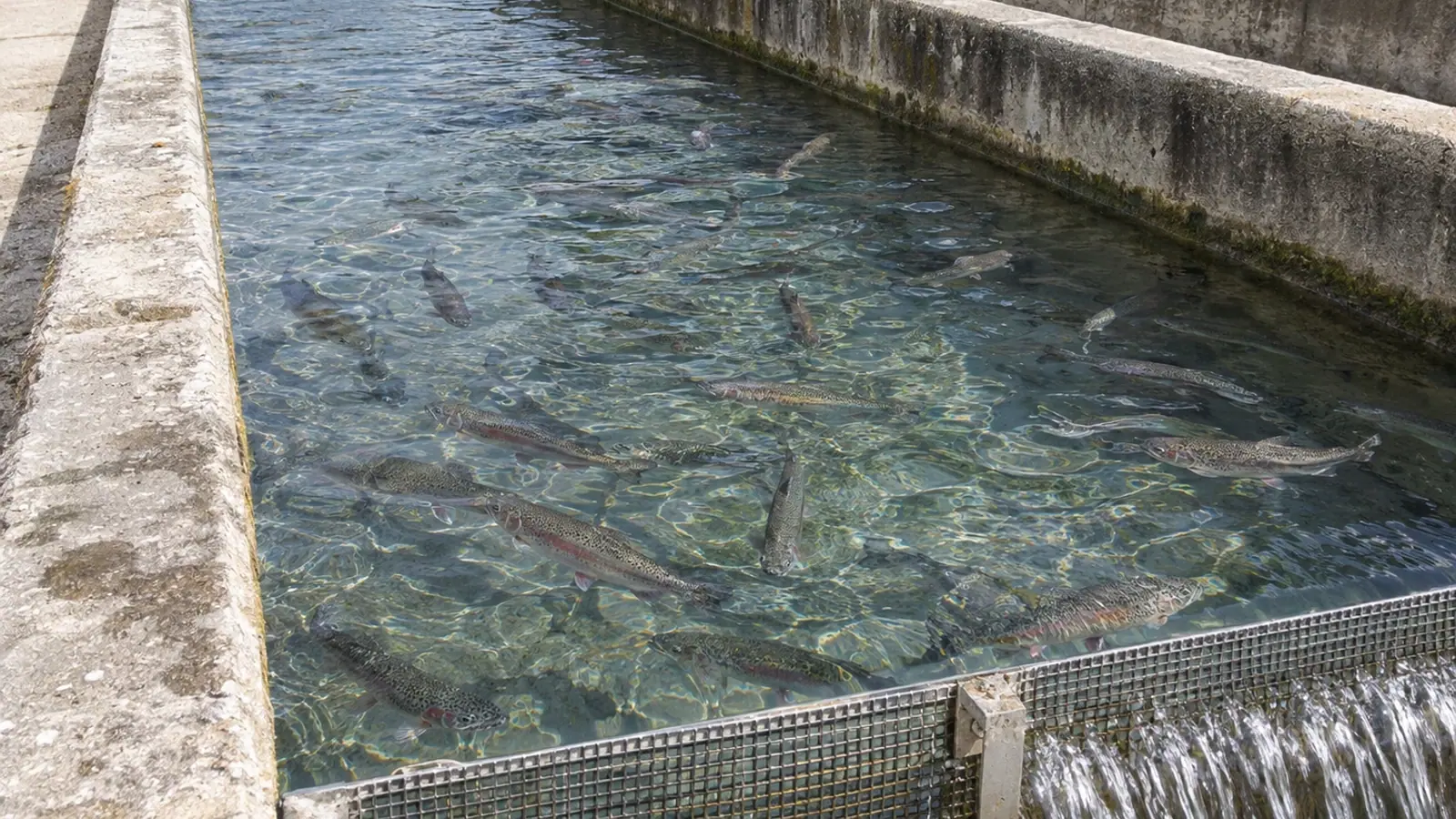
Pastorino and colleagues reported an outbreak in north-western Italy during July and August 2018. Rainbow trout occupied the upstream compartments of a raceway system, with brook trout, Salvelinus fontinalis, in downstream tanks. Water passed from one stock towards the other. The recorded water temperature during the episode was 18–19 °C.
The laboratory received 25 fish of each species. Cultures from kidney and brain yielded cocci identified as Lactococcus garvieae, with PCR confirmation. Sixteen isolates were subsequently characterised by molecular typing. Their related profiles, combined with the arrangement of the tanks, supported waterborne transmission as an explanation. This was an epidemiological inference rather than direct observation of bacteria travelling between individual compartments.
The operational lesson is that a physical partition does not necessarily create a sanitary barrier. A useful water-flow map records supply points, diversions, returns and every compartment receiving water from an affected stock. Reviewing that map may reveal exposed groups that look separate when viewed from the walkway. Equipment movement should be considered alongside the hydraulic connections.
Interpret temperature alongside clinical findings
Lactococcosis can cause septicaemia, a systemic bacterial infection affecting several organs. The Italian report described eye protrusion, haemorrhages, reduced feeding and disorganised swimming among the affected fish. These findings support investigation but are not unique to this disease. Other infections and environmental disturbances may generate a similar initial alert.
The authors considered high temperature a likely predisposing factor, particularly for brook trout. However, pH, dissolved oxygen and ammonium were not recorded, so their possible contribution could not be assessed. The observed 18–19 °C range is neither a universal disease threshold nor a husbandry instruction for other farms. Differences in species, stock condition and water supply matter when interpreting an episode.
At the onset of an alert, record measurements taken where fish are affected, together with their timing and recent trends. A daily maximum, interruption of flow or handling event may be more informative than a weekly average. Aligning the animal observations with the technical log makes it possible to examine whether changes occurred together. It also helps distinguish a continuing problem from one that has already passed.
Ask what the identification method can distinguish
A diagnosis combines clinical history, lesions and identification of the organism. Sample selection and transport should be agreed with the receiving laboratory. Relevant information includes the pattern of losses, which stocks are affected, treatments already given and the interval between sampling and analysis. Detection in water carries a different evidential weight from recovery from an internal organ in fish with compatible lesions.
Species identification deserves attention. In a comparative genomic study published in 2025, Blanchard and colleagues revisited 15 isolates associated with aquaculture outbreaks in four countries. Twelve were assigned to L. petauri and three to L. garvieae. This small collection cannot establish their global prevalence. It does demonstrate why historical species labels should be checked against the resolving power of the method used.
The genomic findings do not retrospectively rename the organism in the Italian outbreak. They support asking whether the current laboratory assay distinguishes closely related lactococci and whether an isolate should be retained for further examination. Better identification helps compare successive episodes and discuss prevention without grouping biologically distinct agents under one convenient name.
Reduce exposure without compromising the water supply
Biosecurity measures should address fish, water and equipment. When disease is suspected, review non-essential transfers with the veterinarian and identify stocks exposed through shared water. Keep track of equipment used in affected compartments. Removing dead fish regularly while recording their source supports both hygiene and interpretation of the outbreak’s progression.
Changing the hydraulic arrangement requires technical assessment. Closing an inlet without an alternative supply can compromise oxygenation and water renewal. Disinfection likewise needs a defined plan covering animals, materials, residues, effluent handling and recommissioning. A product should not be added to occupied tanks simply because it is effective against bacteria under other conditions.
Vaccination may form part of preventive planning, depending on the confirmed agent, available product and conditions of use. It does not replace investigation of an active outbreak. The 2019 case report did not test a vaccine or treatment and therefore cannot provide a therapeutic protocol. Any antimicrobial decision requires veterinary assessment and interpretable susceptibility evidence rather than a choice based on the appearance of the fish alone.
Follow recovery at compartment level
Field reports can expose a plausible transmission route while leaving some determinants unresolved. Here, the water connections, related isolates and temperature were documented, but the exact direction of transmission remained an interpretation. Molecular typing of sixteen isolates cannot describe every organism present on the farm. The reported episode also cannot predict losses in another stock.
Once the situation stabilises, continue recording mortality by tank, appetite, clinical observations, water conditions and laboratory findings. Compare these with the farm’s previous state and with unaffected compartments where possible. A short decline in losses is useful progress but does not establish that every stock is free of infection. Retaining the records makes a later recurrence easier to investigate.
Conclusion and Vetofish support
The practical priority is to connect clinical findings to a correctly identified organism, then reconstruct how stocks are linked. Warm water may contribute to risk; it does not remove the need for that investigation. For aquaculture facilities, our diagnostic and laboratory service can help plan sampling and interpret results alongside the site’s hydraulic layout and health history.


