

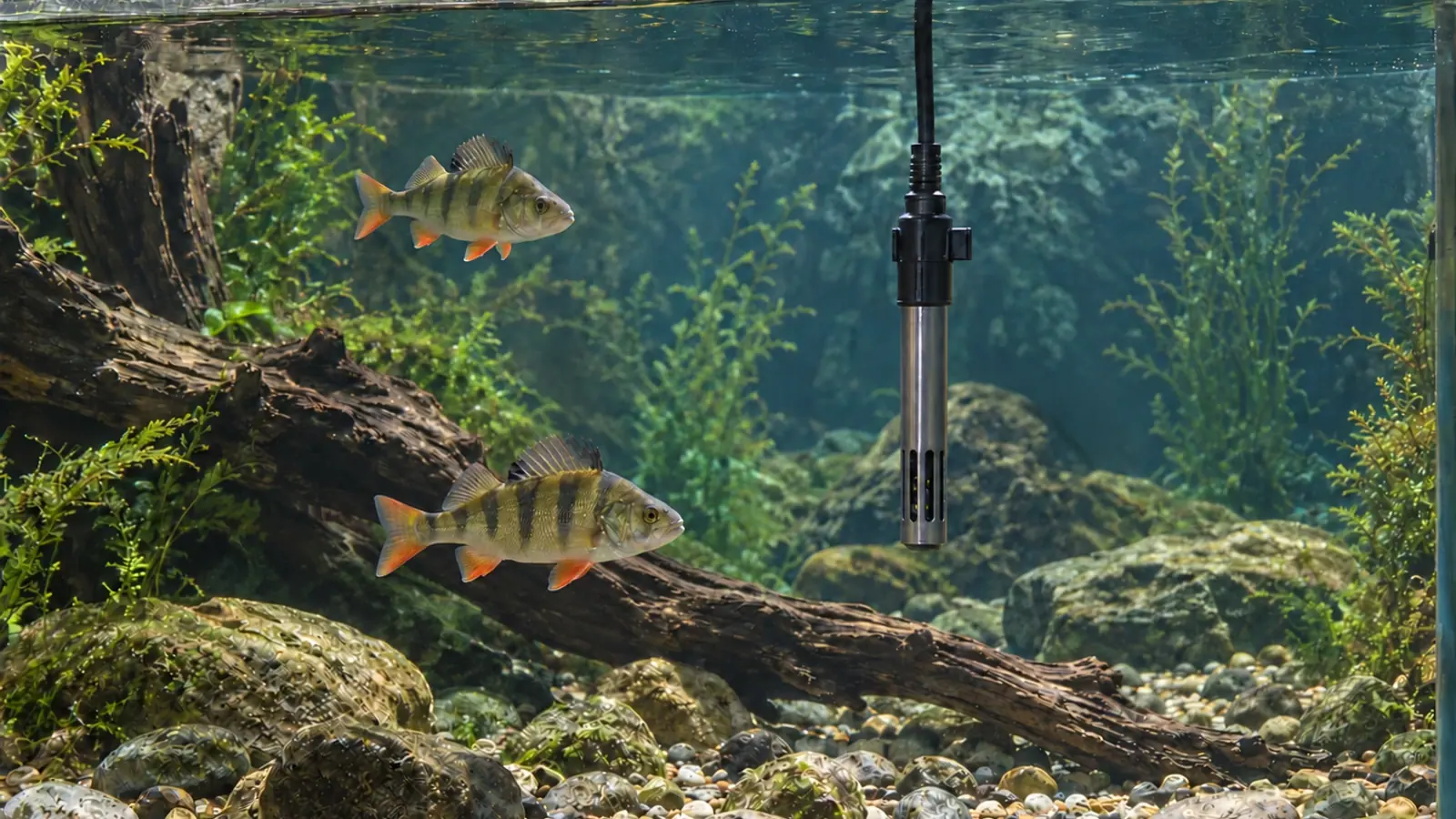
Aquariums: compare conductivity at a reference temperature
Two meters can disagree even when the water has not changed. The USGS’s 2019 manual distinguishes conductivity measured at the water’s temperature from a value referenced to 25°C. That distinction helps aquarium teams compare instruments and monitoring records.

- Content type
- Practical guide
- Sector
- Public aquariums
- Animal group
- Fish
- Keywords
- TemperatureSalinitypH
Establish what each display is reporting
Electrical conductivity describes how readily water carries an electrical current through dissolved ions. It depends on the types and concentrations of those ions and on temperature. A number alone is therefore incomplete: the operator needs to know its temperature basis and how the instrument handles temperature dependence.
The US Geological Survey’s 2019 manual reports specific conductance referenced to 25°C. Water can be measured at a different temperature and the reading corrected to represent its value at that reference temperature. This does not mean that an aquarium should be heated to 25°C to make a measurement.
For a public aquarium team comparing instruments, the first question is practical. Do both screens show conductivity at the water’s actual temperature, or values corrected to the same reference? Comparing the numbers before checking this can create the appearance of a water-quality change that is actually a difference in settings.
Keep the units and actual temperature in the record
USGS reports specific conductance in microsiemens per centimetre at 25°C. Other instruments may display millisiemens per centimetre. One millisiemens equals one thousand microsiemens. Keep the unit visible in exports, monitoring spreadsheets and handovers between teams so that this scale difference survives the transfer.
Record water temperature at the time of measurement as well. The compensated value supports a consistent metrological comparison; the actual temperature remains a property of the environment experienced by the fish. A meter displaying both on separate lines is providing complementary information.
Replacing a probe, changing software or altering a setting can change temperature processing. Before joining a new series to an older one, check what was recorded. If the historical temperature reference is unknown, flag the uncertainty. Recalculating the entire record with an assumed universal coefficient can hide the problem rather than resolve it.
Match the probe to the water
USGS explains that the meter and conductivity cell must have an appropriate working range and cell constant for the expected samples. Automatic range selection does not remove the need to check specifications. A system selected for very low-mineral water may not be suitable for every exhibit in a collection.
Check the working range for seawater displays and unusual water mixtures too. The manual primarily addresses natural waters. It provides measurement principles rather than validation of every instrument for every aquarium water composition. The manufacturer’s instructions and a confirmed operating range remain part of selecting the equipment.
Probe condition is as relevant as its model. Deposits, traces of another solution, damaged cables or air trapped in the cell can affect the reading. Stability is useful, but a stable reading from a contaminated probe can still be wrong. Inspection and maintenance belong within the measurement procedure.
Separate calibration from an independent check
Calibration establishes the instrument’s response using reference solutions. The manual describes single-point and multipoint approaches depending on the instrument. Select solutions for the equipment and the expected readings, rather than simply using whichever bottle happens to be available.
An expired or contaminated standard, or one diluted by residual rinse water, can introduce bias. USGS recommends fresh solutions and records of their lots, temperatures and calibration parameters. Used solution should be kept out of the original bottle so that a measurement does not contaminate the reference intended for later checks.
After calibration, measuring another known solution checks the response of the meter–probe combination. Acceptance criteria need to suit the intended use. Criteria in a USGS monitoring programme are metrological limits, not fish-health thresholds or requirements automatically imposed on public aquariums in another jurisdiction.
Compare measurements under comparable conditions
Place the probe at a representative location with the conductivity cell properly immersed, then allow both temperature and conductivity to stabilise. A fresh-water inlet, incomplete mixing or a bubble around the sensor may explain a local difference. Record location and time with the result.
When comparing two instruments, take readings close together in the same water to limit environmental change between observations. Record each device’s compensation settings, units and verification status. If disagreement persists, investigate the method and equipment before changing the exhibit water to correct a possibly misleading number.
Multiparameter probes need particular attention to pH calibration solutions. The manual identifies these as a possible source of contamination for conductivity measurements. Rinsing and the order of operations should follow a coherent procedure compatible with the instrument instructions. The act of checking the water must not itself alter the sample being checked.
Keep conductivity within its explanatory limits
Salinity, hardness and conductivity describe different properties. A conversion can be useful within a defined application, but depends on ionic composition and the model being used. A single factor cannot reliably turn every conductivity reading into a salt concentration.
Unchanged conductivity does not establish that all health-relevant water parameters are satisfactory. It complements the measurements appropriate to the species and life-support system. If fish behaviour changes, clinical observation and investigation of the system remain necessary even when conductivity resembles yesterday’s reading.
Conclusion and support from Vetofish
A valid comparison starts with the same measured quantity, explicit units and a known reference temperature. Probe condition, reference solutions and measurement location help explain the remaining discrepancies. Altering the water before checking this chain can introduce an unnecessary intervention.
Vetofish can train aquarium teams to interpret instrument displays, record settings and organise comparisons between devices. The aim is a set of measurements that the team can use confidently for its collection, supported by procedures suited to the exhibits and equipment in service.
To move from evidence to action, explore our training courses and our expertise for public aquariums.


