

Can an aquarium identify fish without tagging them?
Skin patterns can act as individual signatures in fish photographs. For aquarium collections, the question is whether recognition remains reliable under normal viewing conditions and meaningfully reduces handling.


- Content type
- Scientific news
- Sector
- Public aquariums
- Animal group
- Fish
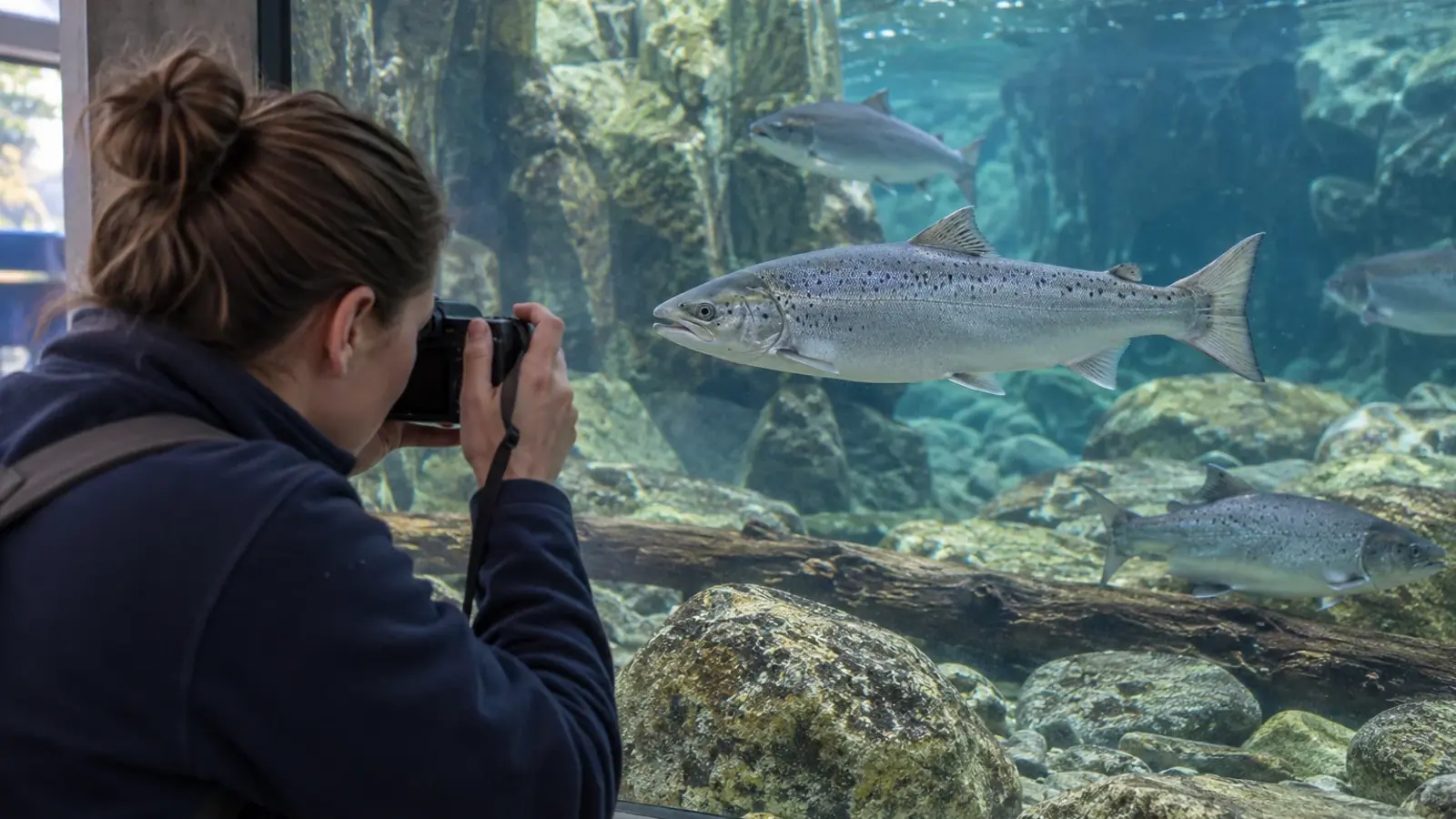
An individual record is valuable only if staff can link observations and care to the correct animal over time. That can be difficult in a large display where capture and physical tags add work and potential welfare costs. A study of Atlantic salmon shows that computer vision can use skin spots as individual signatures. It also provides a warning for public aquariums: good recognition in a controlled photograph does not automatically translate into dependable identification in a display tank.
What was tested in Atlantic salmon
Cisar and colleagues analyzed the lateral spot patterns of Atlantic salmon (Salmo salar). Their short-term collection included 328 fish, while a group of 30 was followed across six months. Photographs were obtained both under controlled conditions outside water and underwater in a small aquarium. During the longer series, fish were captured and anesthetized for imaging sessions. The work therefore tested image recognition; it did not show that the entire data-collection procedure could be performed without handling.
In the reported short-term comparisons, the method identified fish correctly under the study conditions. Longer-term results depended strongly on image type. The dot-based method achieved a reported 70% accuracy across six months with underwater aquarium images, lower than with controlled photographs. A curator should not turn either figure into a general accuracy claim for a mixed-species display. The exact fish, pattern, lighting, camera geometry and passage of time all matter.
Start with a tractable collection question
Photo identification is most plausible when individuals have visible markings that differ from one another and remain reasonably stable. Salmon spots met those conditions in the studied group. An aquarium may hold fish with changing colour, similar-looking bodies, cryptic behaviour or frequent occlusion by other animals. Those collections need their own feasibility assessment. The first question is not which model to purchase; it is which animals the institution needs to follow and for how long.
A small pilot can use a known set of individuals with a consistent viewing angle. Keep a manually verified reference set throughout the trial. The two sides of a fish should be treated carefully because a left-side reference image may not describe the right side. Reflections from glass, suspended particles, another fish passing in front of the subject and camera changes can all degrade a match. A useful workflow allows an uncertain result to remain unresolved and routes it to a keeper, instead of forcing every image into the closest existing identity.
Tie an image to the animal’s clinical record
The intended decision may be to check whether a particular fish has eaten, compare its activity over time, follow a documented lesion or prepare for an examination. Each photograph should have a date, tank, camera position and persistent collection identifier. Retaining the original image and the human review decision makes it possible to investigate a later mistake. Transfers, growth, changes in appearance and interventions should be logged because they can affect both the animal and the matching process.
The protocol must specify when identity needs independent confirmation. Treatment, anesthesia or transfer should not rely solely on an uncertain automated match. Keeper observations, transfer records and suitable physical identification methods may remain complementary. Recognizing a fish also does not measure welfare by itself. It simply makes it possible to connect observations to an individual, provided the observations are reliable.
Evaluate the whole welfare pathway
The potential benefit lies in fewer stressful procedures, not merely a faster algorithm. If every imaging session requires capture, the welfare claim is narrower. A camera positioned at a viewing pane might reduce handling, but its placement, lighting and any changes to the animals’ behaviour need review. Staff should not chase fish around a display simply to obtain a perfect frame for routine records.
Over a defined trial period, record the number of avoided captures, verified matches, unresolved images and corrected errors. If the aim is behavioural monitoring, use a consistent observation scheme as well as an identity check. This separates the ability to name an animal from the validity of a conclusion about feeding, activity or social interactions. Keepers should be able to describe what action followed each identification and whether it improved continuity of care.
Evidence gaps before routine adoption
The published study involved Atlantic salmon and defined photographic conditions. It does not validate the same system for sharks, reef fish or a complex multispecies exhibit. Growth, new arrivals, replacement animals, camera changes and a longer observation period can alter error rates. A successful demonstration on 30 known fish cannot guarantee performance in a moving collection of hundreds. Reassessment is needed when the population or imaging conditions change.
For public aquariums, our animal welfare service can help design a limited pilot with explicit error criteria and practical observations before photo identification becomes part of collection management.


