

Freshwater mussel surveys need an area and detection model
A freshwater mussel survey with no detections does not establish that a population is absent. A 2006 methods paper links searched area, search efficiency and the probability of detecting a rare species. Its framework helps teams state what their survey was capable of finding.


- Content type
- Scientific news
- Sector
- Environment
- Animal group
- Corals and invertebrates
A survey team may spend hours in a river without finding the mussel it is looking for. The observation is specific: no individual was detected under the conditions of the search. What it says about a population depends on how much of the site was examined and which individuals the method could find.
David R. Smith’s 2006 methods paper connects those elements to an explicit detection objective. It uses North American examples and simulations rather than a new survey of a French river. The framework remains useful for asking what a search was capable of detecting, while its assumptions and geographical scope stay visible.
Presence is a different objective from abundance
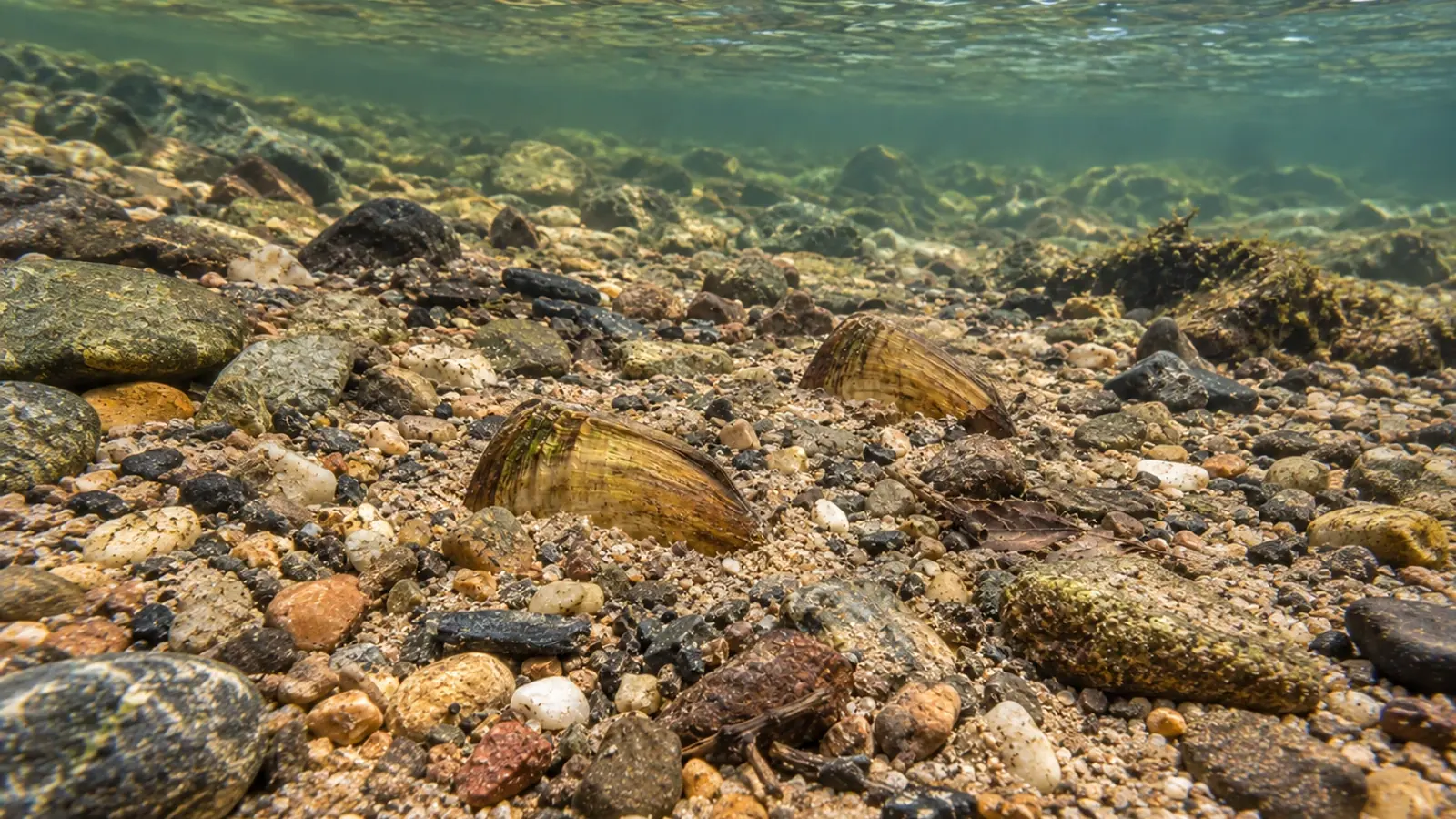
Freshwater mussels are bivalves, and some individuals may remain buried in sediment. Finding at least one member of a rare species is not the same task as estimating population density. A method that can confirm presence may still be inadequate for describing abundance, size structure or recruitment.
Smith distinguishes the area searched from search efficiency within that area. Search efficiency represents the fraction of present individuals that can be detected by the method. It can remain below one even when an observer has inspected the visible riverbed carefully.
A detection objective therefore needs both a probability of finding the species and an abundance or density at which that probability applies. The target density is not a measured density at the site. It specifies the population that the design is intended to detect. Omitting that condition would give a calculated probability a meaning it does not have.
Define an area rather than relying on hours alone
A timed search records effort, but it does not necessarily describe a comparable area examined with comparable efficiency. Two teams can cover different ground in the same time. Turbidity, the substrate and travel between search areas further change what an hour of work represents.
The proposed approach bounds search units and distributes effort across the site. It links the total area inspected to a conditional probability of detecting presence. Required time then follows from the area and assumed search rate, rather than being the only basis for deciding whether enough work has been done.
Habitat information can help allocate the units. It can also mislead if an inaccurate habitat model directs effort away from occupied ground. An area considered less suitable cannot automatically be treated as an area without mussels. The allocation logic and any parts excluded from the search belong in the report.
A careful surface search can miss buried animals
Searching the sediment surface is limited by the fraction of mussels visible or accessible there. Position within sediment may vary with species, season and environmental conditions. Temperature and water level therefore belong with date, location and method in the survey record.
Observer experience, fatigue and visibility can also affect search efficiency. An estimate obtained at another place and time is not automatically transferable. Overestimating efficiency would produce an overly optimistic account of the chance of finding a rare population.
The paper considers ways to investigate the detectable fraction, including comparisons involving the sediment. This is not permission to disturb a riverbed without considering organisms and habitat. Additional intervention should be justified by the monitoring question and its effects, including stress associated with handling. More intensive searching is a methodological choice with consequences, rather than a neutral default.
What the simulations test
Smith evaluated simulated populations with varying abundances, search efficiencies and spatial patterns, including clustered distributions. The comparisons support the value of sufficient searched area and spatially distributed effort for achieving detection objectives within the situations examined.
They do not validate every river or field method. The illustrative species include clubshell, Pleurobema clava, and northern riffleshell, Epioblasma torulosa rangiana, in the Allegheny River. Their characteristics cannot simply be assigned to the species in a French watercourse or to every other freshwater mussel.
Probabilities and densities used as examples in the paper are not universal regulatory thresholds. The acceptable risk and target population must be defined for the local question. Statistical assumptions and the quality of the efficiency estimate remain part of the interpretation. A formula cannot repair a poorly supported estimate of what the field method detects.
Make a zero count interpretable
Before fieldwork, the record should identify the target species, site boundary and objective: presence, density, demography or individual follow-up. Mark–recapture would require a different monitoring arrangement. Merely mentioning it does not turn a surface survey into that type of study.
The sampling record retains each unit’s area, its position, field conditions and actual observations. Inaccessible parts of the site and changes in method should be reported. Poor visibility cannot be reclassified after the visit as complete detection, and uncertain search efficiency should not disappear when the result is written up.
Afterwards, the report separates detections, effort delivered and assumptions used to assess the result’s reach. An unresolved efficiency estimate can justify further investigation. It should not be concealed behind a binary absence conclusion. A reader needs to know both what was found and what the design was unlikely to find.
Match monitoring to the decision
A zero count is conditional evidence from a particular search. Area, detectability and the target population help define its scope. Search duration alone cannot replace that reasoning, especially where some animals remain unavailable to the method throughout the visit.
Vetofish can contribute to defining objectives, examining observation limits and organising traceability through its advisory and support service. This support for environmental work helps teams prepare proportionate, interpretable monitoring without promising that every individual present will be detected.


