

Paramecia for zebrafish: check the culture and the harvest
Paramecia fed to zebrafish larvae come from a living culture that is usually not sterile. The ZIRC procedure separates culture growth, routine inspection and rinsing before feeding; each stage needs its own records.

- Content type
- Practical guide
- Sector
- Research
- Animal group
- Zebrafish
- Theme
- NutritionBiosecurity
- Keywords
- BiosecurityMicrobiomeTemperature
Live prey arrive with a culture history
Paramecia are ciliates used as small live prey for zebrafish larvae, Danio rerio. Their practical value does not remove the need to control production. A poorly prepared harvest can transfer culture water and residual material into the larval tank along with the organisms intended as food.
The Zebrafish International Resource Center procedure, revised in April 2022, describes cultures as clean but not sterile. That distinction matters in a research fish facility. A container with many actively swimming paramecia is not necessarily free from other microorganisms.
The task is therefore to provide prey when larvae need them while controlling the material accompanying the harvest. ZIRC’s document describes a resource centre procedure to assess within a local system. It does not automatically validate a different starter culture, medium or timetable elsewhere.
Give each culture a traceable identity
Record a culture identifier, inoculation date and starter source before multiplying containers. These details help trace a nursery observation back to the cultures fed, and distinguish a general production problem from a change affecting one container.
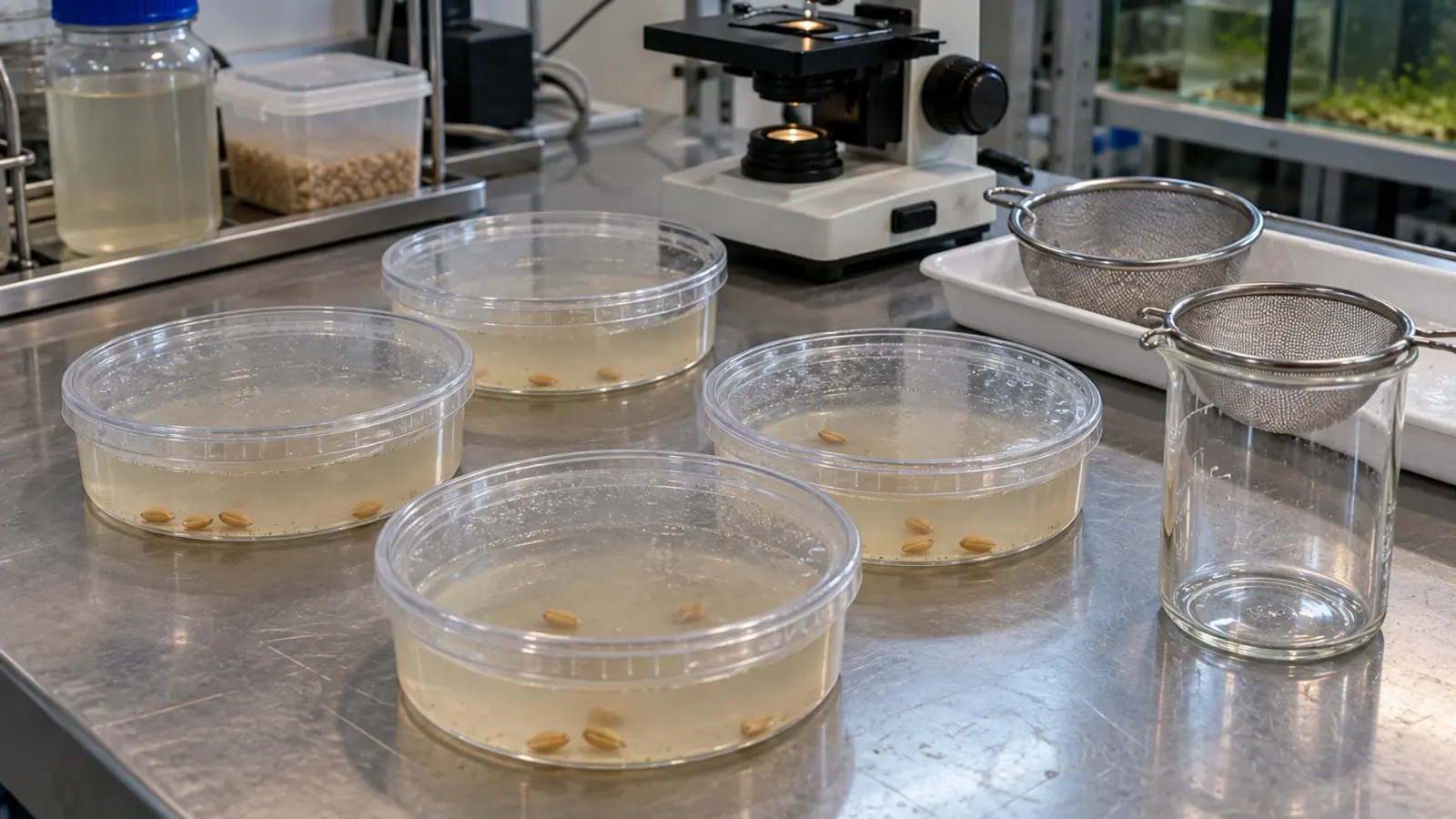
ZIRC recommends containers with a large surface exposed to air that can be cleaned readily. Its method includes prepared wheat and yeast as inputs to the culture medium. Container design, water source and ingredients belong in the procedure, alongside inoculation and harvesting.
The centre keeps these cultures at 24–26 °C. This range describes the published method, rather than a temperature requirement for all ciliates. A change in temperature, water depth or medium formulation may alter production and should be recorded before poor performance is attributed to the culture stock itself.
Maintaining cultures of different ages can reduce dependence on one harvest. This is a management option to size around local demand, available space and cleaning arrangements. It should remain manageable enough that staff can inspect and identify every culture.
Inspect the organisms rather than judging the water alone
Monitoring needs to confirm paramecia are present and look for unexpected organisms. ZIRC explicitly discusses possible contamination and routine observation of its cultures. Clarity or smell alone cannot establish which organisms are growing in a container.
A short record can include general appearance, motility, an estimate of abundance and unusual findings. Use a sufficiently consistent observation method to recognise change. Magnification, sampling location and preparation influence what the observer can see, so keep these details comparable when assessing a series.
Finding a different organism does not, by itself, prove a hazard to the fish. It first creates a need for identification and a decision under the facility procedure. Conversely, failing to see an unwanted organism in one small sample does not certify the culture’s health status.
Biosecurity also depends on workflow: identifiable equipment, separation of doubtful cultures and records of which cultures were fed. Staff need to be able to set aside one suspect container without mixing it into a usable harvest.
Separate growth, harvesting and rinsing
The ZIRC procedure distinguishes removal of large debris from concentration on a finer sieve. The first stage removes material such as remnants of the culture ingredients. The second retains the paramecia while culture water drains away, followed by an appropriate rinse.
An abundant culture is not necessarily ready to pour directly into a larval tank. The amount of culture medium transferred matters alongside the final volume of prepared prey. Sieve condition, mesh choice and cleaning arrangements all form part of the pathway.
Rinsing reduces the transfer of culture water and residues. It should not be described as disinfecting the paramecia or proving sterility. A historical purification method in The Zebrafish Book uses movement to separate motile organisms. Its instructions also warn that slower organisms can eventually reach the collection area.
A separation technique is therefore not a stand-alone guarantee of pathogen freedom. The appropriate health requirements depend on the animals, the facility’s water circuits and the scientific aims. Keep those requirements distinct from a routine visual check of the culture.
Check the delivered feed, not just the volume
Millilitres alone do not describe the prey supply when culture concentration varies. Relate the volume delivered to an estimate of prey abundance, larval numbers and observations after feeding. Other feeds and tank water quality also belong in the assessment.
Licitra and colleagues’ systematic review describes variation in zebrafish diets and feeding management across research studies. It supports the need to report feed and delivery methods, but does not establish paramecia as a complete diet for every developmental stage.
Larval requirements change with development. Paramecia should therefore sit within a feeding plan that includes transition to subsequent foods and assessment of growth. Seeing prey in the water, or observing one feeding event, is insufficient evidence that all nutritional requirements are being met.
Published resource centre quantities and schedules describe their own systems. Local verification should consider whether prey remain available, whether larvae can use them and whether preparation introduces avoidable water quality problems. Unexpected performance needs investigation rather than an automatic increase in culture volume.
Connect the culture room to the nursery record
A useful production system combines identifiable cultures, regular inspection, a controlled harvest and a record of delivery. It allows the team to answer a practical question: which prepared culture was fed to which larval group?
Our advice and support service can help research facilities organise these checks with their team and veterinarian. The starting point is a traceable link between culture containers, harvests and larval batches, with local procedures that staff can carry out and review consistently.


