

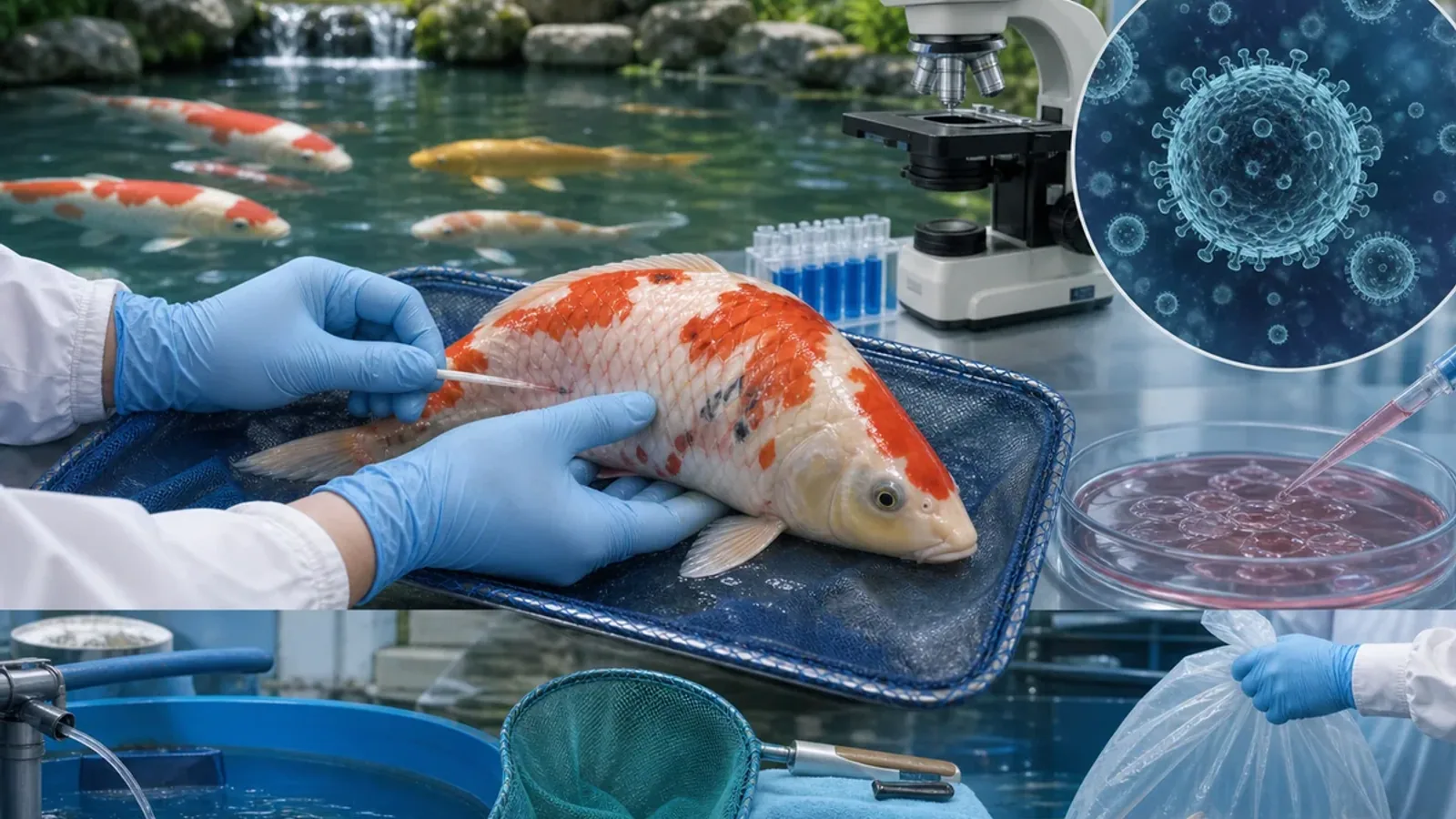
What is KHV (CyHV-3)?


KHV is cyprinid herpesvirus 3 (CyHV-3), a member of the Alloherpesviridae included in the overview of the main pathogenic fish viruses. It causes koi herpesvirus disease (KHVD), a contagious infection that may cause substantial mortality. The clinical signs that can suggest KHVD are nevertheless non-specific. No single mortality percentage describes every outbreak: viral strain, fish age and genetics, water temperature, stocking density and concurrent infections all influence severity.
Which fish are concerned?
Recognised susceptible hosts are all varieties and subspecies of common carp (Cyprinus carpio), including koi, and certain C. carpio hybrids. Detecting viral DNA in another species does not by itself demonstrate that the species develops or transmits the disease.
A surviving carp may carry the virus without visible signs. A healthy-looking purchase and one negative result therefore cannot, on their own, guarantee that a stock is free from KHV: the choice of fish and tissues affects KHV detection by PCR.
What is its animal-health status?
In the European Union, KHVD is currently a category E listed disease under Regulation 2018/1882 (French summary), meaning that it is subject to surveillance. Older French wording that called it a “first-category health hazard” no longer describes its current status. Check the rules in force for applicable duties; the notifiable aquatic diseases list shows diseases listed in 2015. When carp show unusual mortality or compatible signs, apply the first KHVD prevention and control measures: stop movements, keep stocks separate and contact a fish veterinarian promptly. Regulatory action depends on the holding and jurisdiction.